
Interprovincial partnership backs francophone education, arts and community work
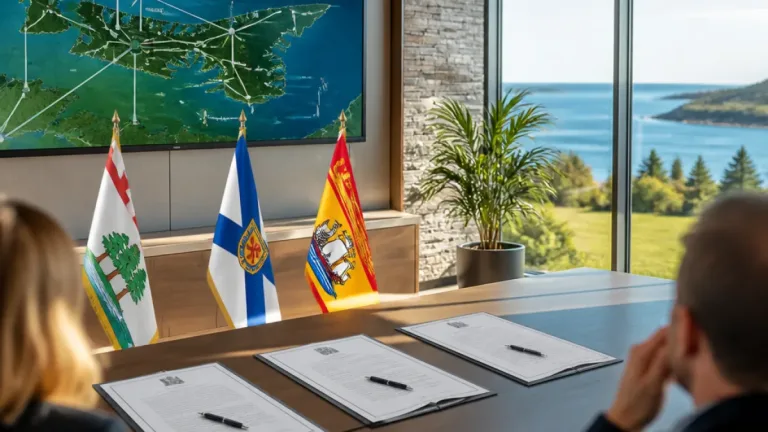
Manitoba and New Brunswick have approved five collaborative initiatives for the 2026–27 fiscal year under their long‑standing Co‑operation and Exchange Agreement, with each province contributing to a joint funding pool totalling $40,000.
The projects, coordinated on Manitoba’s side by its Francophone Affairs Secretariat, target priorities set out in a renewed francophone cooperation protocol signed earlier this year: French‑language education, arts and culture, and community development. The list of approved initiatives was announced by Glen Simard, Manitoba’s minister responsible for francophone affairs.
Background of the partnership
The relationship between the two provinces dates back to a memorandum of understanding on interprovincial cooperation signed in 2002. In June, Manitoba and New Brunswick deepened that relationship with a new four‑year francophone cooperation protocol focused on joint initiatives, knowledge exchange and strengthening ties within Canada’s francophone community outside Quebec.
The program is designed to encourage direct partnerships between community organisations in each province through exchanges, mentoring, training and the sharing of expertise rather than one‑way, top‑down programming.
What the funding supports and demand this year
For 2026–27, the two governments jointly reviewed applications and approved five projects. Each province may contribute up to $20,000 annually, creating a combined pool of $40,000 to be shared by approved initiatives.
| Item | Amount |
|---|---|
| Maximum contribution per province | $20,000 |
| Combined funding pool | $40,000 |
| Total requested by applicants (2026–27) | $42,570 |
Because applications this round requested a combined $42,570, some projects had their requested amounts reduced to fit within the funding cap.
Why the program matters
Interprovincial cooperation of this kind is an important but often low‑profile way provinces support francophone communities outside Quebec. The protocol emphasises building capacity through mutual learning and local partnerships, which can be particularly valuable for community groups seeking practical mentorship, workforce development and cultural exchanges.
For newcomers and long‑established francophone communities alike, these exchanges can mean more robust programming in French, shared cultural events and enhanced educational resources — particularly in regions where francophone populations are smaller and resources scarcer.
How the initiative works in practice
- Joint funding: each province contributes up to $20,000 per year;
- Priority areas: French‑language education, arts and culture, community development;
- Approach: emphasis on exchanges, mentoring, training and knowledge sharing between community organisations.
The program’s design favours direct collaboration between community organisations in Manitoba and New Brunswick rather than centralised, one‑size‑fits‑all projects.
Looking ahead
The renewed four‑year francophone cooperation protocol signed earlier in 2026 signals both provinces’ interest in continued collaboration. While the yearly funding envelope is modest, proponents say the value of these agreements can extend beyond immediate dollars through sustained relationships and shared expertise.
As demand has already outstripped available funds this year, future rounds may require either a larger budget or tighter selection criteria to address growing interest from community groups across both provinces.
Local organisations in New Brunswick interested in participating in future exchanges or partnership projects will want to monitor calls for proposals from their provincial francophone offices and maintain connections with counterpart groups in Manitoba to be ready for collaborative applications.
Reporting from Fredericton.