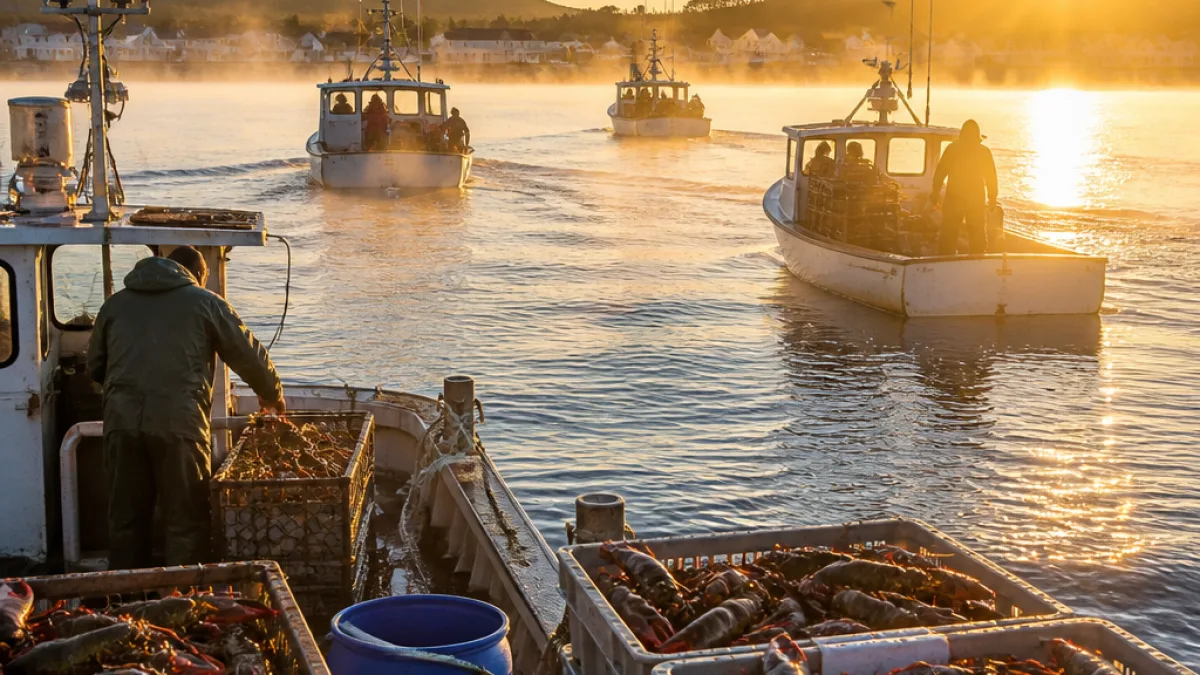
Thousands of lobster fishers in the northwestern portion of the Northumberland Strait began the fall fishing season Monday, signalling the busiest period of the year for coastal communities that rely on the industry.
Season starts amid recovery hopes
Boats left ports as early as 5 a.m. to set traps within Lobster Fishing Area 25 (LFA 25), the stretch of water separating New Brunswick and Prince Edward Island. The zone supports roughly 780 fishing enterprises and about 3,000 fishers, according to local industry figures.
After a spring that saw catches decline and fishing days lost to bad weather, many in the sector are cautiously optimistic that the fall will offer better returns. Rising global prices for protein and steady demand for lobster have contributed to a more favourable market outlook, said Luc LeBlanc, fisheries adviser with the Maritime Fishermen’s Union.
“If we look at market forecasts, we're looking pretty good right now,”
LeBlanc added that lobster remains positioned as a luxury protein in key markets such as the United States, and that increasing prices for competing proteins like beef and pork have helped keep demand for lobster resilient.
Spring setbacks still weighing on fishers
Fishers in the region reported a challenging spring season. Cold conditions and strong winds curtailed fishing activity and affected lobster mobility, contributing to an estimated 20 per cent reduction in spring catches compared with typical years, industry sources said.
Those losses amplified pressure on already rising operating costs — fuel, bait and maintenance among them — creating a squeeze on many small enterprises that depend on a productive fall season to balance annual revenues.
Markets and tariffs
While some Canadian seafood products have faced tariffs or trade disruptions in recent years, union representatives noted that lobster from the region has so far been exempt from U.S. tariffs. International demand has remained steady, providing some reassurance to harvesters who depend on both domestic and export markets.
- Area covered: LFA 25 (northwestern Northumberland Strait)
- Fishing enterprises: about 780
- Fishers: about 3,000
- Spring catch decline: roughly 20%
Economic ripple effects
The lobster season is key not only for harvesters but also for processing plants, transport services and local businesses in coastal towns. A strong fall season can help offset a poor spring; conversely, a second weak season would deepen financial strain across the supply chain.
Industry observers say weather remains the most immediate variable. Extended periods of cold temperatures or stormy conditions reduce fishing days and can affect where lobsters are found, altering catch rates and trip economics.
What fishers are watching
Harvesters will be monitoring daily catch rates, trap efficiency and market prices closely over the coming weeks. Many fishers also watch regulatory announcements and conservation measures that can influence allowable catch or fishing effort in the months ahead.
| Metric | Approximate value |
|---|---|
| Fishing enterprises in LFA 25 | 780 |
| Fishers in LFA 25 | 3,000 |
| Spring catch decline | 20% |
For many coastal families, the next several weeks will determine the financial outlook for the rest of the year. With markets appearing receptive and harvesters returning to the water, there is cautious hope in harbours across the Northumberland Strait that the fall season will help rebuild incomes after a troublesome spring.