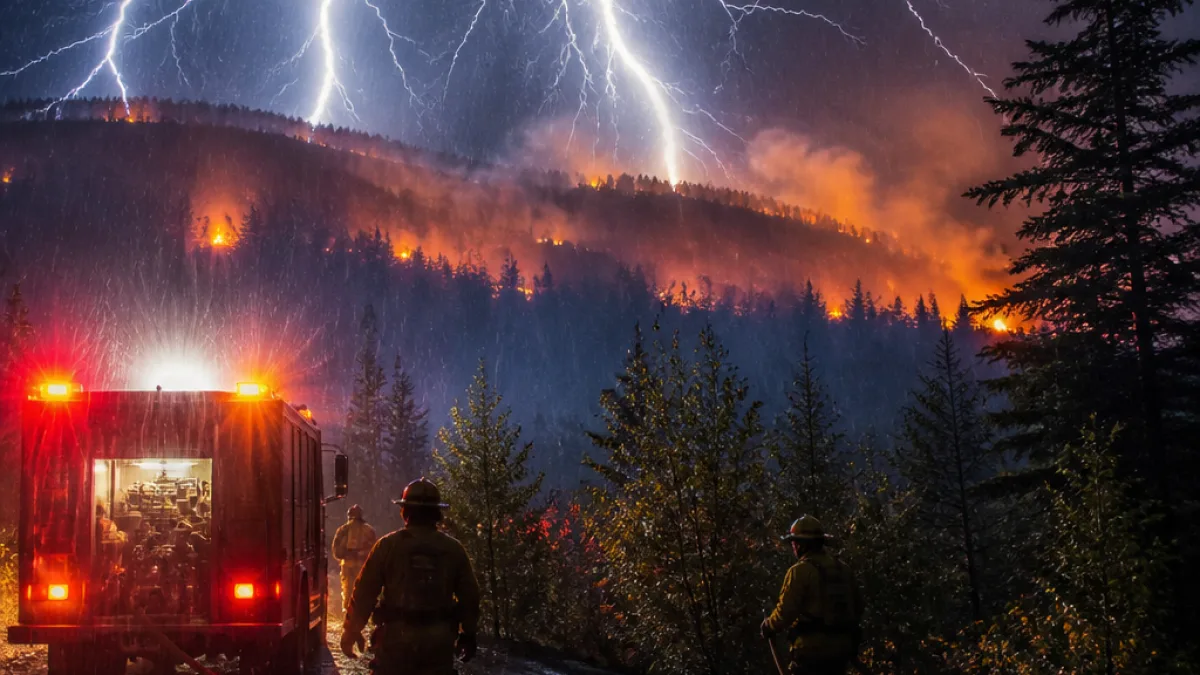
Hundreds of lightning strikes during a subtropical weather event ignited dozens of new fires across British Columbia over the weekend, the BC Wildfire Service (BCWS) said Sunday, even as rainfall in many areas helped crews hold most of the new starts.
Rapid response limited spread of most starts
BCWS reported that 67 new wildfires were discovered in the past 24 hours, with lightning identified as the cause for the majority of those starts. The agency recorded more than 7,000 lightning strikes across the province during the weather event, with strikes reported across all of the province’s southern fire centres.
Of the newly discovered incidents, BCWS said crews were able to respond quickly and that most of the fires are now classified as being held or under control. The service attributed the rapid containment in part to pre-positioned resources and to rainfall from the same weather system that generated the lightning.
Scale of the challenge
BCWS also reported there are currently 181 active wildfires burning in the province. While the recent rains helped reduce fire behaviour in many locations, the sheer number of lightning strikes created a high number of simultaneous ignitions that tested response capacity.
“Crews were prepared for the weather conditions and were able to respond quickly to emerging fires before activity escalated,” BCWS said in its update.
| Metric | Number |
|---|---|
| New lightning-caused wildfires (24 hours) | 67 |
| Lightning strikes recorded | 7,000+ |
| Active wildfires in B.C. | 181 |
Where the fires started and how conditions helped
BCWS said lightning-caused fires were reported in all of the province’s southern fire centres. The subtropical weather system that swept into the region brought both hot temperatures and a high frequency of lightning strikes; in many areas the system later produced meaningful rainfall that dampened fuels and helped limit fire spread.
That combination — intense ignition sources followed by precipitation — produced a mixed outcome: a surge in new starts that were in many cases easier to manage than they otherwise would have been because rain reduced fire behaviour.
Practical implications for residents
Residents in affected regions may see increased activity from wildfire crews, including aircraft and ground crews, as officials move to fully secure the new starts. While most of the new fires are reportedly held or under control, the overall number of active incidents means continued vigilance is required.
- Check local evacuation alerts and orders through regional authorities.
- Monitor BC Wildfire Service and local government channels for updates.
- Maintain a household emergency plan and be ready to follow any evacuation instructions.
BCWS continues to monitor conditions and adjust resource deployments as necessary. The agency’s update underlines that weather remains a major factor in fire behaviour — both as a cause of new ignitions and as a potential mitigating force when it brings rain.
As the province moves through the late summer season, officials say the interplay of heat, lightning and precipitation will continue to shape the wildfire picture in B.C.