The federal Northern development agency has committed a contribution of $1,982,199 to four Indigenous-led projects across the Northwest Territories that aim to strengthen regional infrastructure, expand local industry and train young entrepreneurs.
Funding targets aviation, forestry, business operations and youth
Announced in Yellowknife on Aug. 10, the funding comes from the Canadian Northern Economic Development Agency (CanNor) and was disclosed by Dr. Brendan Hanley, parliamentary secretary to the Minister of Northern and Arctic Affairs, on behalf of the Honourable Rebecca Chartrand, minister responsible for CanNor. The contribution is intended to support initiatives in the Sahtu, Fort Providence, Yellowknife and South Slave regions.
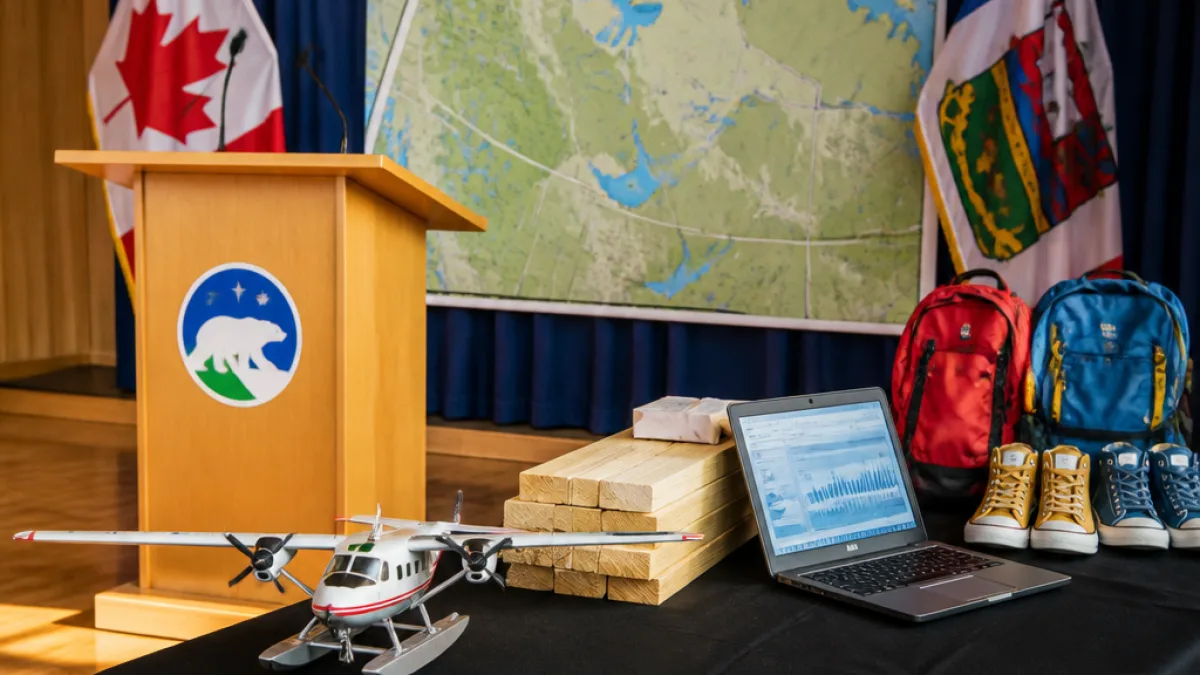
According to the agency, the projects include improvements to airline infrastructure in the Sahtu Region, measures to advance timber harvesting near Fort Providence, software upgrades to enhance business operations for Yellowknife companies and an entrepreneurship bootcamp aimed at empowering 30 Indigenous youth in the South Slave.
CanNor framed the investments as part of a broader strategy to strengthen Indigenous economies and the resilience of northern communities. The agency said Indigenous organisations and entrepreneurs provide “essential local services” and that supporting them helps build long-term prosperity and supports Canada’s northern sovereignty.
Practical impacts for communities and businesses
Improvements to aviation infrastructure in the Sahtu could have immediate operational benefits for communities that rely on air travel for passenger movement, freight and medical evacuations. In the North, airport and runway upgrades can reduce delays, enable larger cargo loads and extend the season for regular service — factors that affect prices and availability of goods.
Advancing timber harvesting at Fort Providence aligns with efforts to develop local resource-based economies that can supply materials for northern construction and create jobs locally rather than importing timber from the south. Timber development also raises environmental and land-use questions that typically require ongoing collaboration between Indigenous governments, territorial authorities and industry operators.
Software upgrades for Yellowknife businesses signal a push to modernize back-office operations and customer services. Small and medium-sized enterprises in the city may see efficiencies in accounting, inventory, e-commerce and client management that help them compete and scale in a challenging northern market.
The entrepreneurship bootcamp in the South Slave aims to equip 30 Indigenous youth with foundational business skills. Such programming can boost youth employment prospects, encourage local start-ups and help young people build enterprises that respond to regional needs.
- Total contribution: $1,982,199
- Number of projects: 4 Indigenous-led initiatives
- Regions addressed: Sahtu, Fort Providence, Yellowknife, South Slave
- Youth beneficiaries: 30 Indigenous youth (entrepreneurship bootcamp)
| Project focus | Region | Purpose |
|---|---|---|
| Airline infrastructure improvements | Sahtu | Enhance aviation facilities to support travel and freight |
| Timber harvesting advancement | Fort Providence | Support local wood resource development and jobs |
| Business software upgrades | Yellowknife | Modernize operations for local companies |
| Entrepreneurship bootcamp | South Slave | Train 30 Indigenous youth in business skills |
CanNor’s announcement in Yellowknife was linked to a larger set of northern investments, though the agency’s statement focused on the territorial projects and the role of Indigenous organisations in delivering services and economic opportunities locally.
For residents and leaders in the affected regions, the funding brings short-term project financing and longer-term potential: improved transportation links, increased capacity for resource harvesting, stronger small business infrastructure and youth entrepreneurship supports can all contribute to diversified local economies.
Officials and community organisations will be responsible for project implementation. Details such as timelines, procurement plans, environmental assessments and reporting requirements were not included in the agency’s summary; these will be important to watch as projects move from announcement to delivery.
As the North pursues sustainable economic development, targeted investments that centre Indigenous leadership and regional priorities remain central to provincial and federal planning. The CanNor contribution is one of several recent announcements designed to channel funding to community-led initiatives across northern Canada.