
Veteran chief leaves after long career shaped by loss and service
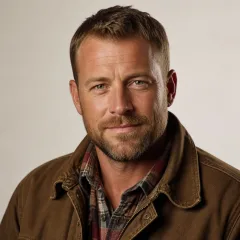
Calgary Fire Chief Steve Dongworth will retire after more than half a century connected to firefighting — including 11 years as the city’s chief and a start to his career in the United Kingdom. He is 69 years old.
Dongworth’s tenure is defined by decades on the job and by the memory of one particularly stark loss. In July 1992, he entered the charred remains of the 17th Avenue Inn the morning after firefighter Morley James died while searching for victims. The memory of that day remains with Dongworth.
“It was sobering for sure. It was an eerie place knowing that one of our people died that night and ironically Morley had gone into the 17th Avenue Inn fire with a fellow I had trained with.”
The events of that night — James taking the lead into the burning building, switching hose lines and continuing to fight the fire until his air supply was depleted — are recounted by Dongworth as emblematic of the risks firefighters accept. James became disoriented in the smoke, was overcome by heat and fumes, and did not make it out.
From a pork abattoir in England to Calgary’s chief
Dongworth’s route into firefighting was unexpected. Raised in England in a military family, he briefly worked in a pork abattoir and then at a pig-breeding centre doing artificial insemination. A family friend suggested the fire department. He applied, passed on-the-spot practical tests and began a career that eventually brought him to Calgary in 1992.
Last month, Calgary Mayor Jeromy Farkas publicly recognised Dongworth’s five decades of service at a Calgary Stampede event, a formal acknowledgment of a long municipal career that began elsewhere and ended at the head of the city’s fire service.
What the record shows
| Fact | Detail |
|---|---|
| Current age | 69 |
| Years as Calgary Fire Chief | 11 years |
| Year he joined Calgary Fire | 1992 |
| Total service recognised | Five decades |
Those milestones outline a career that spans changes in equipment, procedure and risk management, and a period in which Calgary’s population and built environment grew substantially.
Local implications and institutional memory
Dongworth’s departure will mark a change at the top of an emergency service that has to balance operational readiness with training, equipment costs and the human toll of emergency response. His personal recollection of the 17th Avenue Inn fire — where a firefighter died doing what the public expects first responders to do — is a reminder that leadership in the fire service is rooted in both command experience and shared front-line exposure.
- Leadership transition: Council and city administration will need to confirm a successor and ensure continuity for ongoing programs and collective agreements.
- Operational continuity: The service will continue to rely on its institutional knowledge, training regimes and incident reviews to manage risk for firefighters and the public.
- Public memory and morale: High-profile acknowledgements, like the mayor’s recognition at the Stampede, underscore how municipal leaders tie public gratitude to operational realities.
Dongworth himself emphasises the collective nature of the work. “People love their firefighters and it’s not about me,” he told reporters. “It’s about the folks that show up.” That perspective highlights both the public’s reliance on the service and the ranks of first responders who will continue daily operations after his departure.
As Calgary plans for the next chapter in its fire leadership, the city inherits a leadership legacy shaped by years of front-line firefighting, international experience and the hard-won lessons that come from tragic incidents. The selection of a new chief will be watched by firefighters, city administrators and residents who expect resilient, well-resourced emergency services.
Further details on the timeline for his departure and the appointment process for his replacement have not been released publicly.