Guide’s midnight run yields a trophy rainbow
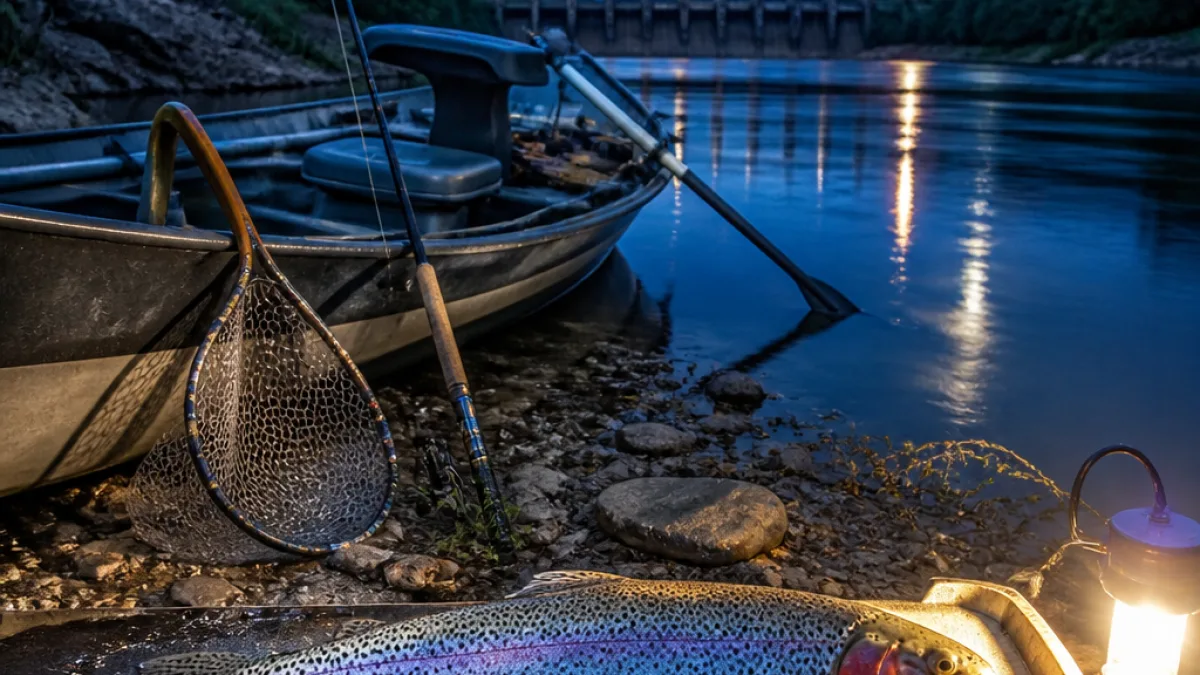
A White River angler and guide landed and released a near‑state‑record rainbow trout on the night of 29 July, showing that the river below Bull Shoals Dam continues to produce large fish prized by visiting and local anglers. The catch was recorded by Jesse Brison, who runs White River Nation guide service based in Cotter.
Brison said he had been studying where large trout are commonly taken from the White River; plaques in local restaurants and businesses, he noticed, often listed the Shipp’s Ferry section of river as the capture spot. He made a late‑night run even after finishing client trips for the day and found himself in the right place at the right time.
“The water level was falling, the moon was full, the air pressure was coming up… I had zero expectations of meeting that fish that night,” Brison said.
Details of the catch and its context
Brison described casting a topwater plug known as a “Mouse” when, on his second drift, the lure was taken hard. He estimated the fish at 17 pounds, 7 ounces. He practises catch‑and‑release; the fish was released after the capture.
| Item | Weight |
|---|---|
| Brison’s July 29 rainbow trout | 17 lb 7 oz |
| State record rainbow (White River, 1981) | 19 lb 1 oz |
| Brison’s previous biggest rainbow in that area | 6–7 lb (approx.) |
What this means for anglers and local guides
The catch highlights several factors that matter for those who make a living from river‑based tourism and for residents who value the White River as an asset. Firstly, it underlines that well‑managed trout fisheries can produce trophy specimens, which draws visiting anglers and supports guiding businesses such as White River Nation in Cotter. Secondly, the conditions Brison cited — falling water levels, full moon, rising air pressure — are reminders of how fine‑scale environmental factors affect fishing success.
- Tourism draw: Large, catch‑and‑release trout build the reputation of the river and attract anglers who spend on guides, accommodation and services.
- River health: Encounters with large fish are an indicator of a functioning ecosystem that can sustain older, larger trout.
- Guide practice: Brison’s routine of guiding multiple trips and still heading back out at midnight shows the demanding schedules and dedication of river guides.
Brison noted that he often guides three trips a day and that, while he might occasionally keep a client’s fish for a shore lunch, he largely adheres to catch‑and‑release practice. That conservation approach helps maintain fish stocks for both the local recreation economy and the ecology of the river.
Local perspective and questions for managers
White River residents who follow angling and tourism will be watching to see whether more large trout are taken from the Shipp’s Ferry reach. While individual catches do not substitute for scientific stock assessments, trophy fish attract interest and can spur conversations about habitat, water management and supporting the guide economy.
For communities reliant on river tourism, sustaining fish populations depends on multiple factors: flow regimes below Bull Shoals Dam, water quality, angling regulation and adherence to best practice by guides and visitors. Brison’s description of a once‑in‑a‑lifetime encounter serves as a reminder that natural assets remain central to local livelihoods and leisure.
Those wanting to learn more about guide offerings or angling conditions can contact White River Nation guide service in Cotter. The capture adds to the White River’s reputation as a notable trout river and will be discussed among anglers and local businesses alike in the coming weeks.