
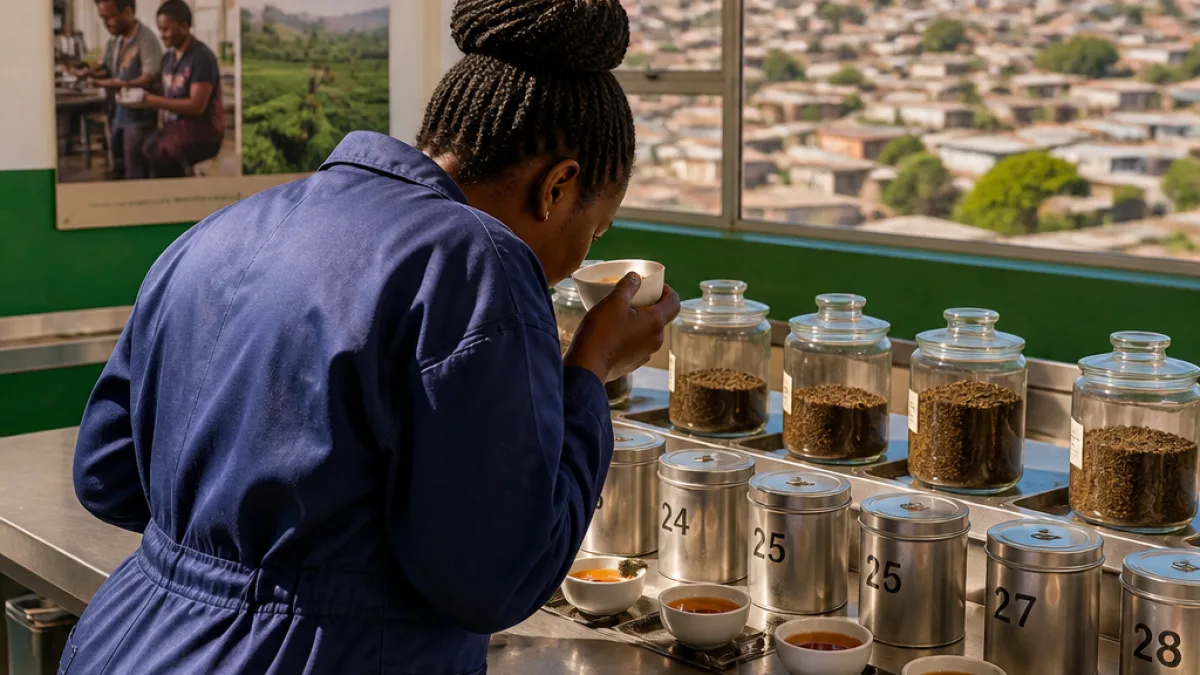
Umlazi — Hlengiwe Gcabashe never set out to become a tea professional. What began as a job in human resources has, over a few decisive years, led to a history-making career: she is now reported to be South Africa’s first Black female tea taster, buyer and blender.
From UKZN classroom to the tea factory
Gcabashe studied Public Administration and Management at the University of KwaZulu-Natal (UKZN) before taking a role as an HR administrator at a tea factory. She told presenter Carol Ofori on East Coast Radio that the move into tea tasting happened after she noticed a training opportunity at the factory — what initially appealed were the travel perks.
After a year of formal training and a competitive assessment, Gcabashe was selected to progress in the programme. Three years later, she had qualified as a fully fledged tea taster, buyer and blender. It was only when she walked into a tea auction, surrounded by hundreds of men, that it sank in how significant the achievement was for representation in the sector.
“Open the door, find your space, take your seat, and shine.”
The line above, offered by Gcabashe during the radio interview, has been shared widely as an encouragement to young Black girls from townships and small towns who may not know such career pathways exist.
Why this matters in Umlazi and beyond
The tea industry in South Africa remains male dominated at certain technical and buying levels, particularly in auction rooms and blending desks. Gcabashe’s presence in those spaces marks a visible shift and provides a local example of upward mobility through vocational training and on-the-job development.
For Umlazi — the township that raised her — the story resonates for several reasons:
- It highlights non-traditional careers that young people from townships can pursue beyond established professions.
- It demonstrates the value of workplace skills development and internal training programmes as routes to specialist work.
- It provides a public role model for girls considering careers in technical, agricultural or commodity-trading sectors.
Timeline of key steps
| Stage | Detail |
|---|---|
| Education | Studied Public Administration and Management at UKZN |
| Early career | Took a post as an HR administrator at a tea factory |
| Training | Completed a year of tea-tasting training and a competitive assessment |
| Progression | Three years later became a qualified taster, buyer and blender |
Gcabashe spoke to East Coast Radio presenter Carol Ofori about her journey. The station carried the interview and reported that she was told she was the first woman in the role when she entered a tea auction room full of men.
Practical takeaway for readers
Beyond the spotlight, Gcabashe’s story contains clear, practical lessons: employers can create accessible routes to specialist skills through internal training; workers from non-technical backgrounds can transition into niche roles; and visible representation can change perceptions about who belongs in particular industries.
She now hopes her path will encourage young Black girls from townships and small towns to explore careers they may never previously have considered. For Umlazi residents, the narrative is a reminder that opportunities can emerge in unexpected places — and that perseverance and curiosity often matter as much as formal study.
As the local community digests the significance of this milestone, the wider tea and commodity sectors may also be prompted to review how they identify and develop talent, ensuring that training pathways are open and visible to a broader cross-section of South Africa’s population.
The full radio conversation between Hlengiwe Gcabashe and Carol Ofori was reported on East Coast Radio.












