As universities and schools confront the arrival of powerful artificial intelligence tools, historians say we must recall the troubled past of IQ testing before treating modern claims about intelligence as neutral or biological facts. The recent public discussion about so-called artificial general intelligence highlights a deeper problem: what do we mean by "intelligence", and who gets to define it?
Historical context matters for present debates
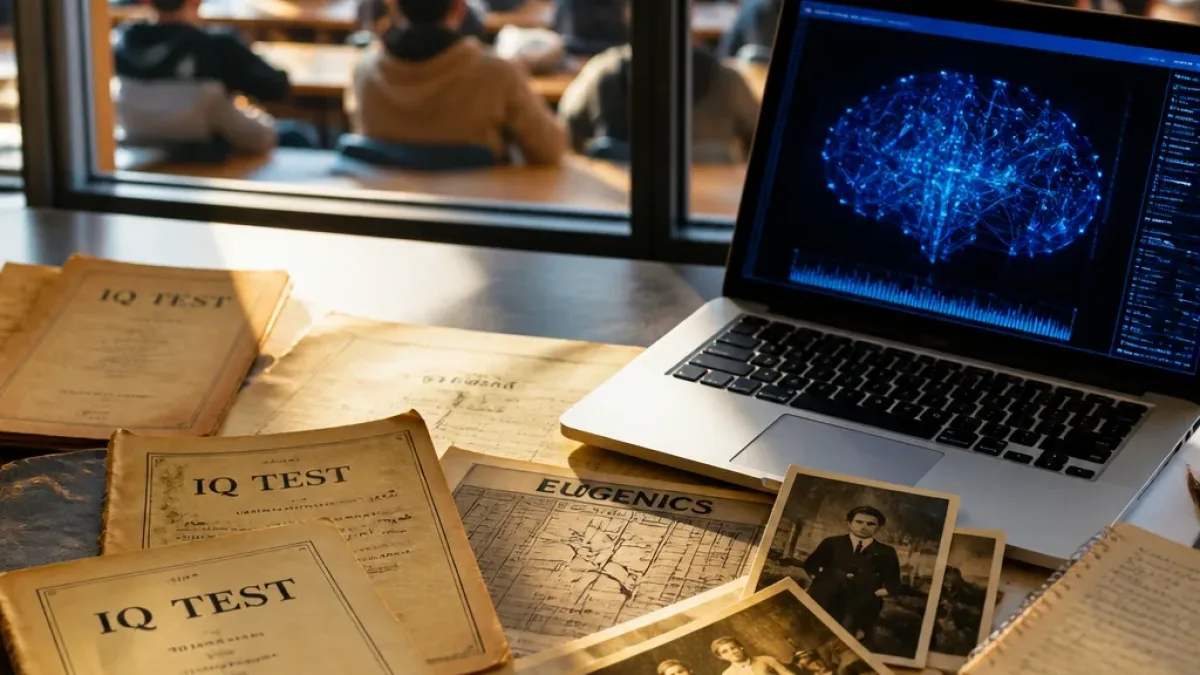
In a recent analysis, a scholar of higher education traced how early 20th-century university research institutionalised a version of intelligence that supported racist and eugenic ideas. The piece draws on historical work showing that some academic leaders used scientific-sounding measures to claim innate differences between groups.
The historian cites the testing of Chinese and Japanese Canadian students in British Columbia during the 1920s under the direction of university figures such as Peter Sandiford and George Moir Weir. That research, according to the account, was designed in part to "confirm" existing beliefs about Anglo‑white superiority and Asian inferiority. Historians named in the piece, including Gerald Thompson and Angus McLaren, connect these projects to the broader eugenics movement.
Why the past matters for AI and education policy
Contemporary discussions about AI — including public comments from tech leaders suggesting that future AI could surpass human "raw IQ" — often recycle unexamined assumptions about intelligence as an innate, measurable trait. The historian argues this is dangerous. Treating intelligence as a fixed biological quantity risks reproducing old patterns of exclusion and hierarchy when AI systems are used in admissions, assessment, or learning analytics.
"Intelligence" clearly has a high-stakes and worrisome future, but also a dark history.
For universities and schools, the lesson is pragmatic and ethical: responses to AI should be aligned with institutional missions and with an awareness of how measures of ability have been misused in the past.
Practical implications for South African education
South African educators face choices about how to adopt AI responsibly. The historical perspective suggests the following priorities:
- Contextualise metrics: Avoid treating single numeric measures as definitive assessments of learners' potential.
- Guard against bias: Scrutinise datasets and algorithms for embedded inequalities that can amplify historical disadvantages.
- Align with equity goals: Ensure AI tools support access, learning support and democratic values rather than sorting or excluding learners.
These steps emphasise that technology choices are also moral and pedagogical choices. AI can offer personalised learning or administrative efficiency, but without critical oversight it may also import and magnify the very assumptions that have harmed marginalised groups.
| Concern | Historical example |
|---|---|
| Scientific authority used to validate bias | IQ-style testing of Chinese and Japanese Canadian students in the 1920s |
| Institutional endorsement | University departments and research led by figures such as Peter Sandiford and George Moir Weir |
The article does not prescribe specific policies but urges a reflective approach: universities should not assume that AI‑driven measures are neutral or purely technical. Instead, they should interrogate the concepts embedded in tools and the social consequences of their use.
For teachers and parents, this history is a reminder to question ranking systems and to advocate for assessments that recognise different kinds of learning and potential. For policymakers, it signals the need for governance frameworks that require transparency, bias audits and alignment with education equity objectives.
As debates about the power and scope of AI continue, revisiting the legacy of IQ testing offers a cautionary tale. It shows how seemingly scientific instruments became instruments of exclusion — and why contemporary education systems must not let new technologies repeat those mistakes.