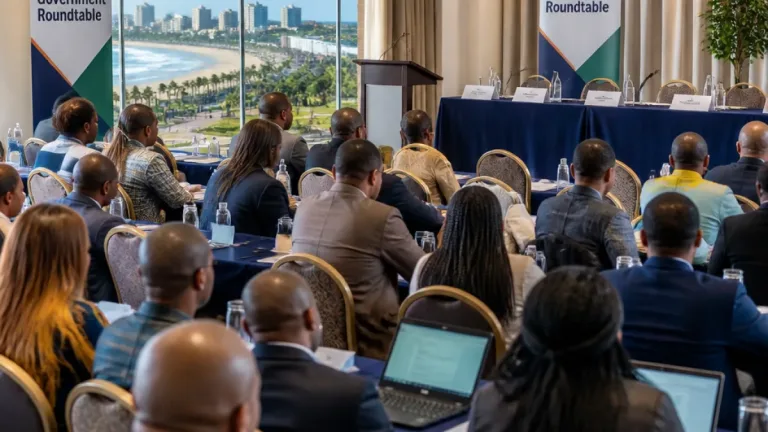

BLOEMFONTEIN — University of the Free State (UFS) Professor Sethulego Matebesi told a community seminar hosted by the Free State Legislature that blaming government alone will not resolve the country’s social challenges. He urged citizens, civic organisations and institutions to reflect on how the weakening of basic social structures contributes to disorder.
Focus on institutions, not only government
Speaking at the event in Bloemfontein, Matebesi set out a framework that places four foundational institutions at the centre of social stability: the family, religious institutions, education and politics. He said when these pillars are out of balance, communities are more likely to experience chaotic outcomes.
“I want for us just to pause for one moment. The way you find yourself in life, in society, they are all basic institutions. These institutions are your family, religious institutions, education, and college. When you find any imbalance in these institutions, that’s when you’ll find many chaotic situations.”
His comments formed part of a broader call for reflection and collective action to tackle the root causes of issues affecting communities, rather than attributing them exclusively to government failure. The seminar was convened by the Free State Legislature to engage residents, researchers and civil society on provincial concerns.
What Matebesi identifies as the building blocks
Matebesi emphasised the complementary roles of different social actors. He said government has an important role in service delivery and policymaking, but families, schools and faith communities also shape behaviour, norms and resilience at grassroots level.
- Family — the first site of socialisation and moral guidance.
- Education — schools and colleges that shape skills, civic values and prospects.
- Religious institutions — community anchors that provide moral frameworks and social support.
- Politics — governance systems that manage resources, rights and collective decision-making.
By urging attention to all four, Matebesi pointed to the need for coordinated responses that combine public policy with community-led initiatives.
Implications for provincial policy and civic action
The message has practical implications for the Free State, where service delivery pressures, unemployment and social strain feature in local politics. If the balance between these institutions erodes, problems such as youth disenfranchisement, family breakdown and weakened civic oversight can become more pronounced.
Strengthening institutions does not absolve government of responsibility, Matebesi implied, but it broadens the locus of responsibility and suggests different entry points for interventions. For example, education programmes that teach civic responsibility, community faith networks that offer youth mentorship, and family-support services could all complement municipal and provincial initiatives.
How communities can respond
Matebesi’s remarks at the legislature offered several practical takeaways for community actors and policymakers:
- Invest in early-childhood and family-support services to shore up the first institution where values are formed.
- Prioritise civic education and life skills in schools to strengthen the educational role in social cohesion.
- Engage religious and community leaders in structured prevention and support programmes for at-risk youth.
- Ensure political accountability remains focused on service delivery while enabling community participation in policy design.
| Institution | Role in social stability |
|---|---|
| Family | Primary socialisation and moral guidance |
| Education | Skills development and civic values |
| Religious institutions | Community support and ethical frameworks |
| Politics | Coordination of resources and public accountability |
These elements underline a central point of the seminar: tackling social problems requires both institutional strengthening and collaborative action across sectors.
Conclusion
The Free State Legislature’s seminar provided a platform for a measured reminder that government is one actor among many in shaping social outcomes. Professor Matebesi’s appeal for reflection and collective responsibility reframes public debate away from singular blame and towards shared solutions — a perspective that may influence community programmes and provincial policy discussions in the months ahead.
Further details of any follow-up recommendations from the legislature were not included in the seminar report provided at the event.