
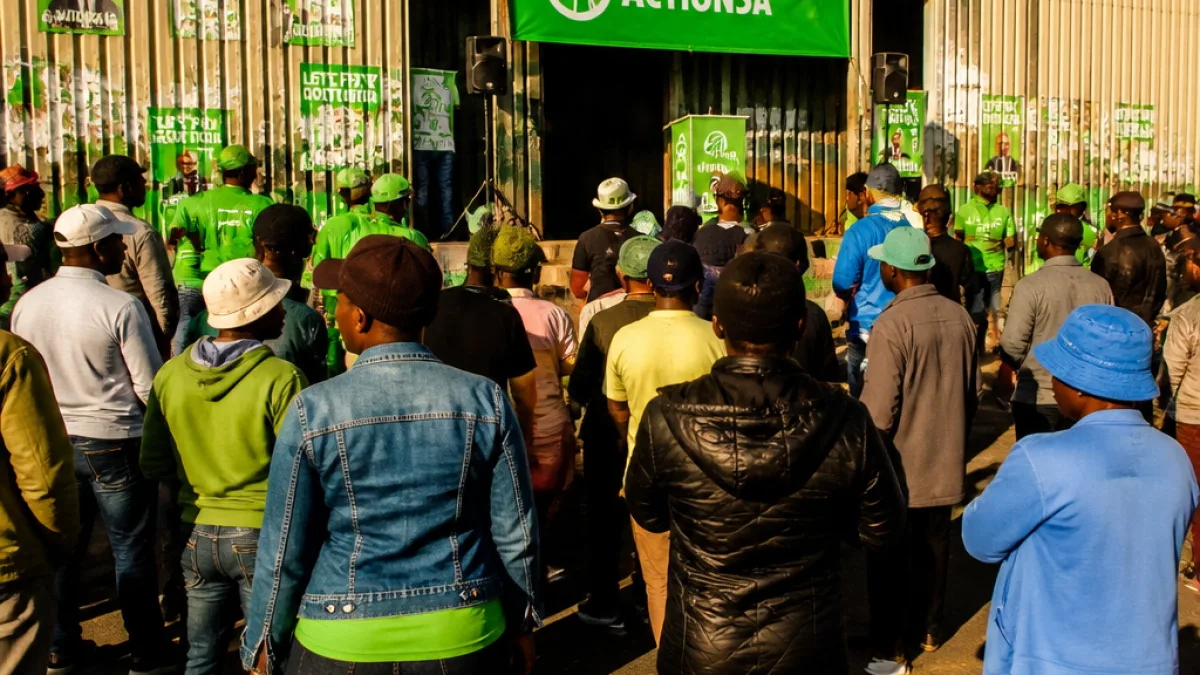
Herman Mashaba, ActionSA leader and mayoral candidate for Johannesburg, has told audiences that no candidate can win the metro without the support of Soweto, dismissing veteran Democratic Alliance (DA) politician Helen Zille’s chances of becoming mayor.
Township support seen as decisive
Mashaba made the comments in an interview and during public appearances reported this week, arguing that Soweto — the city’s largest township and a key vote pool — will determine who governs Johannesburg after the election. He was blunt about his view of Zille’s prospects, saying she “will not be mayor of Johannesburg, not even in her next life,” a remark that underlined the tone of his campaign messaging in the city.
Speaking to audiences and media, Mashaba framed his pitch around a return to tough municipal policies on a range of civic issues. The campaign has emphasised interventions on hijacked buildings, undocumented migrants and broader public order measures — issues he says resonate with township residents worried about safety, service delivery and local economic opportunity.
“If she thinks she will win Joburg without the support of Soweto, she must be living in another world,”
The line of attack is part of a wider effort to position ActionSA as the kingmaker in the metro. Mashaba’s comments also follow months of intense contestation over voter mobilisation in townships across Gauteng, where political parties are vying for both ward-level control and proportional-representation support.
What Mashaba is promising
Mashaba’s campaign has set out several hardline priorities that he says will appeal to voters in Soweto and other townships. The key themes reported include:
- Crackdown on hijacked buildings: Tightened enforcement and interventions to restore safe, habitable buildings.
- Stricter stance on undocumented migrants: Measures to address perceived competition for jobs and services.
- Service delivery focus: Promises to reshape municipal priorities to better reach township communities.
These positions are being advanced against a backdrop of broader political manoeuvring in Johannesburg, where coalition possibilities remain fluid and no single party enjoyed clear dominance after previous local elections. Soweto’s large and diverse electorate is often pivotal in shaping coalition maths.
Local consequences for Soweto voters
For Soweto residents, the stakes are concrete. Mayoral control affects how the city budgets for services, manages housing and deals with law enforcement at street level. Ward councillors in Soweto could find themselves courted by multiple parties seeking to convert local support into majority control at City Hall.
| Issue | Mashaba/ActionSA stance |
|---|---|
| Hijacked buildings | Strong enforcement, reclaiming buildings for safe use |
| Undocumented migrants | Hardline measures to curb perceived negative impacts |
| Service delivery | Prioritise township access and responsiveness |
Observers say such messages aim to mobilise voters who feel neglected by the mainstream parties. The DA’s Helen Zille, whose candidacy has generated heated debate, continues her own campaign efforts across the metro; Mashaba’s remarks are likely to sharpen contestation in wards across Soweto where margins can be slim.
What to watch before the vote
Residents should watch for:
- Ward-level candidate slates and how parties deploy resources in Soweto.
- Coalition signalling after the vote: which parties are prepared to partner with ActionSA or the DA.
- Local service-delivery promises and the steps proposed to tackle hijacked buildings and safety concerns.
As the campaign intensifies, Soweto’s role as a political bellwether for Johannesburg has again been put in the spotlight. Parties are recalibrating messages to reflect township priorities, and residents can expect a sharper focus on local issues as election day approaches.
Reporting on the city’s politics will continue to track how these promises translate into policy detail and how they influence ward-level voting patterns across Soweto.












