
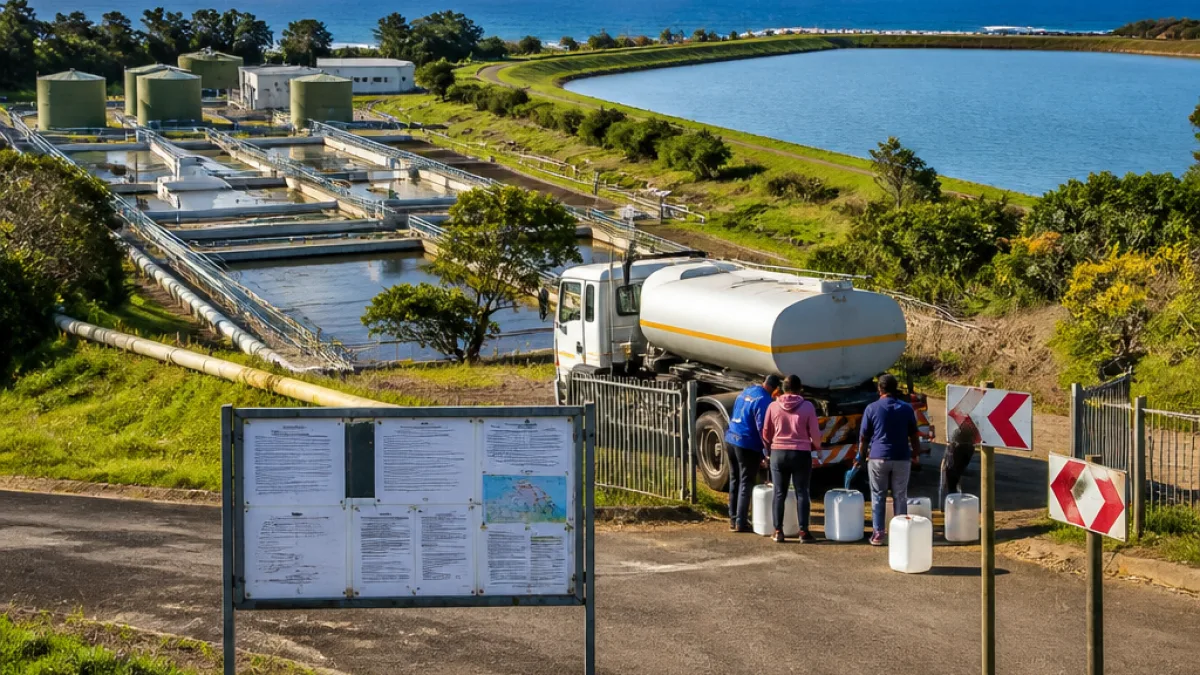
The KwaZulu‑Natal South Coast has been placed under a 10% water supply restriction, the Department of Water and Sanitation (DWS) said on Friday, after its annual review of regional supply systems.
Restriction, duration and scope
The restriction will run for the department’s 2026/2027 operating year, from 1 May 2026 to 30 April 2027, and reduces the South Coast allocation to 13 megalitres per day. The South Coast supply system serves parts of the uGu District Municipality, including Hibberdene and Port Shepstone.
DWS spokesperson Wisane Mavasa said the move follows completion of the Annual Operating Analysis (AOA) for the uMngeni, North and South Coast Water Supply Systems and consultations at the Stakeholders Operating Forum (SOF).
"Although the South Coast Water Supply System was at 97% storage at the start of the operating year, water demand is currently exceeding the long‑term sustainable yield of the system," Mavasa said.
Why restrictions were needed
Mavasa noted that summer rainfall and runoff from October 2025 to April 2026 were lower than the previous year, reducing available inflows. While the uMngeni system began the year effectively full at 99.5% storage, the South Coast’s present demand threatens the sustainable yield of its system.
The DWS said the restrictions are precautionary measures to protect the resource and keep supply reliable through the operating year. The department will continue to monitor storage levels, river flows and pipeline performance and may change restrictions if conditions improve.
Triggers for easing or lifting restrictions
According to the DWS, restrictions could be lifted or reduced under any of the following circumstances:
- Successful reinstatement of water supply from the Mpambanyoni Scheme
- South Coast dams reaching full capacity and beginning to spill
- Consistent maintenance of 4.6 megalitres per day supply from the South Coast Pipeline
Local impact and practical advice
Communities in Hibberdene, Port Shepstone and surrounding areas should expect tighter allocations and are urged to conserve water. Households and businesses can reduce consumption by prioritising essential uses, fixing leaks promptly and avoiding non‑essential outdoor water use.
Municipalities that draw from the uMngeni system — including eThekwini, uMgungundlovu, Msunduzi and iLembe — were not given restrictions because the uMngeni system started the operating year nearly full. Nonetheless, the DWS reiterated that reducing water use remains important to guard against unexpected shortages.
Storage snapshot
| Water Supply System | Storage at start of operating year |
|---|---|
| South Coast | 97% |
| uMngeni | 99.5% (effectively full) |
What residents should watch for
- Municipal notices or by‑laws announcing local watering schedules or additional restrictions.
- Reports from the DWS about progress on the Mpambanyoni Scheme or pipeline deliveries.
- Updates from uGu District Municipality on any changes to supply or emergency measures.
Residents who rely on boreholes, tanked supply or alternative sources should still conserve where possible: tanker deliveries are limited and priorities during shortages are usually domestic essential use and critical services.
The DWS said it will keep monitoring conditions and review restrictions during the year. For now, the 10% reduction is a measure designed to spread available water across the season and protect reservoirs against further pressure.
Local municipalities and community leaders are being asked to work with the department to ensure the restrictions are implemented fairly and to help households access information on water use and savings.














