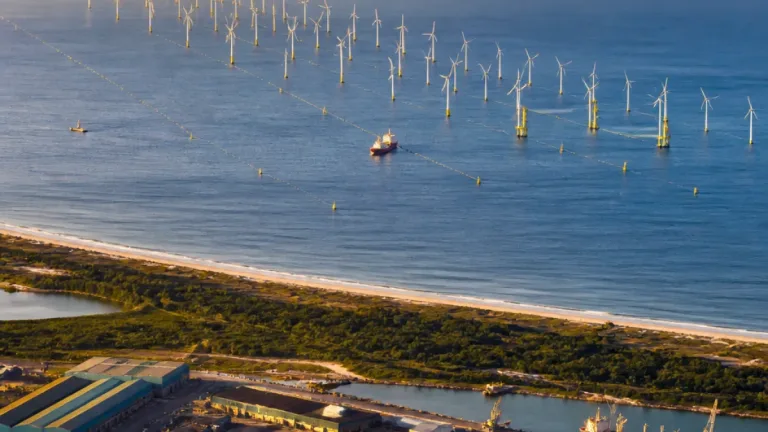

Seriti Green has officially commissioned the 155 MW Ummbila Emoyeni wind farm in Mpumalanga, marking the province’s first inland utility-scale wind facility and signalling a notable shift in the local energy landscape.
Large-scale renewables arrive inland
The project, located between Bethal and Morgenzon, is a R5 billion development comprising 25 Goldwind GWH182 turbines, each rated at 6.2 MW and equipped with rotor diameters of 183.5 metres. It is expected to generate about 525 GWh of clean electricity annually, according to project information released by Seriti Green.
Project infrastructure includes the Vunumoya transmission system, built by Seriti at a cost of around R1.2 billion. The main transmission substation was completed in 17 months and provides the connection required to evacuate electricity from the wind farm into the national Eskom grid.
How the power will be used
Seriti Green says approximately one third of Ummbila Emoyeni’s output will be allocated to support Seriti Resources’ coal mining operations. The remaining two thirds will be sold to corporate customers through electricity wheeling arrangements involving Eskom and private market players including Energy Exchange of Southern Africa, Etana and NOA.
This arrangement places the project at the intersection of corporate energy procurement and the national grid, illustrating how privately developed renewables are beginning to relieve some industrial demand and diversify supply sources within Mpumalanga.
Cultural and regional notes
One of the turbines has been wrapped in traditional Ndebele artwork and is being referred to as The Ambassador, a visual connection between the development and local cultural heritage. Seriti Green also describes Ummbila Emoyeni as among the largest grid-ready wind farms in the region south of Kenya.
Phased investment and wider plan
The wind farm is part of a broader Seriti Green programme in Mpumalanga that combines wind, solar and battery storage. Seriti has committed an additional R10 billion toward two further phases, taking its planned investment in the province’s renewable programme to R25 billion.
| Item | Figure |
|---|---|
| Installed capacity | 155 MW |
| Annual generation (expected) | 525 GWh |
| Number of turbines | 25 (Goldwind GWH182 6.2 MW) |
| Project cost | R5 billion |
| Transmission investment | R1.2 billion (Vunumoya) |
Local implications
For Mpumalanga — a province long associated with coal mining and electricity-intensive industries — the arrival of an inland, utility-scale wind farm is significant. The project demonstrates how renewable generation can be sited away from coastal wind belts and still deliver commercial-scale output where industrial demand exists.
By allocating a portion of the output to its own mining operations, Seriti Resources aims to reduce the carbon intensity of those facilities. Meanwhile, wheeling the balance to corporate offtakers through Eskom and private traders creates another revenue pathway that does not depend solely on state procurement rounds.
That model may be closely watched by other industrial players in the province seeking ways to stabilise energy costs and meet corporate sustainability commitments amid ongoing national supply challenges.
What this means for residents and stakeholders
- Industrial decarbonisation: one third of generation earmarked for Seriti’s mining operations will reduce those operations’ grid reliance.
- Grid connection: the Vunumoya substation strengthens transmission capacity around Bethal–Morgenzon, potentially aiding other projects.
- Local visibility: The Ambassador turbine and cultural artwork create a public-facing symbol linking renewable infrastructure to local identity.
As Seriti Green moves to additional phases, municipalities, local businesses and communities will be watching how the company balances further infrastructure development, employment opportunities and environmental considerations. The expansion plans place Mpumalanga on a trajectory toward a more mixed energy economy, though the scale-up and impacts will depend on future project approvals, grid capacity and the commercial terms secured with offtakers.
Reporting on energy developments in the province will continue to focus on how new projects interface with Eskom, industrial demand, and local communities, and on whether the promised investments translate into sustained local benefit.