
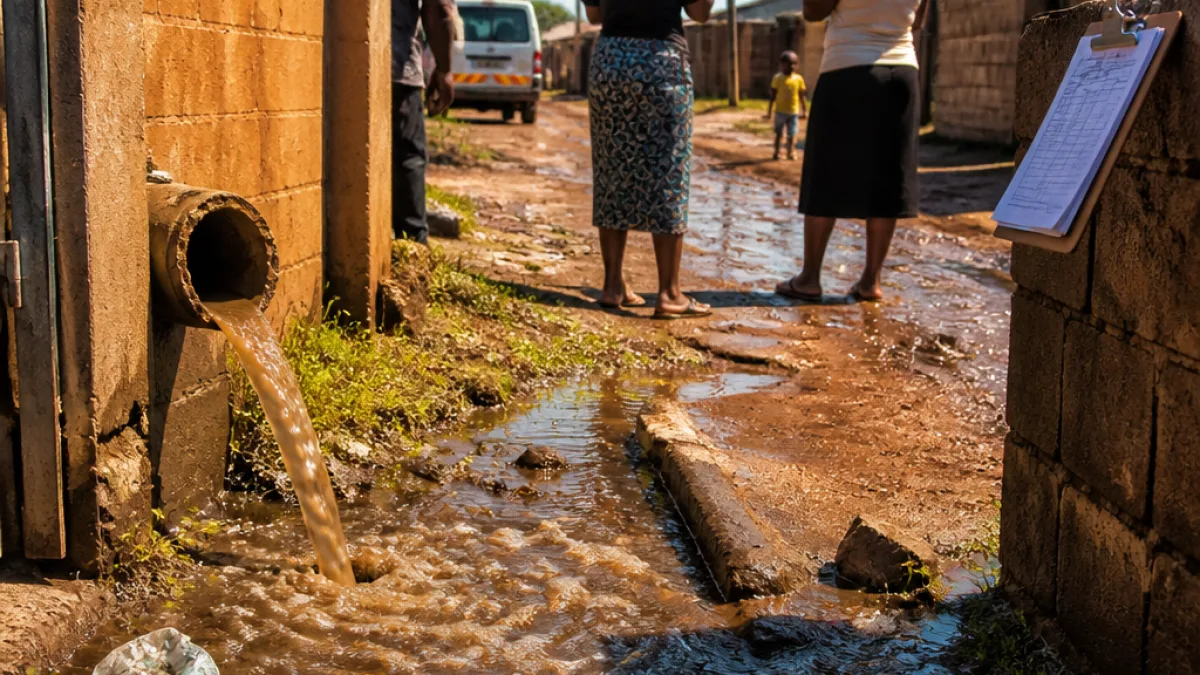
MAHIKENG — The South African Human Rights Commission (SAHRC) has raised the alarm over recurrent sewage spillages in parts of the North West, saying the problem is widespread, risks public health and infringes residents' constitutional right to an environment that is not harmful to their wellbeing.
Communities report chronic stench and respiratory illness
Residents in affected areas, including Motlhabeng Village and parts of Mahikeng, say the relentless smell and raw sewage have had a tangible impact on daily life and health. The SAHRC briefing follows complaints from communities who say sewer pipe bursts and inadequate wastewater management have persisted for months.
Sixty-five-year-old Motlhabeng resident Kgomotso Makabanyane said the spillages had direct health consequences. She told the SAHRC that after three months of living with raw sewage near her home she developed breathing problems and was later diagnosed with a respiratory condition.
"My lungs were affected after living with the sewage for three months. I was diagnosed with asthma and it was caused by the sewage because the smell was so bad we could not even eat in the house," Makabanyane said.
Community leader Thato Wa Magogodi of Seweding, Mahikeng, said residents in ward 11 and ward 20 need immediate health interventions and warned that the spillages had exposed people to dangerous biohazards.
Expert warns of airborne risks from wastewater
An expert from the South African Medical Research Council (SAMRC), Sizwe Nkambule, told the SAHRC there is a potential risk of respiratory illness where wastewater contaminants become airborne.
Nkambule said aerosolisation — where liquid droplets from agitated wastewater disperse into the air — can carry pathogenic micro-organisms or biological toxins. While the long-term health outcomes of chronic exposure in residential settings remain under-studied, he cautioned that the potential for respiratory impacts exists.
SAHRC frames issue as rights violation
The SAHRC has characterised ongoing sewage spillages as more than a nuisance: they constitute a breach of the constitutional guarantee to an environment that is not harmful to health and wellbeing. The commission's intervention signals the problem has moved beyond isolated incidents to a systemic failure requiring municipal and provincial attention.
| Location | Reported impact |
|---|---|
| Motlhabeng Village, Mahikeng | Resident diagnosed with respiratory condition after months of exposure |
| Ward 11 and Ward 20, Mahikeng | Community reports of stench, potential biohazard exposure |
Practical concerns and calls for action
Residents and community leaders are calling for urgent municipal repairs, improved wastewater treatment, and targeted health interventions for those affected. The SAHRC's involvement may prompt formal investigations and remedial orders if authorities do not act swiftly.
Key community concerns include:
- Immediate repairs: fixing leaking pipes and blocked sewers to stop further spillages;
- Health screening: assessing and treating residents exposed to raw sewage, particularly those with respiratory symptoms;
- Long-term upgrades: investment in wastewater infrastructure and regular maintenance to prevent recurrence.
Local clinics and primary healthcare facilities are the first point of contact for residents who develop breathing problems, eye irritation or gastrointestinal symptoms after exposure. Authorities have not released a coordinated health response plan in the material provided by the SAHRC.
What this means for labour and vulnerable households
The most severe impacts fall on older residents, children and chronically ill people who are more likely to suffer complications from respiratory exposure. For households already under economic pressure, medical costs and lost income from illness deepen hardship. Community leaders say informal settlements and low-income neighbourhoods are disproportionately affected because of ageing infrastructure and limited municipal capacity.
The SAHRC statement is likely to push provincial and municipal officials to provide a public response and concrete timelines for repairs and health measures. If the situation does not improve, the commission could pursue formal remedies to compel a response under South Africa's human rights framework.
For now, residents in Mahikeng are continuing to contend with the smell and health fears while waiting for municipal action and a clear, coordinated plan to address both the infrastructure collapse and its consequences for public health.












