
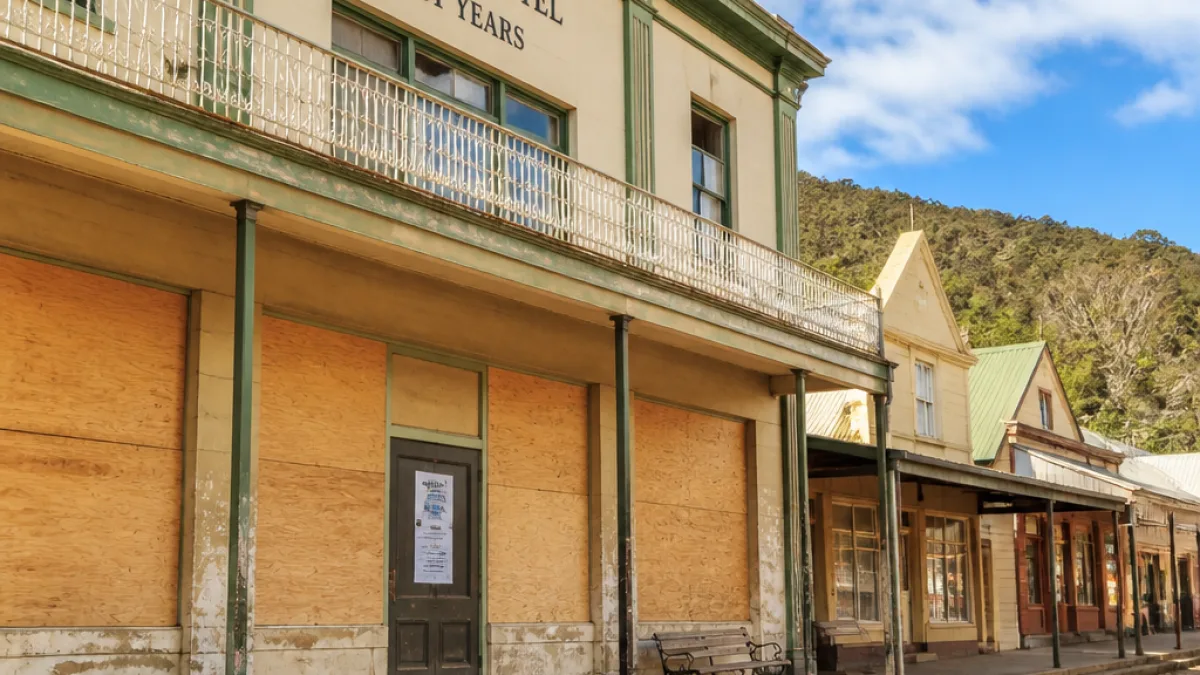
The Provincial Department of Public Works, Roads and Transport is facing renewed criticism after reporting that bids to re-open the historic Royal Hotel, Pilgrim’s Rest, were non-responsive, forcing the tender to be re-advertised and prolonging the closure of the 131‑year‑old property.
Heritage site left without an operator
Pilgrim’s Rest, declared a UNESCO World Heritage Site in 2004, relies on cultural tourism and limited accommodation options. The department told the Portfolio Committee on Public Works, Roads and Transport in a progress report — submitted this week — that no submitted bids met the advertised tender’s compliance requirements. The Bid Adjudication Committee recommended the tender be re-advertised.
The stalemate has left the Royal Hotel closed for extended periods, removing a key accommodation option from a town that already faces a shortfall of beds for visitors. The Democratic Alliance (DA) in Mpumalanga has repeatedly flagged administrative delays, tender re-advertisements and failed tenant arrangements since 2016, saying the problems have damaged tourism and local economic development.
Jobs lost and operations disrupted
The department’s report recalls a string of tenancy problems. In September 2022, Kruger on Sabie (KOS) took over operations after the Mpumalanga Regional Training Trust’s lease ended. KOS initially absorbed the hotel’s workforce of about 50 employees, but later sought to change staffing arrangements to a shift system when operating costs proved unsustainable. That dispute led KOS to vacate the premises and the matter has not been resolved, according to the progress report.
With the province recording a headline unemployment rate of 48.3% — the third highest among provinces after North West and the Eastern Cape — the prolonged closure of a historic hotel carries local economic consequences beyond tourism, affecting household incomes in the town.
Administrative backlog and procurement hurdles
The DA’s provincial office has pointed to a long-running administrative backlog and repeated re-advertisements by the Department of Public Works, Roads and Transport as key problems. The department confirmed that previously received bids were non-responsive in terms of compliance, but did not in the progress report name the specific compliance shortfalls or indicate a timetable for the re-advertisement and awarding of a new lease.
Local tourism stakeholders say losing available rooms at the Royal Hotel undermines Pilgrim’s Rest’s ability to host visitors, which in turn reduces spend at other businesses in the town.
- Key actors: Mpumalanga Department of Public Works, Roads and Transport; Bid Adjudication Committee; Kruger on Sabie (KOS); Mpumalanga Regional Training Trust (MRTT).
- Impacts: Extended hotel closure, job losses, reduced accommodation for tourists, reputational risk for a UNESCO‑listed town.
- Previous concerns: DA raised issues in the Provincial Legislature as far back as 2016 about administrative delays and tender problems.
Timeline
| Year | Event |
|---|---|
| 2004 | Pilgrim’s Rest declared a UNESCO World Heritage Site. |
| 2016 | DA raised concerns in the Provincial Legislature about stalled processes and tenders related to the Royal Hotel. |
| September 2022 | Kruger on Sabie (KOS) assumed operation after MRTT lease ended; later vacated following staffing and affordability disputes. |
| August 2026 | Department reported bids non‑responsive and BAC recommended re‑advertisement, according to a progress report submitted to the portfolio committee. |
What’s next and what residents should expect
The department has recommended re-advertising the tender, which means the hotel will remain closed while officials run another procurement cycle. There is no timetable in the reported progress update for the re-advertisement, bid evaluation or the appointment of a new operator.
For residents and small businesses that rely on tourism, that uncertainty signals continued pressure on incomes and local trade. Until an operator is appointed and the hotel recommences operations, visitors to Pilgrim’s Rest will face fewer overnight options and may choose nearby towns with available accommodation.
Local stakeholders have argued that the provincial government should fast‑track compliance support for potential bidders and consider transitional measures that could return at least part of the hotel to use while longer‑term lease processes continue.
The situation highlights the intersection of heritage preservation, tourism development and procurement efficiency. For Pilgrim’s Rest — a town whose appeal depends on its history and visitor experience — resolving the Royal Hotel’s operating status remains urgent for both cultural and economic reasons.