
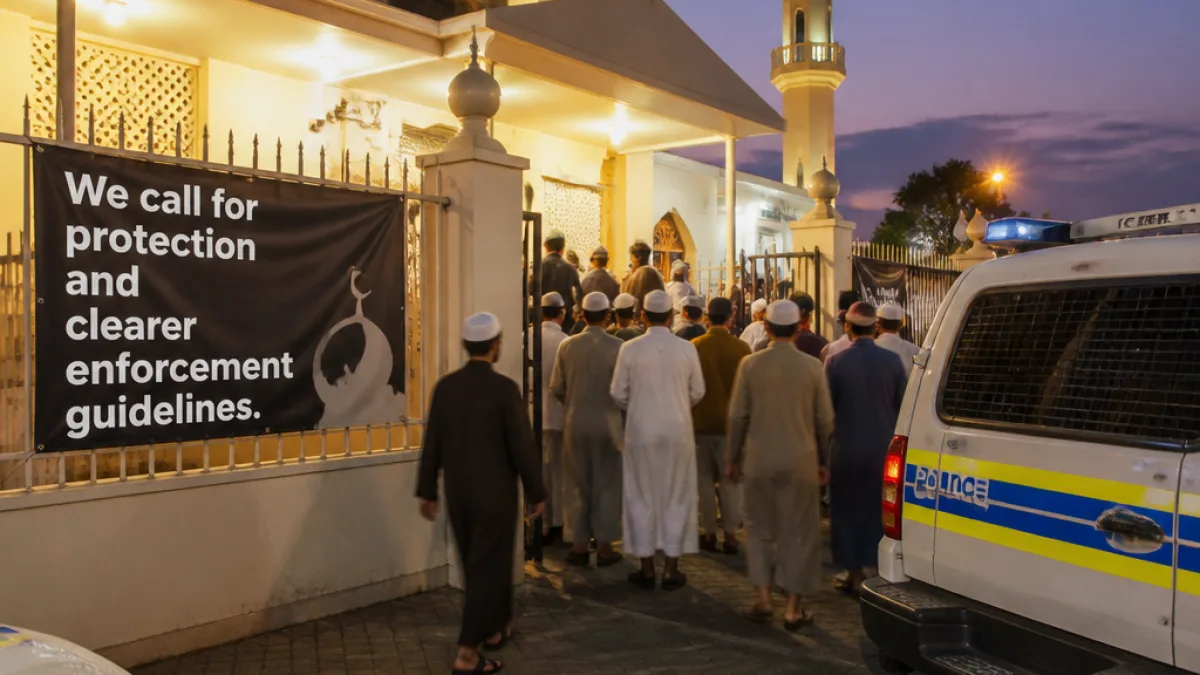
Community leaders seek safeguards after tensions at Pietermaritzburg mosque
Pietermaritzburg — Muslim community leaders have asked the national Police Ministry to set clearer rules for immigration enforcement near places of worship after unrest at mosques in Pietermaritzburg, Chatsworth and Johannesburg. The United Ulama Council of South Africa (UUCSA) says the incidents have unsettled worshippers and risk damaging trust between Muslim communities and law enforcement.
The council’s secretary general, Yusuf Patel, reiterated that UUCSA supports the enforcement of South African immigration laws but warned that religious sites should not become regular venues for high-friction immigration operations. He said such actions can create fear among worshippers and undermine the sanctity of mosques.
“The manner in which the laws are enforced must remain consistent with the Constitution's foundational values: human dignity, freedom of religion, and the right to security,” said Patel, according to the council's communication.
UUCSA has written to acting Police Minister Firoz Cachalia requesting a meeting to discuss how best to balance public safety and constitutional rights during immigration enforcement. The council is calling for clear SAPS guidelines to avoid enforcement at places of worship except where operationally necessary.
According to the UUCSA statement, tensions flared when protesters allegedly attempted to force their way into mosques, claiming they wanted to remove worshippers they believed to be undocumented foreign nationals. The council emphasised the need to distinguish between places of worship actively harbouring undocumented individuals and those where undocumented people simply attend services.
- Request for guidelines: UUCSA wants SAPS to avoid conducting immigration enforcement at mosques unless operational necessity is clearly demonstrated.
- Meeting sought: A meeting with the Police Ministry has been requested to discuss how to protect constitutional rights while maintaining public safety.
- Community impact: The council warned that enforcement operations around sacred spaces risk creating fear and undermining trust.
Local mosque leaders and congregants have not been individually named in the UUCSA release, but the council’s concern reflects broader unease in affected communities. The incidents in Chatsworth, Pietermaritzburg and Johannesburg illustrate how immigration enforcement can become entangled with public protests and communal tensions.
| Location | Concern reported |
|---|---|
| Pietermaritzburg | Protesters allegedly attempted to enter mosques during immigration enforcement operations |
| Chatsworth | Similar incidents involving attempts to remove worshippers believed to be undocumented |
| Johannesburg | Tensions reported around mosque and immigration activity |
UUCSA stressed its support for the State’s constitutional mandate to regulate and enforce immigration legislation, but it argued that enforcement must respect the rights to human dignity, freedom of religion and security. The council pointed to historical practice, locally and internationally, where places of worship have functioned as sanctuaries of peace and community support.
The request for SAPS to adopt specific operational guidelines at places of worship aims to reduce the possibility of confrontations that could escalate into wider communal unrest. It also signals a desire to preserve lines of communication between Muslim communities and law-enforcement bodies.
For Pietermaritzburg residents, the UUCSA appeal highlights two practical concerns: ensuring congregants can attend services without fear, and making certain that immigration enforcement proceeds in a way that does not inflame local tensions. The council’s requested meeting with the Police Ministry will be watched closely by faith leaders and civic organisations in the city.
SAPS or the Police Ministry have not issued a public response in the UUCSA release. The council’s communication seeks a framework that balances the rule of law with constitutional protections, and it asks authorities to limit enforcement at sacred spaces to instances where it is operationally unavoidable.














