
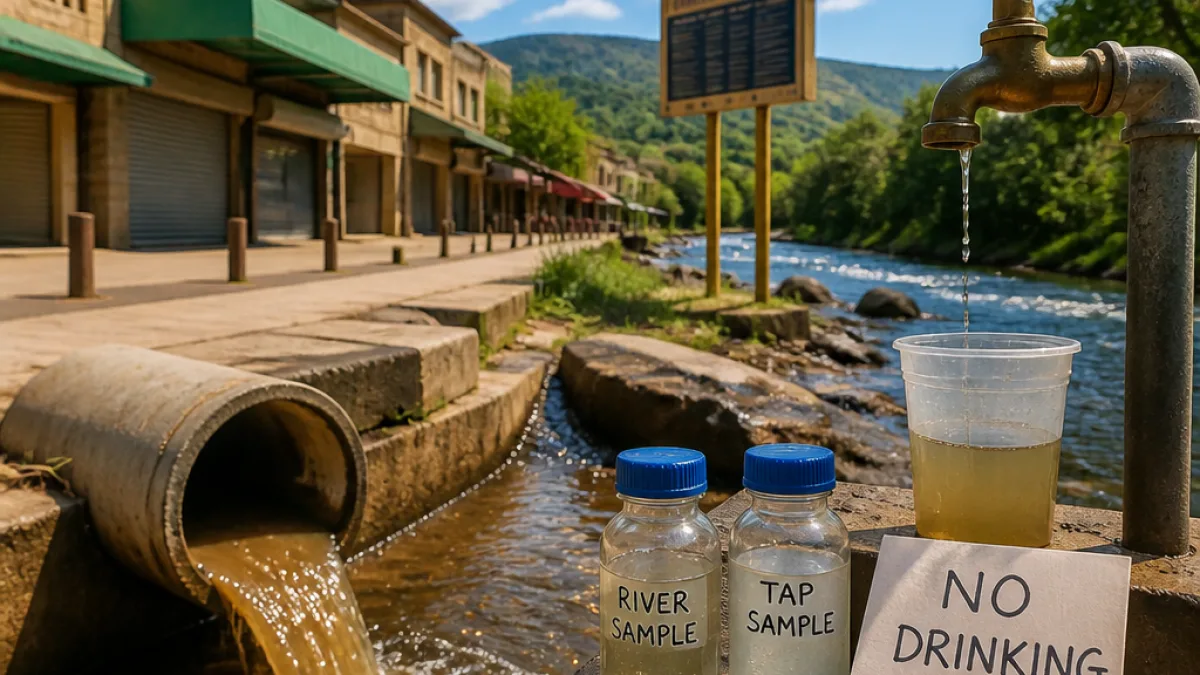
The landscape that draws tourists to Mpumalanga’s Panorama Route is under threat as a sustained collapse in basic services in the Thaba Chweu local municipality is producing unsafe drinking water and visible sewage pollution in town centres.
Tests show contamination and low disinfectant
Independent tests carried out by iLab in collaboration with AfriForum found coliform bacteria at levels described as unsafe, while alkalinity registered at a warning level. A sample taken from a tap in Mashishing (formerly Lydenburg) showed the chlorine residual to be zero, indicating no effective disinfection at that point in the distribution system.
"The results indicated the water was not safe for consumption," said Ferrial Adam, executive director of WaterCan, describing the findings as indicative of failures in water treatment.
During a visit to Mashishing, sewage was observed spilling onto streets and flowing into a local river, a visible sign that the municipality’s sanitation infrastructure is failing or being poorly maintained. Photographs and on-site reports captured overflowing manholes and effluent discharge close to residential and commercial areas.
Local economy and public health at stake
The Thaba Chweu municipal area includes Lydenburg, Graskop, Sabie and Pilgrim’s Rest — towns that rely heavily on tourism. Business owners are reporting declining visitor confidence as concerns mount over water quality and hygiene. Stakeholders warn that if the problems are not corrected quickly, the tourism economy could be damaged, with knock-on effects for jobs and small enterprises.
DA councillor Marius Opperman urged the municipal administration and mayor Friddah Nkadimeng to urgently provide a remedial plan and to be transparent about water treatment processes.
What the tests found
| Location | Parameter | Result |
|---|---|---|
| Mashishing (Lydenburg) | Chlorine residual | Zero |
| Various points in Thaba Chweu | Coliform bacteria | Flagged as unsafe |
| Various points in Thaba Chweu | Alkalinity | Warning level |
Calls for accountability and remedial action
WaterCan’s Ferrial Adam said the first steps should be to investigate the functioning of the water treatment works and determine why water entering the distribution network is not meeting standards. She called for clear accountability and remedial measures.
- Residents should avoid drinking untreated tap water until authorities confirm it is safe.
- Use boiled or bottled water for drinking and food preparation where possible.
- Report visible sewage spills and contaminated water points to the municipality’s emergency services and to the provincial department of cooperative governance.
Opperman pointed to the legal framework: water supplied for human consumption must comply with SANS 241, which sets limits for microbiological, chemical and aesthetic parameters. He noted the department of water and sanitation requires regular monitoring — a process he says the municipality must be held to.
What residents and visitors need to know
Until clear evidence is presented that water treatment systems are functioning and that chlorination levels are adequate, residents should treat or avoid tap water for drinking. Tourists should check with accommodation providers about water safety and consider using bottled water for drinking and brushing teeth. Businesses that depend on a clean water supply — such as guesthouses, restaurants and tour operators — face immediate operational risks if the situation worsens.
Next steps
Political parties, community activists and civic groups have urged provincial and national authorities to intervene and to coordinate a rapid response. The immediate priorities are:
- Comprehensive water-quality testing across the municipal network and publication of results.
- Rapid repairs or temporary measures (such as bulk chlorination points) to restore safe supplies.
- Emergency action to stop sewage discharges and protect rivers and public areas.
With peak tourist season approaching for parts of the Panorama Route, restoring reliable, safe water and functional sanitation is essential both for protecting public health and for supporting the local economy. Municipal officials were contacted for comment; the municipality has been urged to publish a clear plan and timeline for addressing the faults identified by independent testing.
The crisis in Thaba Chweu underscores a broader challenge facing several municipalities in the province: maintaining ageing infrastructure and meeting regulatory water quality standards while safeguarding livelihoods that depend on clean water and a healthy environment.















