
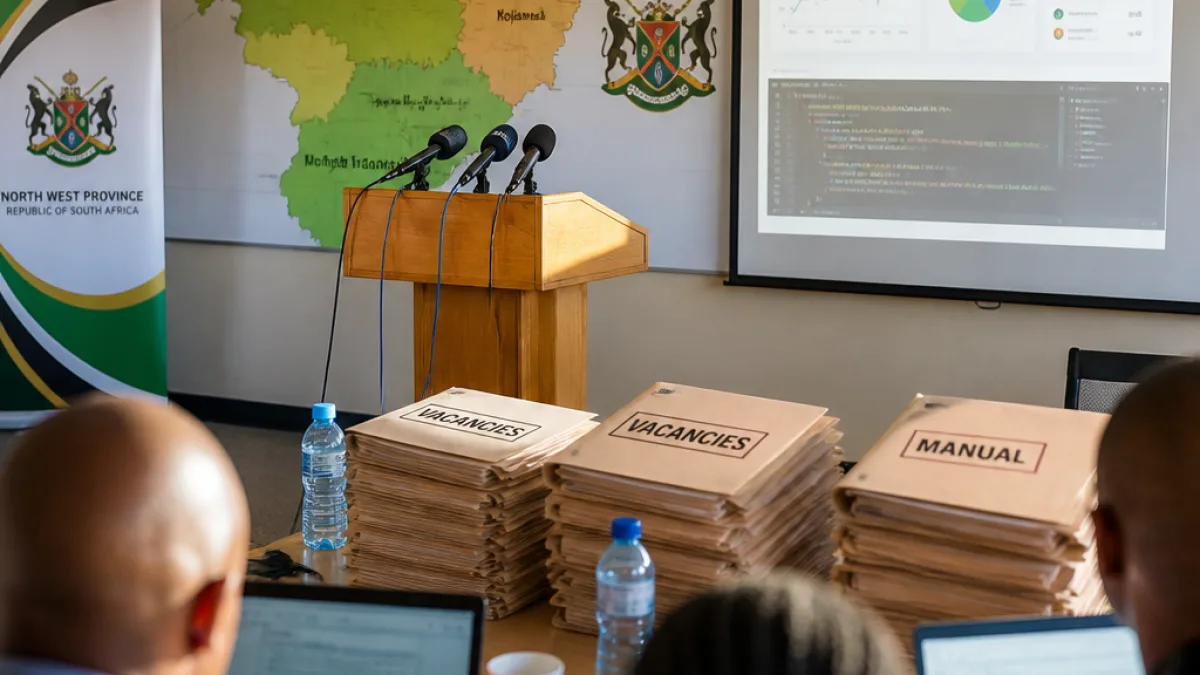
The North West provincial government has acquired the source code and technical framework of Gauteng’s Online Professional Job Centre and e‑Recruitment System at no acquisition cost, the Premier said at a media briefing on Wednesday. The move is aimed at replacing fragmented and largely manual recruitment practices across departments and improving access to provincial employment opportunities.
Digitising recruitment to widen access and cut duplication
Premier Lazarus Mokgosi told journalists the system will centralise job advertising and applications, reduce duplication across departments and generate savings for the province. He said the initiative will help move the province towards a more efficient and transparent hiring model.
“This e‑Recruitment initiative demonstrates that our digital transformation journey is beginning to translate strategy into tangible results, not only through better technology, but also through real savings, greater efficiency and smarter government.”
The provincial government did not disclose a roll‑out timeline in the briefing notes released, nor did it specify which departments will be first to use the platform. The Premier described the transfer of source code as an opportunity to avoid costly procurement and custom development, enabling faster deployment of an established system.
What the system is expected to deliver
- Centralised vacancies: a single portal for provincial job adverts and applications;
- Reduced duplication: fewer separate recruitment processes across departments;
- Cost savings: avoiding purchase or bespoke development of recruitment software;
- Improved access: easier online access to provincial job opportunities for applicants.
Officials said the system is based on the Gauteng model and includes the technical framework and source code. That should allow the province to adapt the system to local requirements, though customisation and training will still be needed for users and HR staff across provincial departments.
Scholar transport enforcement remains a priority
The Premier used the briefing to update stakeholders on scholar transport compliance checks being conducted across all four districts in the province. Inspections focus on roadworthiness, safety equipment, vehicle numbers, operating licences and the validity of permits, he said.
Mokgosi reported that 94 operators have been terminated for failing to comply with the requirements of their service level agreements. The province stressed that learner safety will not be compromised.
Transport entity and inter‑provincial talks
On the matter of North West Transport Investment — a provincial transport entity — Mokgosi said discussions with the Gauteng government are ongoing to restore the entity to profitability. No financial details or timelines were provided in the briefing notes released to the media.
Local implications and questions for implementation
For job seekers and provincial HR practitioners the announced system could bring practical benefits: a single point of entry for vacancies, clearer information on application status and reduced paperwork for applicants and hiring managers. However, several practical questions remain unanswered from the briefing:
- How will the province address digital access barriers for applicants in rural areas with limited internet connectivity?
- What support will be offered to applicants who require assistance submitting online applications?
- Which departments and vacancies will transition first to the new platform and what is the expected timeline for full rollout?
These are significant operational issues in a province where many communities still rely on physical notices and in‑person assistance to apply for work. For the platform to be inclusive, provincial departments will need to combine the online system with support services and outreach in areas with low connectivity.
Next steps
The Premier’s office indicated the province has secured the technical assets, but further detail on procurement for implementation services, user training and accessibility provisions was not released. Stakeholders in the public service and civil society will be looking for a transparent roadmap and clear timelines to ensure the promised efficiency gains translate into real access for jobseekers.
The scholar‑transport inspections and the termination of non‑compliant operators underscore the provincial administration’s current focus on safety and accountability in parallel with digital modernisation. Discussions with Gauteng over the transport investment entity are ongoing and will be monitored for impact on service delivery and provincial finances.
As the province moves from manual recruitment towards a shared online system, the practical details of implementation — training, accessibility and oversight — will determine whether the changes benefit jobseekers, municipal HR teams and provincial departments alike.















