
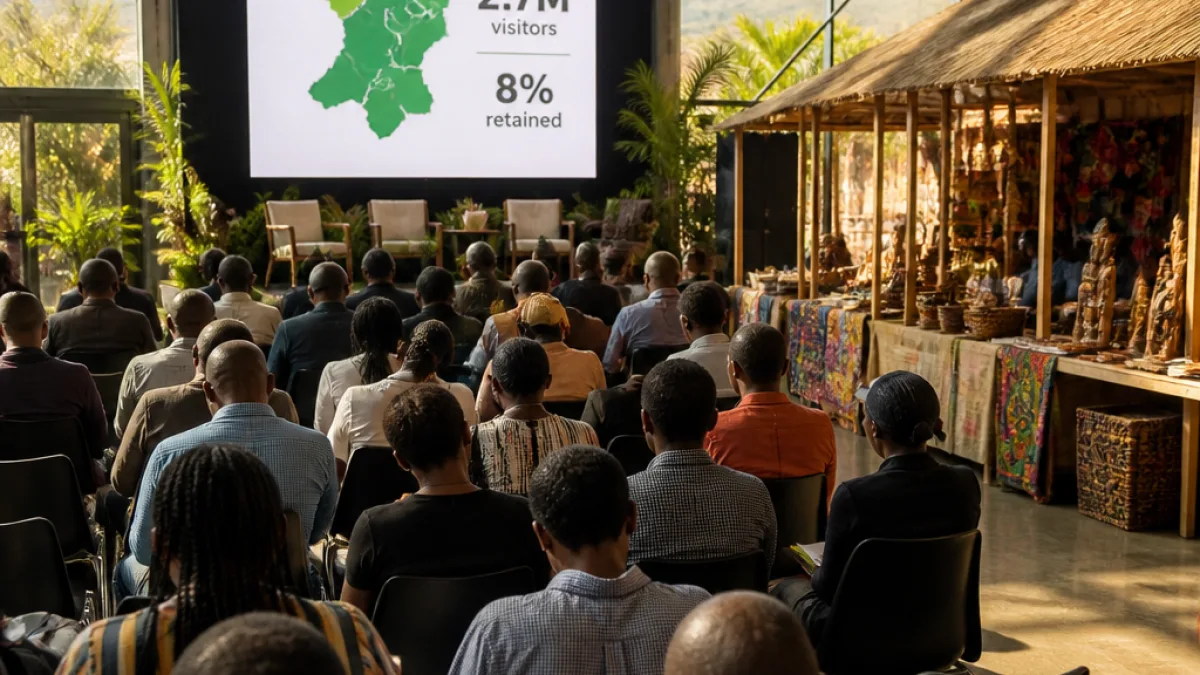
Visitor numbers high, local returns low
Mpumalanga is successful at attracting tourists but is not converting arrivals into meaningful local economic benefit, industry leaders said at the Mpumalanga Tourism Expo in Mbombela on Friday.
National Chairperson of the Southern Africa Tourism Services Association, Oupa Pilane, told delegates the province welcomed about 2.7 million visitors in 2025. Yet, he said, only around 8% of tourist spending actually took place in Mpumalanga.
“We have people coming into the province in numbers, as you might have seen, 2.7 million visitors in 2025. And yet our spend was as little as eight percent,” Pilane said.
Put another way, Pilane explained, tourists spent roughly R8 of every R100 available while in the province. He said this low capture of tourist expenditure undermines tourism’s potential to create jobs, support small businesses and reduce poverty in host communities.
Attractions as showrooms, not engines of spending
Pilane criticised the way many attractions operate, describing a pattern where sites act as "showrooms": visitors arrive, take photographs and leave without buying food, souvenirs or engaging in additional activities that would keep them in the area longer and increase local spending.
“If you are thirsty... you are in trouble. If you are hungry... you are in trouble,” he said, using the lack of on-site services to illustrate missed opportunities for revenue and jobs.
- High arrivals but low local spending: 2.7 million visitors vs 8% spend retained.
- Tourist behaviour: limited ancillary purchases at many attractions.
- Policy implication: need to develop broader visitor experiences to extend stays and increase spend.
Examples and direction
Pilane pointed to developments such as the Graskop Gorge project as an example of how an attraction can be turned into a broader experience that encourages longer visits and higher local expenditure. He argued the province must move beyond simply advertising its natural assets and ensure services, activities and supply chains are in place so communities benefit.
| Indicator | Value (2025) |
|---|---|
| Visitors to Mpumalanga | 2.7 million |
| Share of tourist expenditure retained in-province | 8% |
| Average local spend per R100 of tourist money | R8 |
What this means for jobs and small business
Tourism can support a wide range of local economic activity — from eateries, craft and souvenir traders, tour guides, transport operators and accommodation providers to upstream suppliers such as farmers and artisans. When visitor spend leaks out of the province, those linkages fail to be realised.
Industry leaders at the expo urged a focus on interventions that convert single-site visits into multi-experience stays: better on-site amenities, packaged itineraries that showcase surrounding communities, skills development for local entrepreneurs and investment in products that encourage spending beyond entrance fees.
Practical considerations for provincial stakeholders
Addressing the capture of tourist spend will require coordinated action across the provincial tourism authority, municipalities, private operators and community enterprises. Key areas for attention include:
- Enhancing food and beverage offerings at attractions to capture immediate spend.
- Developing and marketing multi-attraction itineraries that keep visitors in the area longer.
- Supporting small, local suppliers to stock souvenir and convenience outlets at sites.
- Training and capacity building to improve standards and product offerings.
Next steps
Speakers at the expo called for detailed accounting of the visitor economy so policymakers can measure progress. Pilane’s figures provide a baseline: boosting the provincial capture rate even modestly could translate into increased income for local businesses and more sustainable tourism-linked jobs.
For now, Mpumalanga’s challenge is clear. The province’s natural attractions continue to draw large numbers, but unless infrastructure, services and enterprise development are aligned to capture more of visitor expenditure, much of the economic value will continue to flow elsewhere.













