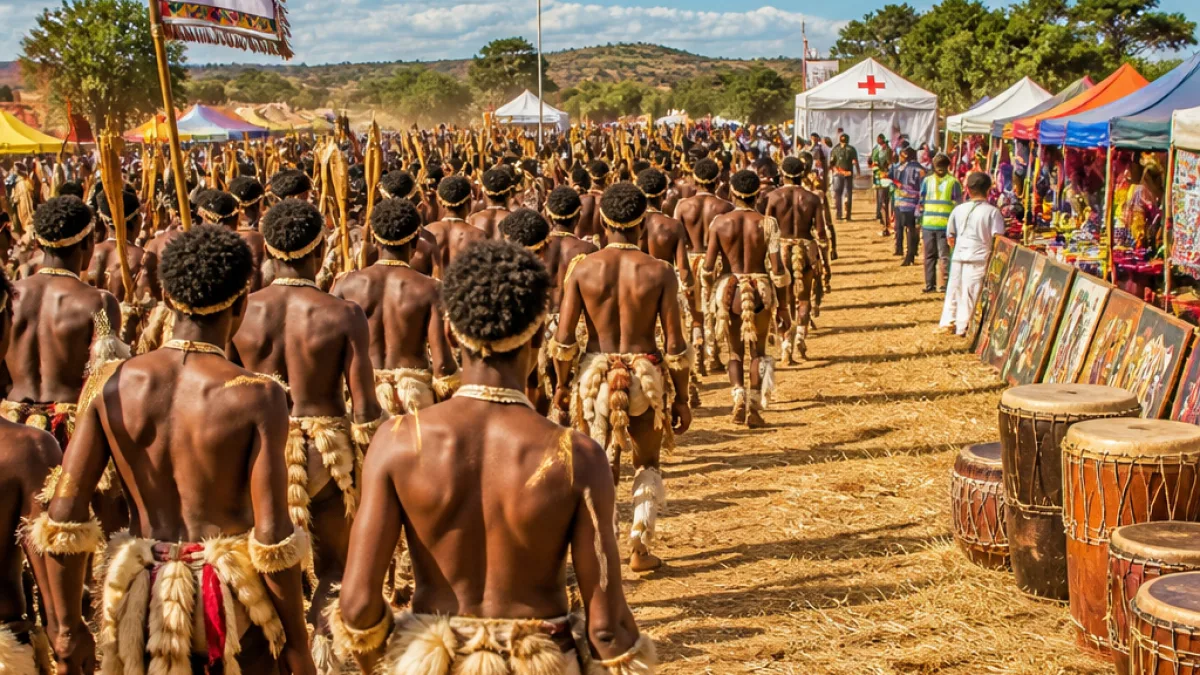
More than 4 000 initiates completed their traditional rites and returned home safely after the Lowveld’s annual Dikoma/Ingoma pass‑out celebration in Bushbuckridge, organisers and traditional leaders said. Authorities and school owners credited strict health oversight, compliance with safety guidelines and co‑operation between traditional healers and medical personnel for the incident‑free season.
Scale and safety of the season
The closing event, held on Saturday 8 August, drew an estimated 30 000 visitors to the area, according to local organisers. All 320 traditional schools in the Bushbuckridge area reportedly sent their initiates home alive and healthy following the ceremonies.
School owners who run initiation camps emphasised adherence to clear rules on wellbeing and medical support. Athias Matsane, owner of one of the schools, said he was pleased to have returned all initiates home without incident and thanked parents for their trust.
“I believe I have produced strong and responsible young men and women… In Bushbuckridge, we always practise safe Dikoma, and we have proved that again this year,” said Matsane.
Another school owner, Jealous Shakwane, highlighted the lack of road accidents or deaths during the celebrations, saying community members behaved responsibly to keep the event safe.
Traditional leaders and medical oversight
The chairperson of the Mpumalanga House of Traditional Leaders and national president of the Congress of Traditional Leaders of South Africa, Kgoshi Mathupa Mokoena, confirmed the area hosted an incident‑free Dikoma this year. Mokoena said the safety record was due to school owners following instructions and the immediate closure of schools that operate carelessly.
“For many years, the area has been known for hosting incident‑free initiation, because all school owners follow instructions on how to run them, and we immediately close careless schools,” said Mokoena.
He added that organisers worked with traditional healers who understand Ingoma practices and with medical doctors to ensure prompt help for initiates who became ill.
Local economic and social impacts
The pass‑out attracted traders, entertainers and small businesses. Local food and liquor outlets reported increased demand during the celebrations, while Mrupelo artists and other performers also benefited from the influx of visitors.
The combination of cultural observance and commerce underlined how initiation seasons can act as both a social ritual and a short‑term economic stimulus for rural towns in Mpumalanga.
- Over 4 000 initiates completed rites and returned home.
- 320 traditional schools participated in the Bushbuckridge season.
- More than 30 000 visitors attended pass‑out celebrations.
Health protocols and responsibilities
Organisers stressed that owners of initiation schools are responsible for initiates’ wellbeing and must comply with established health protocols. Mokoena said this includes quick access to medical care when needed and collaboration with sanctioned traditional healers.
He also thanked supporters and visitors who came to the event and followed safety instructions, reinforcing the message that collective responsibility played a role in preventing incidents.
What this means for the community
An incident‑free season reassures families and local authorities and supports the continued practice of culturally significant rites under regulated conditions. The visible economic benefits for small traders and artists also highlight the event’s role beyond cultural rites — as a contributor to local livelihoods.
| Indicator | Figure |
|---|---|
| Traditional schools involved | 320 |
| Initiates returned | Over 4 000 |
| People at pass‑out | More than 30 000 |
Traditional initiation remains a sensitive subject, and the emphasis on regulated, health‑aware practices in Bushbuckridge follows provincial efforts to reduce harm while respecting cultural customs. Local leaders said they will continue to monitor schools and close those that flout safety rules.
For families and community members, the outcome of this year’s Dikoma offers a model for how cultural rites can be conducted safely when there is clear oversight, co‑operation between traditional and medical practitioners, and community adherence to safety guidelines.