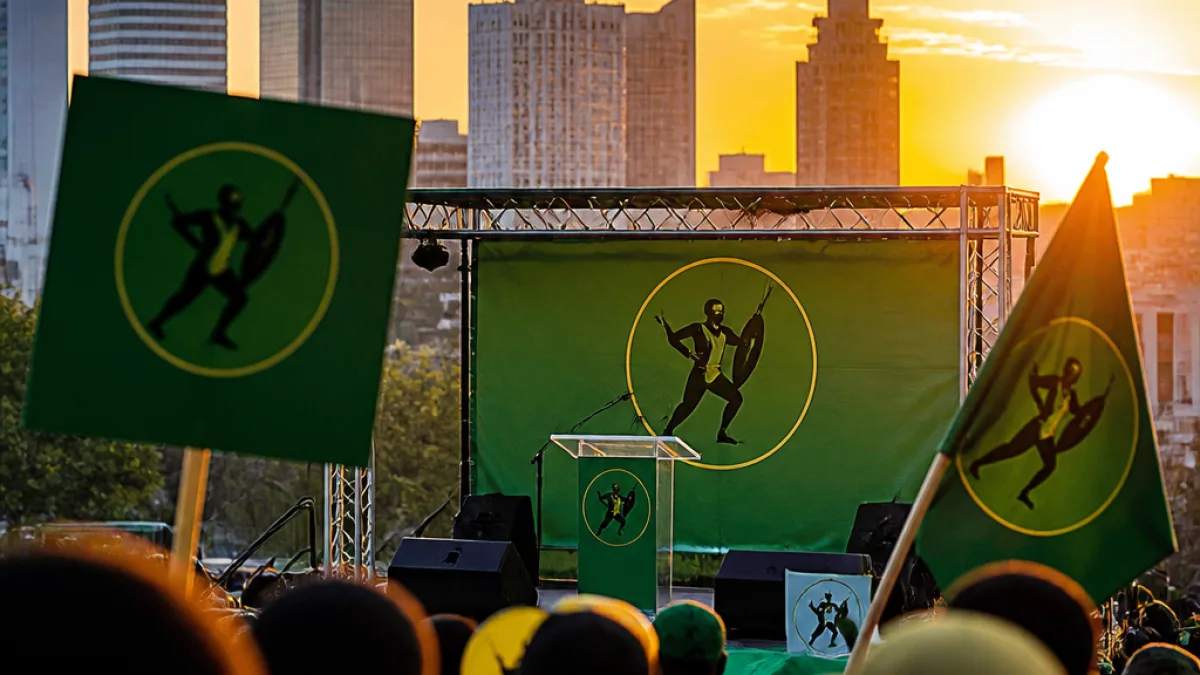
Johannesburg — The MK Party has begun staking its claim in Gauteng’s metro battles, unveiling mayoral candidates and promising hardline action on corruption and crime if elected in next year’s local government polls. The party says it will contest every municipality nationwide and is still finalising candidate lists.
Targets: corruption, crime and service delivery
At the launch, the MK Party’s Johannesburg mayoral candidate, Bongani Baloyi, framed the city as a strategic prize that needs “capable leadership” to retain its role as the continent’s economic engine. Baloyi stressed credibility, ethical conduct and respect for the public mandate as prerequisites for running Johannesburg.
“The residents of Johannesburg deserve a leader with credibility, ethical standing and who will respect the mandate bestowed upon them. So, over the next few days and weeks, we will be hitting the ground running, demonstrating that we can turn around a very complex and unique city,”
In Ekurhuleni the party’s mayoral candidate, Thulani Shongwe, linked high levels of crime and corruption to stalled housing and basic services projects in the metro. Shongwe said he would make arrests where necessary and singled out alleged large-scale theft relating to sanitation projects.
“I need that police van because I want to arrest people in Ekurhuleni because the money that's supposed to build houses in Ekurhuleni – people at the Chris Hani informal settlement live in shacks. Two billion rand was stolen for toilets and there's a certain political party that was involved. So I need that van to put corrupt politicians and tenderpreneurs behind bars.”
What the pledges mean for Gauteng voters
The MK Party’s statements reflect a campaign focus on visible, law-and-order responses and on rooting out procurement-related corruption — themes that have resonated with voters across metros where failed contracts and service backlogs are recurring concerns. For residents in Johannesburg and Ekurhuleni, the promise of decisive action will be judged against the party’s ability to work with existing law-enforcement structures and municipal administration to deliver results.
Key elements voters should watch as the campaign develops:
- Whether the MK Party finalises full candidate lists and registers to contest all municipalities as promised;
- How the party proposes to cooperate with SAPS, the Hawks and municipal oversight bodies when it speaks of enforcing arrests and recovering funds;
- Concrete plans for restoring basic services and turning around procurement processes without disrupting essential operations.
Known metro candidates in Gauteng
The party said it had unveiled six metro mayoral candidates nationwide at the event; in Gauteng, the confirmed names announced are below.
| Metropolitan area | Candidate (announced) |
|---|---|
| Johannesburg | Bongani Baloyi |
| Ekurhuleni | Thulani Shongwe |
| Other Gauteng metros | Not specified at the launch |
Context and constraints
The MK Party’s commitment to contest every municipality is ambitious. Municipal races in Gauteng are often closely fought and hinge on coalition math, service delivery track records and voter turnout. Candidates promising arrests or aggressive anti‑corruption campaigns must also work within the criminal-justice system and municipal legal frameworks to ensure lawful investigations and prosecutions.
Residents in affected areas should note that criminal allegations or claims about stolen funds require formal investigative processes. Arrests and asset recovery are carried out by SAPS, the Hawks and prosecuting authorities following evidence-led inquiries and court processes.
What comes next
The MK Party said it is still finalising candidate selection. Over the coming weeks, the party will be expected to outline detailed policy proposals for municipal governance, procurement reform, housing and policing strategy if it wants its pledge of rapid action to be taken seriously by voters and oversight institutions.
Voters in Johannesburg and Ekurhuleni will be watching whether the MK candidates translate strong rhetoric into workable plans that can pass legal and administrative muster while improving day‑to‑day services — from sanitation to safety — in the metros.
Reporting from Johannesburg.