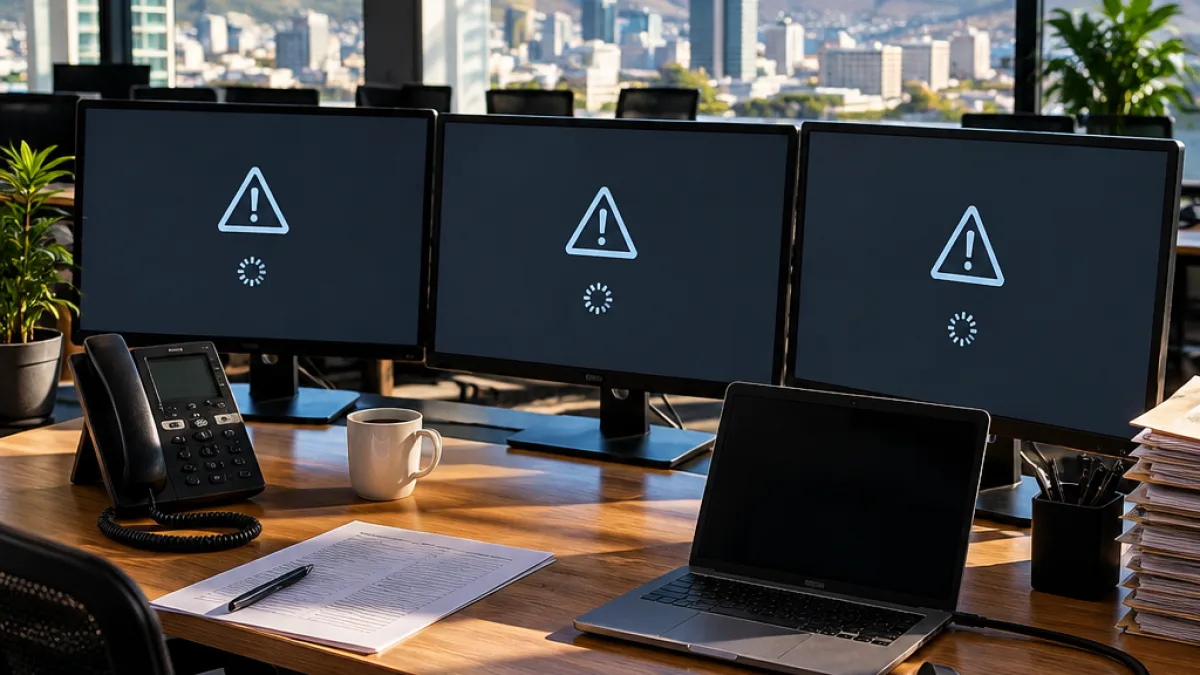
A recent Microsoft outage should serve as a warning to businesses about the risks created by deep dependence on a single technology ecosystem. What may have appeared to many employees as an unexpected break from online meetings exposed a more serious vulnerability: when a widely used digital service fails, companies can quickly lose access to tools that have become central to everyday work.
The disruption affected people using services including Outlook and Microsoft Teams, while users of Google and Gmail were less likely to notice it. For some businesses, that meant interrupted communication and a temporary inability to follow normal routines. The incident also prompted widespread humour on social media, but the underlying issue was less amusing for organisations whose operations rely on uninterrupted access to workplace platforms.
Convenience has increased exposure
The move towards remote and hybrid work during the Covid pandemic accelerated the adoption of digital collaboration tools. Teams became a preferred platform for virtual meetings, alongside services such as Zoom, WhatsApp, FaceTime and Google Meet. That change delivered clear convenience, allowing work to continue without everyone being in the same office.
However, convenience can make dependence less visible. As employees and managers become accustomed to technology working in the background, the need for alternative processes can receive less attention. A system that is used for meetings, communication and other routine tasks can become so familiar that its failure is treated as an unlikely event rather than a business continuity risk.
| Technology trend | Business risk highlighted |
|---|---|
| Remote working | Work may be disrupted when collaboration platforms are unavailable |
| Artificial intelligence | Growing reliance can increase exposure to technology failures |
| Single-provider systems | A service interruption can affect several business processes at once |
One platform can mean several points of failure
The central lesson is not that businesses should abandon workplace technology. Digital tools have transformed how organisations communicate and operate, and artificial intelligence is making many tasks easier than they were a decade ago. The concern is that the benefits may encourage companies to place too many functions with one provider without testing what happens when that provider is unavailable.
For South African businesses, the incident provides a practical reason to examine their contingency arrangements. Management teams can ask whether employees know how to communicate if an email or meeting service is down, whether critical information is available through another route, and how long normal operations could continue during an interruption.
- Identify which business processes depend on a single digital service.
- Keep workable alternatives for essential communication and meetings.
- Ensure staff understand what to do when normal systems are unavailable.
- Review technology dependence as part of broader business continuity planning.
A warning rather than a reason for panic
Previous technology scares have not always resulted in lasting changes to corporate planning. The Y2K concern, for example, became either a warning about insufficient preparation or, in some assessments, a commercially driven alarm. That history may help explain why businesses can be reluctant to spend time and money preparing for a failure that may not happen often.
Yet the greater use of digital tools means that the consequences of a disruption can be harder to ignore. The recent breakdown offered companies an opportunity to test their assumptions without waiting for a more serious failure. A platform outage may not stop every part of a business, but it can reveal how quickly routine work becomes difficult when staff cannot use the systems on which they have come to rely.
The sensible response is measured preparation, not panic. Businesses should weigh the cost of alternative arrangements against the potential effect of interrupted communication and lost productivity. Those decisions can affect operating costs and, indirectly, the pressure on companies to protect jobs and contain expenses. Households are ultimately exposed to those business decisions through employment and affordability. This is general information, not financial advice.
The Microsoft disruption therefore matters beyond one difficult working day. It is a reminder that the more indispensable a digital service becomes, the more carefully its failure should be considered. Companies that use the incident to review their systems, responsibilities and alternatives will be better placed to keep working when convenience temporarily disappears.