
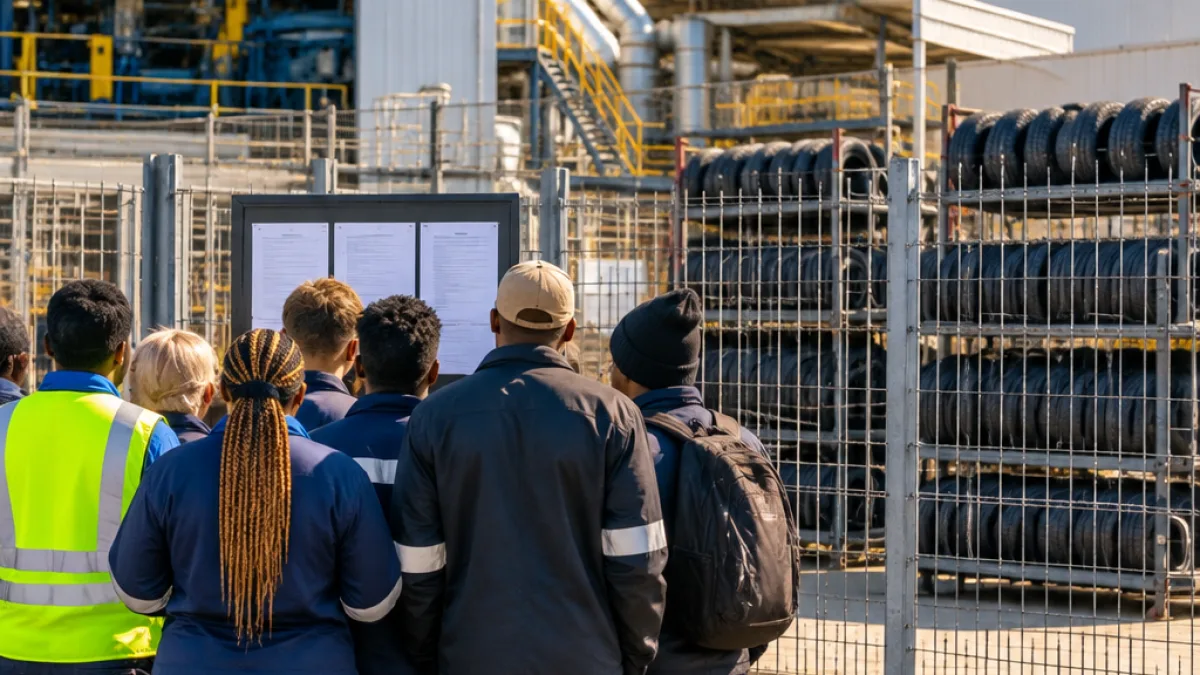
Continental is considering ending tyre production at its Gqeberha plant, placing approximately 950 employees at risk and raising fresh concerns about the pressure facing the city’s manufacturing sector. The German tyre group announced on Friday, 20 November, that it had begun a formal consultation process under Section 189A of the Labour Relations Act.
The process is intended to examine alternatives to the proposed closure and consider ways of reducing its effect on employees. Production at the facility could be discontinued by early 2027 if no workable option is identified during the consultations. Continental has not announced a final decision to close the plant, and the outcome will depend on the discussions with affected employees and other parties.
Long-running pressure on local production
Continental said manufacturing capacity at the Gqeberha site had remained substantially underused for several years, despite extensive efforts to turn around the operation. The company said deteriorating market conditions had added to the strain, making it increasingly difficult to sustain production at the facility.
The plant has operated in Gqeberha since 1947, producing different tyre brands over the decades. Manufacturing of Continental-branded tyres began in 1985, with the site supplying vehicle manufacturers in South Africa as well as the replacement-tyre market elsewhere on the African continent.
The company identified several factors affecting the plant’s competitiveness and operating costs:
- Growing competition from lower-priced imported tyres;
- Higher energy costs affecting local manufacturing;
- Supply-chain interruptions that have complicated the movement of materials and products; and
- Fragile infrastructure, which Continental said had made production planning more difficult.
What the announcement means
A possible halt in production would have consequences beyond the factory floor. The affected workforce represents hundreds of households in and around Gqeberha, while the plant’s long presence in the city has linked it to the broader industrial and automotive economy. Any reduction in local tyre manufacturing would also add to concern about South Africa’s ability to compete with lower-cost imports while dealing with rising domestic production expenses.
| Issue | Information available |
|---|---|
| Facility | Continental tyre plant in Gqeberha |
| Potentially affected employees | Approximately 950 |
| Consultation process | Section 189A of the Labour Relations Act |
| Possible production end | Early 2027, if no alternative is found |
| Plant operating history | Tyre production since 1947 |
Continental said it remained committed to maintaining an open and constructive engagement with employees during the consultation process. The company acknowledged the uncertainty created by the proposal, but the available announcement does not indicate what alternatives are currently under consideration or whether a revised production model could preserve the plant’s operations.
The group also stressed that South Africa and the wider African market remain important to its business. Even if manufacturing at the Gqeberha facility is discontinued, Continental’s local sales organisation will continue serving customers in South Africa and the region from the city. Its BestDrive retail network is also expected to remain unaffected by any changes to production at the plant.
For now, the future of one of Gqeberha’s longstanding industrial sites remains subject to the consultation process. The central question will be whether a viable alternative can address the plant’s underutilised capacity and cost pressures without shifting the burden of the proposed change on to its workforce.