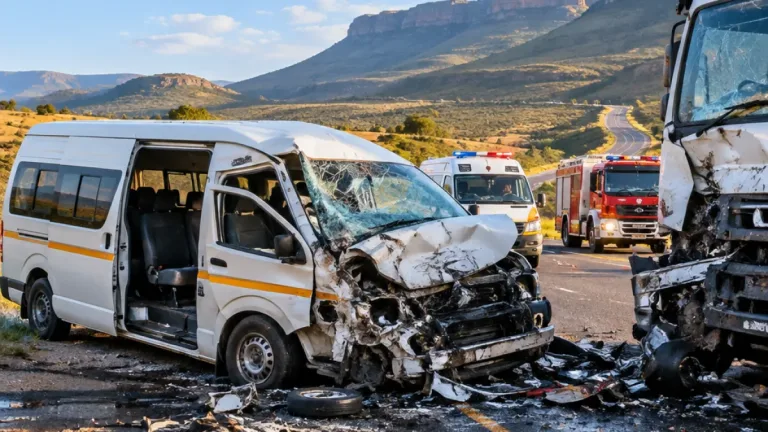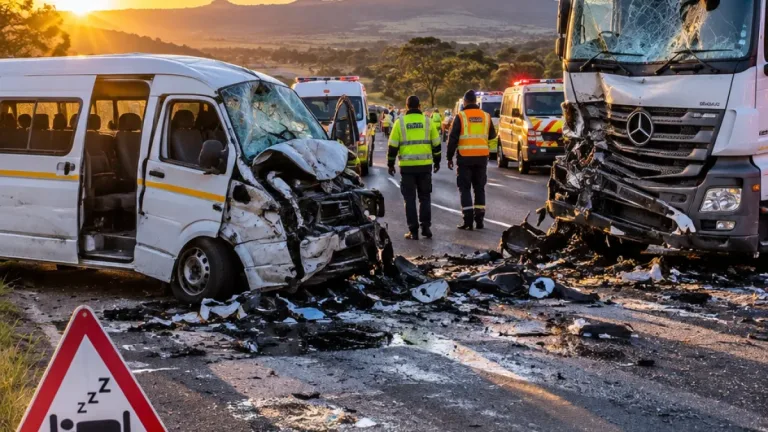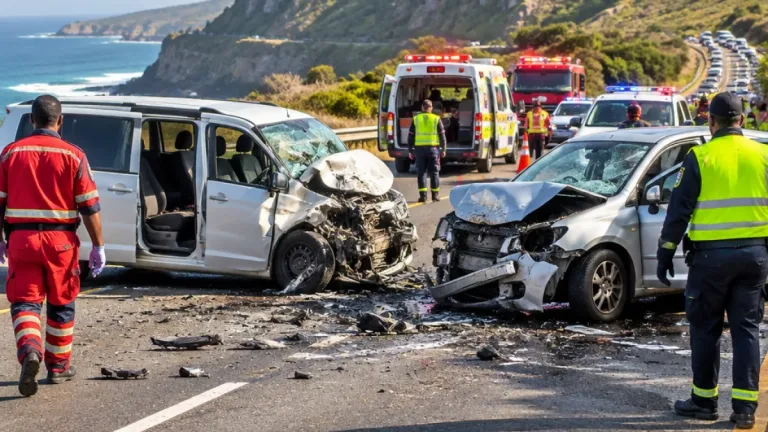
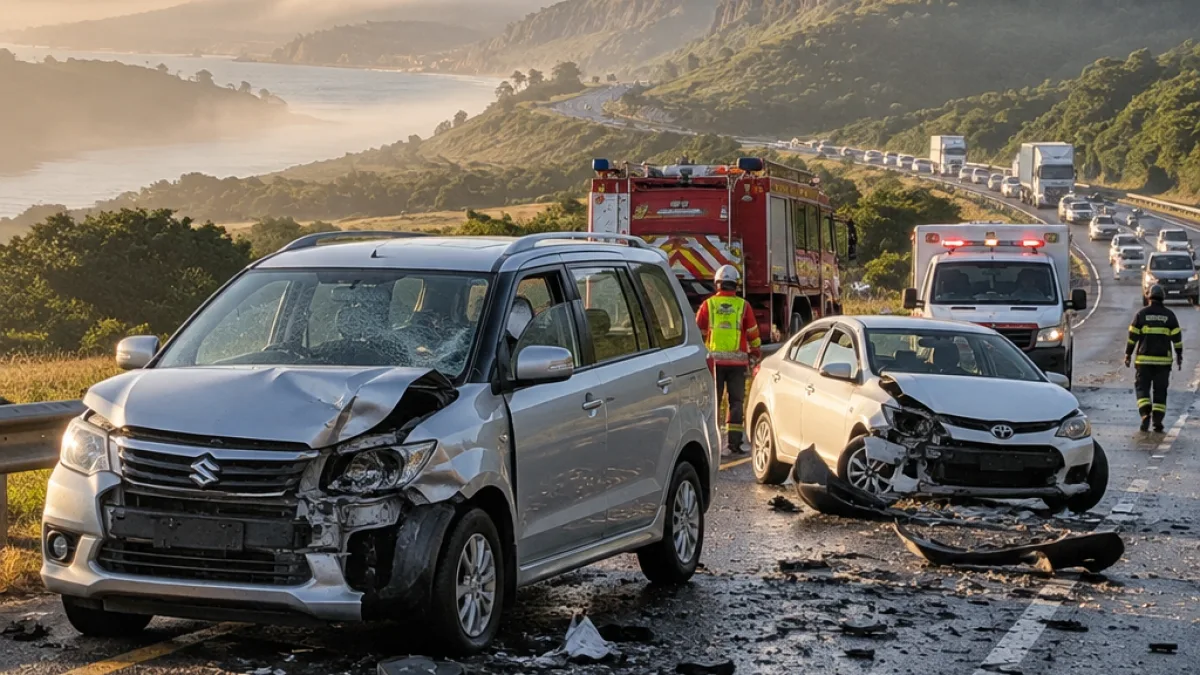
Seven people were killed, including a five-year-old boy, after a Suzuki seven-seater and a Toyota Corolla collided on the N2 in the Eastern Cape on Friday.
The crash happened between Kei Cuttings and Ndabakazi, a section of the national road that has been linked to several serious crashes in recent years. The dead were five men and two women, according to Eastern Cape transport spokesperson Unathi Binqose.
The Suzuki was carrying eight people. One person in that vehicle survived and was taken to hospital. The Corolla’s driver, who was seriously injured, was also transported for medical treatment.
“Drunk driving and poor visibility due to a misty weather are believed to be contributing factors to the crash,” Binqose said.
The circumstances remain subject to investigation. Binqose urged motorists using the route to reduce their speed, approach the area carefully and obey directions from law enforcement officials. The warning is particularly relevant while emergency and recovery teams work around the crash scene and its aftermath.
Secondary crashes add to danger
Two further vehicles, a Mazda SUV and a Mercedes-Benz sedan, were involved in secondary collisions after the initial impact. The occupants of those vehicles suffered minor injuries, according to the transport department.
Emergency rescue teams attended the scene to assist injured people and manage the consequences of the collision. The incident illustrates how a serious crash on a busy national route can quickly create additional hazards for approaching drivers, particularly where visibility is reduced.
- Seven people died at the scene.
- The victims included two women, five men and a five-year-old boy.
- The Suzuki passenger and the Corolla driver were taken to hospital.
- A Mazda SUV and a Mercedes-Benz sedan were involved in later collisions, with minor injuries reported.
A recurring danger zone
The latest deaths have again placed the Kei Cuttings section under scrutiny. In August 2021, 30 people died when a double-decker bus travelling from Cape Town to Mthatha left the road at the cuttings. Three children younger than four were among those killed.
At the time, Binqose said the bus driver had lost control at the pass, a few kilometres from the Kei Bridge. The 2021 crash remains one of the Eastern Cape’s worst road disasters and underlines the consequences of losing control on a route where weather, visibility and road conditions can combine to leave drivers with little time to react.
In June 2024, four people, including a police officer, died in a five-vehicle collision on the N2 near the Kei Cuttings. The pattern of repeated serious incidents has made the area a critical concern for road-safety enforcement and emergency response planning.
| Incident | Reported outcome |
|---|---|
| Latest N2 collision | Seven killed; three vehicles involved in total |
| August 2021 bus crash | 30 people killed |
| June 2024 N2 collision | Four people killed in a five-vehicle crash |
Wider Eastern Cape road toll
The latest crash follows other deadly incidents on provincial roads. In May this year, seven people died and 18 were injured when a minibus taxi carrying workers from KwaNobuhle allegedly turned across the path of an approaching bus.
On the final day of 2025, seven more people—six women and one man—were killed when two bakkies and a minibus taxi collided on the R61 outside Mthatha. These incidents have repeatedly involved passenger vehicles, heavy traffic and manoeuvres that left little room for oncoming motorists to avoid impact.
For drivers approaching the N2 crash area, the transport department’s immediate advice is clear: slow down, remain alert in misty conditions and follow instructions from officials. Motorists should also be prepared for emergency vehicles and for delays caused by the response operation.
The cause of the latest collision has not been finally established. Suspected drinking and poor visibility have been identified as possible contributing factors, but the investigation will determine how the crash unfolded. The deaths have nevertheless renewed attention on the safety of the Kei Cuttings and the need for caution on one of the Eastern Cape’s most heavily used routes.