
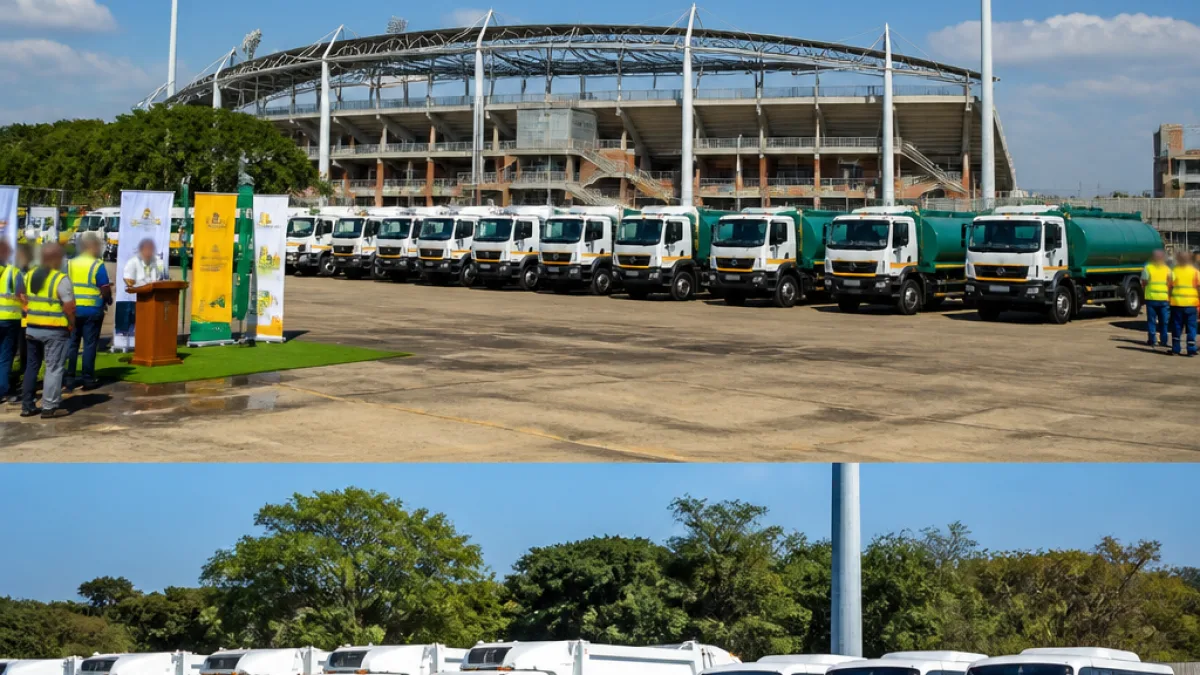
The City of Mbombela took delivery of a 20-vehicle consignment at Mbombela Stadium on 16 September as part of a municipal drive to bolster service-delivery capacity across the metro.
What was handed over
The new additions comprise a mix of vehicles targeted at core municipal services, according to the executive mayor, Sibongile Makushe-Mazibuko. The fleet includes:
- 10 water tankers with an 18 000-litre capacity each;
- 7 compactor trucks for refuse collection;
- 3 22-seater buses to support councillors and oversight visits.
Municipal leaders said the vehicles will replace ageing assets and support frontline teams responsible for water and sanitation, waste management and project oversight.
Why the purchase matters
Makushe-Mazibuko framed the investment as a practical intervention to strengthen internal capacity. The administration said owning and maintaining its own vehicles would reduce reliance on contracted services and the operating costs that go with outsourcing, thereby creating fiscal room for other infrastructure needs such as roads and bridges.
"The CoM's investment in its own fleet is a practical intervention to improve service delivery. By owning and maintaining these vehicles, we reduce dependence on contracted services and the associated operational costs."
Officials expect shorter response times for repairs, leak interventions and refuse collection because municipal crews will be better equipped and less constrained by the availability of hired vehicles.
Local consequences and context
For residents, the immediate impact should be felt in more reliable water delivery where tankers are deployed to support borehole and reservoir operations or to respond to supply interruptions. Compactor trucks are aimed at improving waste collection frequencies, which affects public health and local tourism appeal — an important consideration in Mbombela, which hosts events and visitors drawn to nearby attractions.
The three buses are intended for councillors' oversight and monitoring visits to projects across the municipal area. That arrangement could speed up accountability processes and enable ward councillors to inspect works more regularly without depending on ad hoc transport arrangements.
Municipal ownership of vehicles also shifts long-term maintenance responsibility onto the City. That means the intended savings from reduced contracting will depend on the municipality's ability to budget for servicing, spare parts and driver training. The handover, the mayor noted, was delivered ahead of her leaving office — an administrative milestone as well as an operational one.
Breakdown of the consignment
| Vehicle type | Quantity | Primary use |
|---|---|---|
| Water tankers (18 000 litres) | 10 | Water supply support and emergency response |
| Compactor trucks | 7 | Refuse collection and waste management |
| 22-seater buses | 3 | Councillor oversight visits and project monitoring |
Municipal communication around the handover emphasised operational benefits and potential reallocation of savings toward other priorities. How those savings will be tracked and redirected remains an implementation issue residents will watch closely.
Mbombela has in recent years faced intermittent service pressures common to growing cities: aging infrastructure, changing weather patterns that affect water availability, and constrained budgets. The expanded fleet addresses one operational bottleneck, but sustained improvement will depend on consistent maintenance, clear deployment plans and transparent reporting on outcomes.
For now, the new vehicles represent a visible investment in municipal capacity. Residents and community groups will expect to see quicker responses to water disruptions, more regular refuse collection and more robust oversight of local projects in the months ahead as the fleet is integrated into daily operations.















