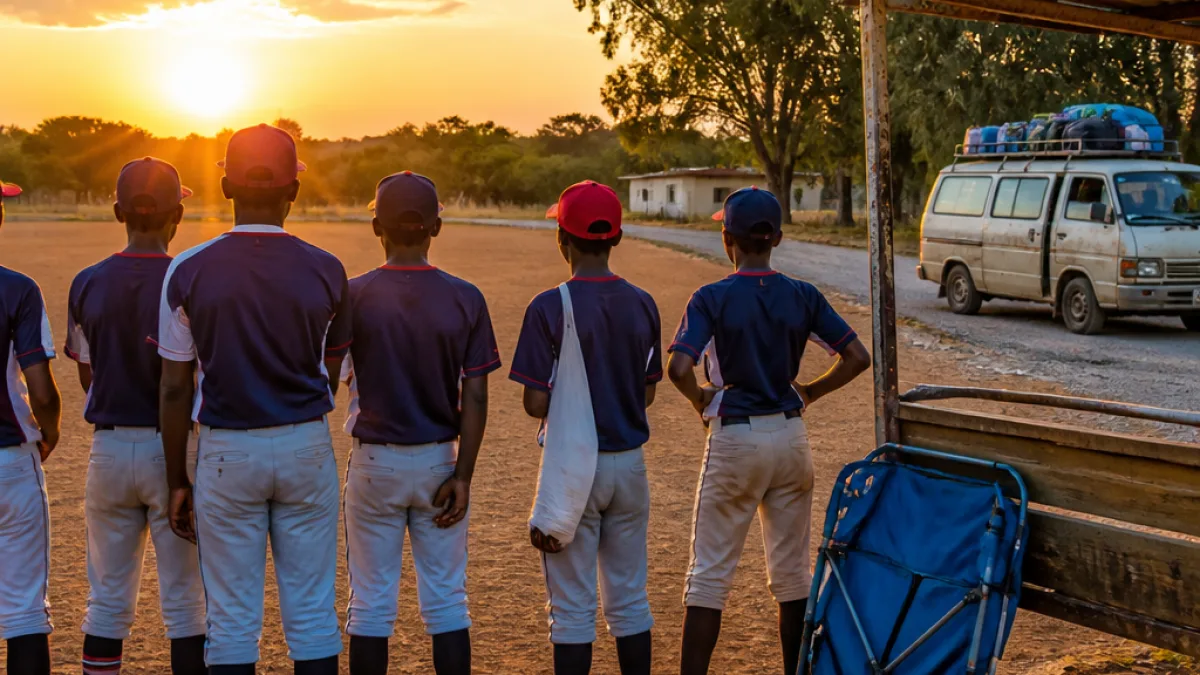
Senwabarwana, Limpopo — An 18-year-old softball player from Senwabarwana says the excitement of national selection is shadowed by anxiety about injuries, scarce ongoing medical care and personal costs borne by families. Health-e News reported that Maphuti Hlako, who qualified for South Africa’s under-18 side to compete at a regional tournament in Gaborone, Botswana, has had to find money for travel and manage injuries largely on her own.
Selection brings temporary clinical access, but little aftercare
Hlako is due to travel with the national team by bus on 19 August for the World Baseball Softball Confederation regional tournament from 20 to 22 August. According to Health-e News, she raised R5,000 to cover travel, accommodation and meals for the trip.
While provincial and national call-ups give young athletes access to physiotherapists and basic medical attention during events, Hlako said that clinical support stops when tournaments end. She described a pattern where players see a physiotherapist only during selections or competitions and are left to manage rehabilitation at home afterwards.
“You only see a physiotherapist for the first time when you’re selected to the provincial squad. You only have that access during the tournament, and once it’s over you’re on your own to nurse the injuries you sustained,” Hlako told Health-e News.
The gap between episodic tournament care and continuous treatment matters in contact sport. Hlako recounted injuring her ankle at the National Provincial Championships in the Free State in March last year. She was taken by private car to a public hospital in Bloemfontein and treated by a general practitioner, who provided painkillers and a topical ointment. Subsequent rehabilitation costs were met privately by her family, Health-e News reported.
First aid shortages at club level
At club level, Hlako plays for the Seshego Cannons. She reported that first-aid kits are not always available during training and matches, forcing players to rely on home remedies. She also described a knee injury sustained at a Women’s Month tournament in Lebowakgomo, Polokwane, in 2024 that left her in severe pain for the day.
- Main concerns: episodic access to physiotherapy and mental-health services;
- Financial burden: Hlako raised R5,000 for the Botswana trip and paid for over-the-counter medicine after injury;
- Safety gaps: inadequate first-aid provision and limited rehabilitation resources at club level.
Local impact and wider implications
Hlako’s experience is emblematic of challenges facing many young athletes in rural and township settings across Limpopo. Interrupted care increases the risk of chronic injuries and may discourage continued participation in sport, which has implications for youth development, school retention and pathways to provincial or national representation.
Parents and caregivers, often single providers and earning modest incomes, shoulder the costs of transport, medication and informal rehabilitation. Hlako’s mother, a single parent and security officer, was named by Health-e News as a key support in meeting these demands.
What sporting bodies and provincial health services could consider
Addressing episodic care requires coordination between provincial sport federations, schools, municipalities and health services. Practical measures could include:
- regular outreach physiotherapy and sports-medicine sessions for regional clubs;
- training coaches and managers in basic sports first aid and injury prevention;
- schemes to subsidise travel and accommodation for economically vulnerable athletes; and
- linking athletes to mental-health services for the psychosocial pressures that accompany selection and competition.
| Issue | Reported by Hlako |
|---|---|
| Cost of tournament trip | R5,000 |
| Access to physiotherapy | Only during selection/tournaments |
| First-aid at club level | Not consistently available |
Provincial sport bodies and Limpopo health authorities were not quoted in the Health-e News report. Further comment from these institutions would be useful to clarify what support structures exist for grassroots athletes and whether any plans are in place to strengthen continuity of care.
For now, Hlako will travel with her teammates to Gaborone this month, carrying both the pride of provincial selection and the familiar worry about how injuries and mental strain will be managed after the tournament ends. Her situation highlights a gap between the promise of sport as a vehicle for opportunity and the practical supports needed to protect young athletes’ health and futures.
— Reporting from Limpopo, for WE NEWS