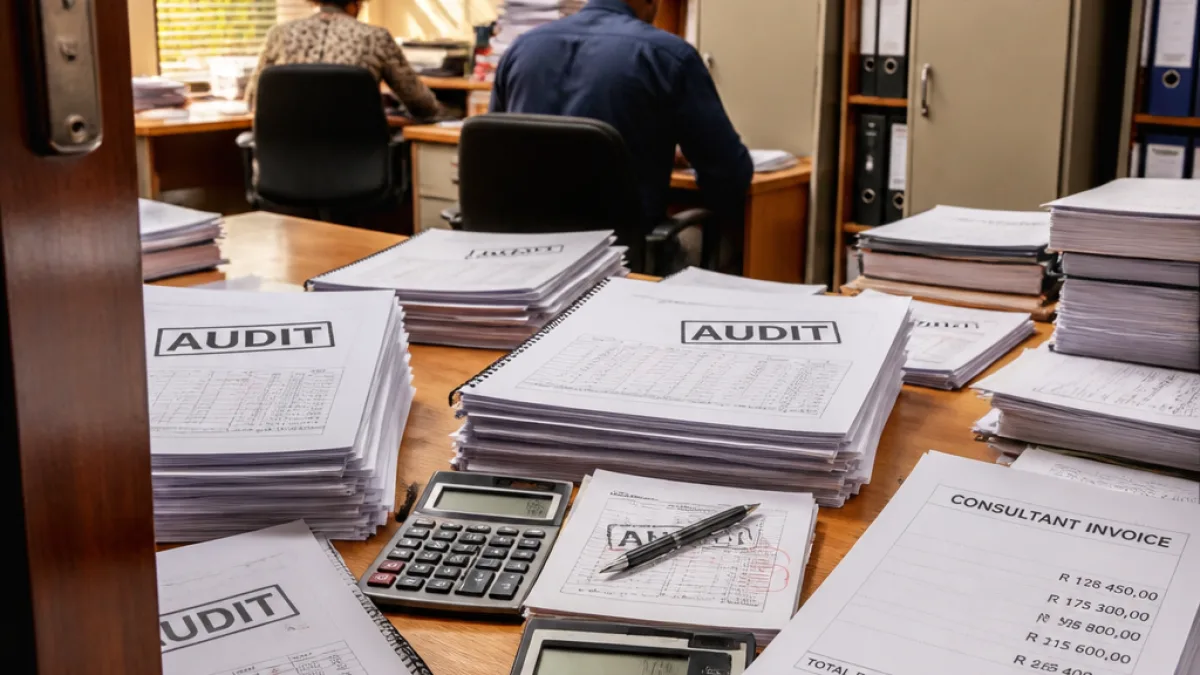
All 27 municipalities in Limpopo hired financial reporting consultants during the 2024/25 year, spending a combined R235.85‑million, yet 20 municipalities — about 74% — still submitted financial statements containing material misstatements in the very areas consultants were brought in to assist, according to the Auditor‑General’s Consolidated General Report on Local Government Audit Outcomes for 2024/25.
Audit findings and the cost to taxpayers
The Auditor‑General, Tsakani Maluleke, raised concerns about municipalities’ growing dependence on external consultants to prepare financial reports, and said municipal finance units were not adequately reviewing or accepting responsibility for the consultants’ work, the report shows. These weaknesses persisted even where municipalities spent substantial sums on external help.
Democratic Alliance Member of Parliament Jacques Smalle pointed to the double cost to taxpayers: municipalities also spent a total of R885.01‑million on their own finance units while engaging consultants. The DA has called on Limpopo’s Department of Cooperative Governance, Human Settlements and Traditional Affairs (CoGHSTA) to enforce penalty clauses in contracts where consultants produced substandard work.
Where the money went
The Auditor‑General’s report lists the municipalities with the largest consultant bills. Among them were:
- Mogalakwena Local Municipality – R31.48‑million
- Polokwane Municipality – R26.62‑million
- Fetakgomo Tubatse Local Municipality – R22.51‑million
- Thabazimbi Local Municipality – R19.38‑million
- Collins Chabane Local Municipality – R17.25‑million
- Modimolle Mookgophong Local Municipality – R16.5‑million
- Maruleng Local Municipality – R11.75‑million
These figures form part of the R235.85‑million total attributed to external financial reporting assistance across the province.
| Expenditure category | Amount (R) |
|---|---|
| External financial consultants (all municipalities) | R235,850,000 |
| Municipal finance units (salaries, operations) | R885,010,000 |
Quality of statements and internal oversight
The Auditor‑General found that the overall quality of financial statements in the province remained poor. In many cases the municipal finance teams failed to properly review consultants’ outputs, leaving material misstatements uncorrected. The report highlights weaknesses in governance and internal controls that undermine public confidence in municipal financial management.
Municipalities are required to prepare reliable, auditable financial statements so that councillors, provincial authorities and the public can scrutinise spending decisions. When external experts are engaged, the expectation is that municipal staff retain responsibility for checking and signing off on the final accounts — a responsibility the Auditor‑General indicates was not met in many instances.
Calls for accountability and next steps
The Democratic Alliance has urged CoGHSTA to implement contractual penalty clauses against service providers where deliverables were inadequate. The party argues this would protect public funds and deter poor performance by consultants. The Auditor‑General’s report serves as the official basis for such action, but any penalties or investigations would need to follow municipal procurement and contract management procedures.
Local governance specialists and oversight bodies will likely examine whether municipalities complied with supply‑chain management rules when contracting consultants and whether those appointments were necessary or driven by capacity shortfalls.
What this means for residents
For residents, the findings raise two practical concerns: first, large sums are leaving municipal coffers for outside consultants while simultaneous weaknesses remain in municipal financial reporting; second, poor financial statements complicate service delivery planning because inaccurate accounts make it harder to track budget performance and to hold councillors and officials to account.
Provincial and municipal leaders now face pressure to explain how external consultants were selected, to demonstrate that their work added value, and to show how contract management and internal oversight will improve ahead of the next budgeting cycle.
Follow‑up steps include potential enforcement of contractual penalties, internal disciplinary procedures, and strengthened oversight from CoGHSTA and the provincial legislature’s portfolio committees. Municipalities must also address the skills and capacity gaps within their finance units to reduce reliance on costly external advisers.
This report will be closely watched across Limpopo as taxpayers, councillors and provincial oversight bodies seek clearer answers about why large consultancy bills did not prevent material misstatements in municipal financial statements.