KwaZulu‑Natal continues to experience scheduled electricity interruptions even as Eskom reports a national surplus of generation capacity, highlighting a split between national supply figures and local distribution realities.
National capacity versus local constraints
In its latest power system update, published on 11 September 2026, Eskom said South Africa had 28,992MW of available generation capacity against an expected evening peak demand of 24,485MW. The utility further reported a 6,019MW cold reserve — surplus capacity kept offline — and an Energy Availability Factor of 67.78% for the financial year to date, its highest in six years.
Those national figures have coincided with an extended period without nationwide loadshedding: South Africa had recorded roughly 483 consecutive days without loadshedding, counting back to 16 May 2025.
Why KZN still faces interruptions
Despite the improved national position, Eskom distinguishes between loadshedding and load reduction. Loadshedding is triggered when generation cannot meet national demand. Load reduction, by contrast, is applied to specific distribution networks where infrastructure is overloaded or at risk.
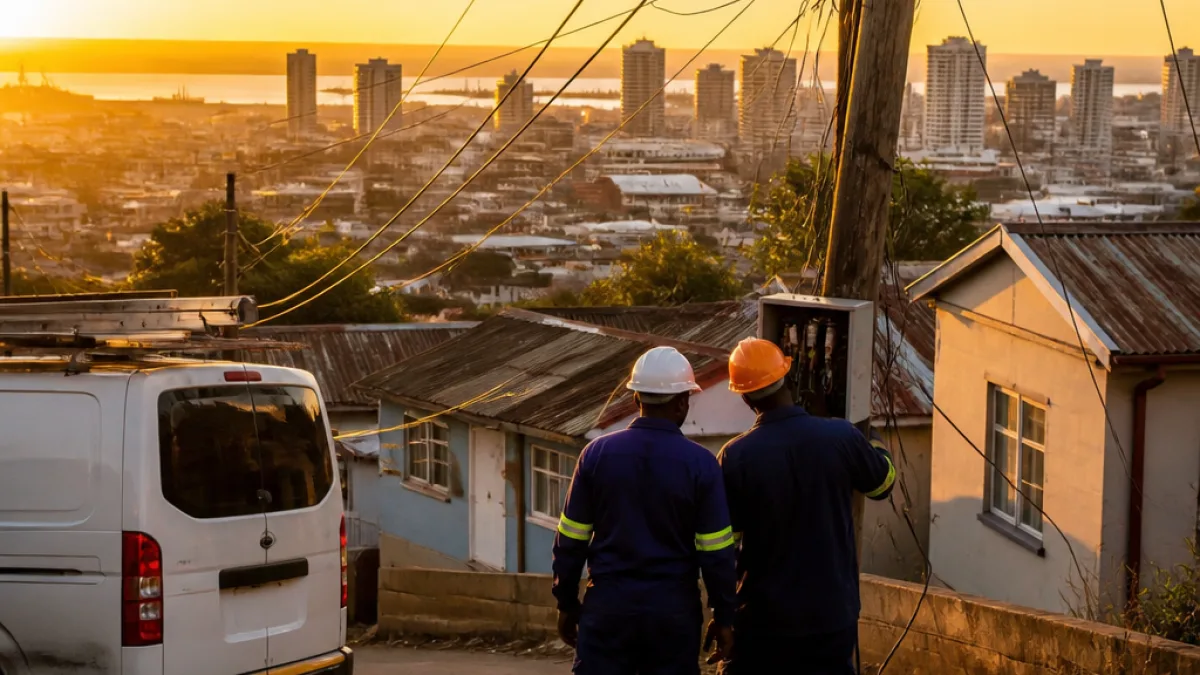
Eskom attributes the ongoing load reduction affecting parts of KwaZulu‑Natal to problems on local networks — including illegal connections, meter tampering and electricity theft — which overload transformers and feeders and force selective reductions to protect equipment and prevent broader failures. In short, additional national generation does not automatically resolve overloaded or damaged local distribution systems.
“Where others see chaos, we forge a path to the truth.”
Local impact and practical implications
For households and businesses, the distinction matters. Load reduction tends to be more targeted and can affect particular suburbs, industrial nodes or parts of municipal networks for short periods, whereas loadshedding is implemented more widely according to schedules. Still, the effect on livelihoods, refrigeration, small businesses and medical equipment can be significant.
Customers in affected areas should expect the following:
- Intermittent, scheduled interruptions on specific feeders rather than province‑wide stages.
- Possible sudden re‑routing or emergency transfers that can cause brief voltage fluctuations.
- Extended outages if transformers or lines are damaged by overload or tampering.
Where responsibility and solutions lie
Resolving load reduction requires action beyond increasing generation. The focus shifts to distribution: repairing ageing infrastructure, replacing overloaded transformers, improving meter security and curbing illegal connections. Municipalities, Eskom and law enforcement must co‑ordinate to locate problem feeders, clamp down on theft and upgrade equipment where loads have exceeded design limits.
Consumers can help by ensuring meters and connections are secure, reporting suspected tampering or theft to their municipality or SAPS, and avoiding improvised or illegal wiring that can endanger neighbours and damage infrastructure.
Data at a glance
| Metric | Value |
|---|---|
| Available generation capacity | 28,992MW |
| Expected evening peak demand | 24,485MW |
| Cold reserve | 6,019MW |
| Energy Availability Factor (YTD) | 67.78% |
| Days without nationwide loadshedding | ~483 days (since 16 May 2025) |
The current situation underlines an uncomfortable truth for KwaZulu‑Natal residents: national generation improvements do not automatically end local power pain. Fixing distribution networks, preventing theft and investing in maintenance are the next, essential steps to translate national stability into reliable local supply.
Officials and households alike will be watching whether accelerated repairs and anti‑theft operations can ease the load reduction that still touches many parts of the province.