
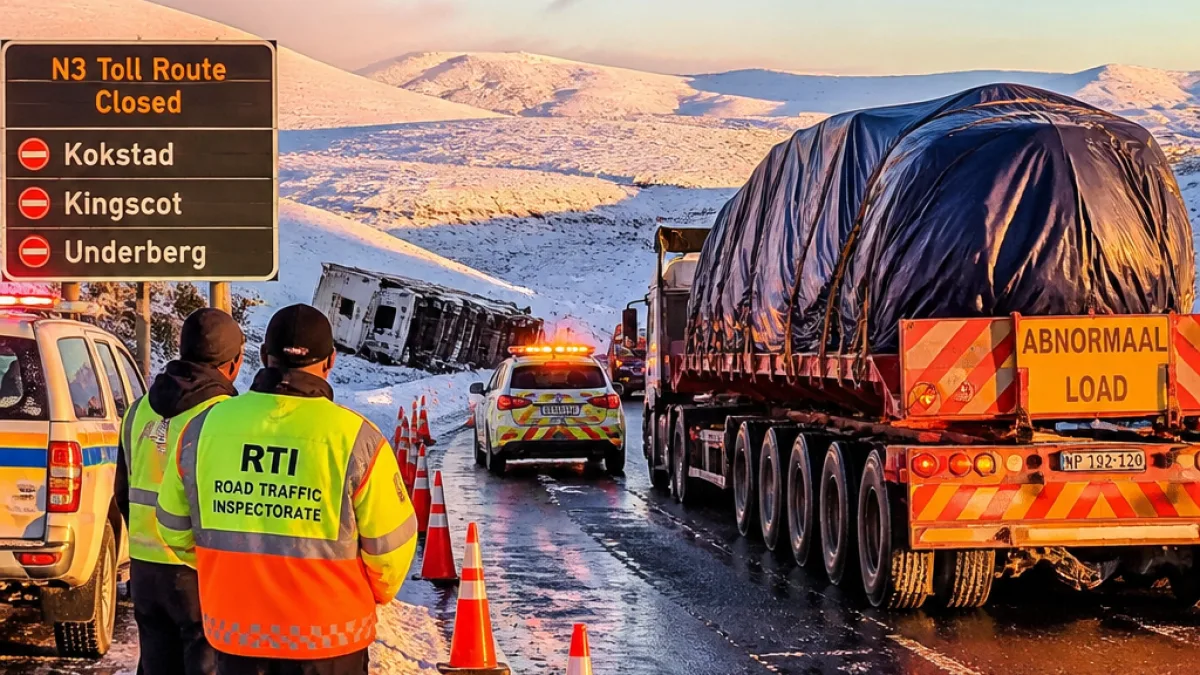
KwaZulu‑Natal’s Transport Department has tightened enforcement on hazardous heavy vehicles after a rare cut‑off low weather system brought snow, icy rain and bitterly cold conditions to parts of the province, prompting road closures and heightening the risk of serious accidents on the N3.
Enforcement stepped up on main freight route
Transport MEC Siboniso Duma said Road Traffic Inspectorate (RTI) officers have intercepted and impounded abnormal and dangerous load trucks on the N3 Toll Route, one of Africa’s busiest corridors linking Gauteng and KwaZulu‑Natal.
"Our vigilant team from Road Traffic Inspectorate has intercepted and impounded abnormal and dangerous trucks along the N3. We commend the team for their strictness and for saving innocent lives," Duma said, according to provincial announcements.
The MEC warned that abnormal load operations are prohibited under the National Road Traffic Act during these severe weather conditions and that the clampdown aims to prevent what he described as "catastrophic accidents" while the cut‑off low continues to trigger snowfall, heavy rain and congestion.
Local impact: closures and overturnings
The provincial department announced the closure of roads in Kokstad, Kingscot and Underberg on Monday after the adverse weather made surfaces treacherous. Duma added the province had already "witnessed" several trucks overturning along the N3, underlining the dangers posed by heavy and abnormal loads in icy conditions.
Trucks account for roughly 44% of all vehicles using the N3, a pattern that remains consistent over weekends and holiday periods. That heavy freight share increases the potential for major incidents when weather and road conditions deteriorate.
What motorists and logistics operators need to know
- Abnormal load movements are restricted during severe weather under the National Road Traffic Act and the provincial snowfall response plan.
- RTI and other road authorities have stepped up patrols and are empowered to impound vehicles that present a risk.
- Drivers should expect delays, detours and increased enforcement on the N3 and surrounding routes; check with toll operators and provincial traffic updates before travel.
The department did not publish a detailed list of all impounded vehicles or the precise number of overturning incidents. However, the enforcement action signals zero tolerance for operators who attempt to move abnormal loads in hazardous conditions.
Why abnormal loads are a specific concern
Abnormal loads — defined by their size, mass or configuration — require special planning, escorts and often lower speeds. In icy or snowy conditions their higher centre of gravity, extended braking distances and potential for instability make them more likely to jackknife or overturn. The combination of high freight volumes on the N3 and sudden winter weather increases the likelihood of multi‑vehicle collisions and long‑running congestion.
| Location | Action | Reason |
|---|---|---|
| Kokstad | Road closures announced | Snow, icy rain and unsafe driving conditions |
| Kingscot | Road closures announced | Adverse weather |
| Underberg | Road closures announced | Snowfall and hazardous surfaces |
Operational and public safety implications
Logistics companies should reassess planned movements on the N3 until the weather system clears and roads are declared safe. The RTI has the authority to stop and impound non‑compliant vehicles; prosecutions may follow if operators are found to have breached the National Road Traffic Act.
For the travelling public, particularly motorists unfamiliar with high‑altitude passes and winter conditions in KwaZulu‑Natal, the department’s message is clear: do not attempt to travel through affected areas unless absolutely necessary, and observe all traffic signs and directions from officials on the ground.
Duma reiterated that restrictions are part of the province’s snowfall response plan, which mandates limiting abnormal load movements during extreme weather to reduce the risk of serious incidents.
Provincial traffic updates, toll operator notices for the N3 and RTI bulletins remain the primary sources for real‑time information. Motorists are advised to keep mobile phones charged, maintain safe following distances, and carry warm clothing and emergency supplies if travel cannot be avoided.
As the system moves through the region, authorities are monitoring conditions and will lift restrictions only when it is safe to do so.














