
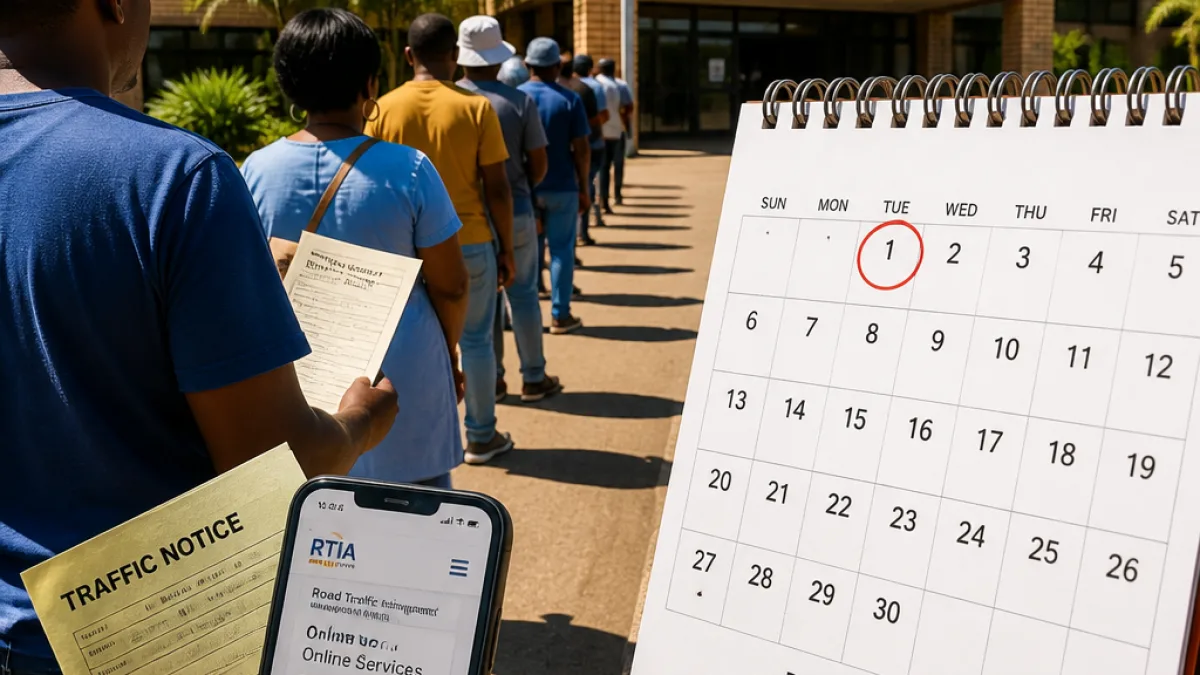
KwaDukuza municipality has confirmed that the Administrative Adjudication of Road Traffic Offences (Aarto) Act came into effect locally on 1 July 2026, bringing a suite of administrative enforcement mechanisms into force for motorists in the area. While the municipality says it has introduced electronic service of notices and the Appeals Tribunal process, the timeline for the national demerit points system remains uncertain.
What has changed in KwaDukuza
Municipal spokesperson Bridget Shange said the implementation that commenced on 1 July covers the administrative adjudication process, electronic service and postage of infringement notices, and access to the Appeals Tribunal. The introduction means infringement notices no longer need to be served exclusively by registered mail; notices may be sent electronically or by post, and motorists can use the Road Traffic Infringement Authority’s (RTIA) online Aarto portal to view notices and submit representations.
The RTIA, which is responsible for administering the national Aarto system, confirmed through spokesperson Monde Mkalipi that the date for the roll-out of the demerit points scheme has not yet been determined. The demerit system — under national control — will allow motorists to accumulate points for repeated traffic infringements, and drivers who exceed 15 points face licence suspension; repeated suspensions can lead to licence cancellation.
Services and support for motorists
Shange said traffic officers and back‑office staff have completed required training, and that resources and infrastructure are being procured in phases. She added the municipality supports Aarto’s objectives. The RTIA will provide additional assistance through a call centre and designated service outlets, and the online portal will allow drivers to interact with the system.
The municipality set out the main options that road users will have under the legislation:
- Receive a 50% discount if a fine is paid to the issuing authority within 32 days of receiving the infringement notice.
- Submit a representation to dispute an infringement notice.
- Nominate the driver in control of the vehicle to transfer liability for the fine.
- Apply to pay an infringement in instalments if it exceeds R750.
- Elect to be tried in court instead of using the administrative process.
“The implementation of the Aarto Act commenced on 1 July 2026 and includes the administrative adjudication process, electronic service and postage of infringement notices, and the Appeals Tribunal,” said the municipality spokesperson.
What remains unresolved
Although local structures for paperwork and contestation are being put in place, the critical element that will determine how drivers are penalised over time — the demerit points calendar and activation date — has not been set by the RTIA. That national authority retains responsibility for the points system and for maintaining the Aarto database that links infringements to individual driving records.
Until the RTIA announces a firm date, motorists in KwaDukuza face a mixed picture: they must comply with the new administrative processes and be aware of the discounts and dispute mechanisms, yet they cannot calculate future licence‑related risk because the demerit clock is not yet running locally. The potential for licence suspension once points are active underscores the importance of drivers understanding both the administrative options and the national authority’s timelines.
| Feature | Status (KwaDukuza) |
|---|---|
| Administrative adjudication | In effect (from 1 July 2026) |
| Electronic service / online portal | Available |
| Appeals Tribunal | Active |
| Demerit points roll‑out | Not yet determined (RTIA decision pending) |
For KwaDukuza residents, the practical steps are clear: check the RTIA portal regularly, consider the 50% early‑payment discount where appropriate, and use the representation or court options when disputing notices. Motorists should also watch for further announcements from the RTIA about when the demerit system will be activated, as that will change the long‑term consequences of repeated infringements.














