
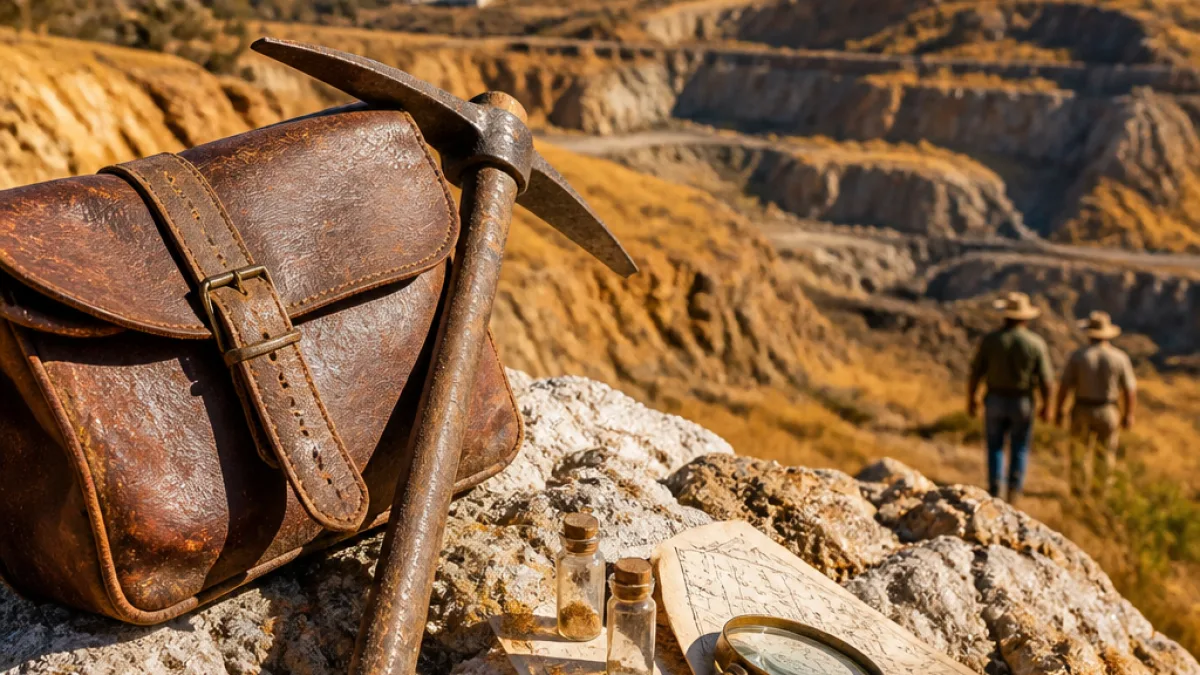
Prospectors in Krugersdorp laid groundwork for the Witwatersrand boom
Krugersdorp and its rocky ridges were part of a prolonged story of exploration that, according to local heritage researchers, helped create the conditions for the great Witwatersrand gold rush of the late 19th century. The 30th edition of Echoes of Krugersdorp, produced with the Krugersdorp Heritage Association (KHA), argues that discoveries in the quartz outcrops of Blaauwbank and Kromdraai were early signals of much larger mineral wealth to the east.
The programme’s co‑founder, Jaco Mattheyse, said the famous Main Reef find at Langlaagte in 1886 “did not occur in isolation”. He described it as the culmination of more than three decades of persistent prospecting across the southern Transvaal. That longer sweep of activity, Mattheyse said, included modest successes that nonetheless drew attention to the region’s potential.
“Their persistence, often rewarded with only modest success, ultimately paved the way for the greatest gold rush the world had ever seen,” said Mattheyse.
Early hints of gold around Krugersdorp
The heritage report traces formal records of gold discovery in the Transvaal back to the 1850s. It notes that in 1853 prospector Pieter Jacob Marais found small quantities of alluvial gold in the Jukskei River near present‑day Johannesburg. The deposits were insufficient for commercial mining, but the find demonstrated gold was present on the Witwatersrand and inspired further exploration.
Some years later, the report says, JH Davis identified additional gold‑bearing deposits near what is now Krugersdorp. Davis’s discovery attracted attention, but the government of the Zuid-Afrikaansche Republiek approached the prospect of a rush cautiously. The report refers to contemporary accounts suggesting President MW Pretorius feared a flood of fortune‑seekers would disturb the young republic’s agricultural base and social stability. According to the same accounts, Davis was compensated by the government and persuaded not to publicise his find.
Why the Krugersdorp finds matter today
For residents and heritage practitioners in Krugersdorp, the narrative matters on several levels. It places the town within a much wider geological and economic history, underlining that the story of the Witwatersrand goldfields did not begin in Johannesburg alone. It also strengthens local claims to cultural and historical tourism, which can support small businesses and community projects.
Heritage groups say showing how early prospecting linked the Krugersdorp landscape to the later industrialised mining era helps explain patterns of settlement, transport and land use that shaped the Highveld. The KHA’s material also encourages renewed attention to historic maps and site records held by local archives and collectors.
| Year (approx.) | Event |
|---|---|
| 1853 | Alluvial gold found by Pieter Jacob Marais in the Jukskei River |
| 1850s–1880s | Intermittent prospecting in the Witwatersrand area, including near Krugersdorp |
| 1886 | Main Reef discovery at Langlaagte — culmination of broader prospecting |
What the research does and does not claim
The Echoes edition emphasises continuity rather than a single, dramatic moment: discoveries around Krugersdorp are presented as part of a long, cumulative process that made the 1886 boom possible. The piece acknowledges there are contested details in contemporary accounts — particularly around how government actors handled early finds — and does not claim every local rumour as settled fact.
Local historians and the KHA plan to use the series as a basis for further research and public outreach. That includes encouraging students and community groups to examine old maps and field reports held in regional archives, and to document surviving landscape features associated with early prospecting.
- Residents can expect more community events and heritage walks tied to the series.
- Schools in Krugersdorp may be able to link local history projects to the material the KHA is making available.
- Local tourism operators stand to benefit if the town’s early role in the gold story is more widely promoted.
As the Highveld’s industrial past is reassessed, the KHA’s work places Krugersdorp back on the map of stories that shaped modern South Africa — not as an afterthought, but as an early, active terrain of discovery and change.














