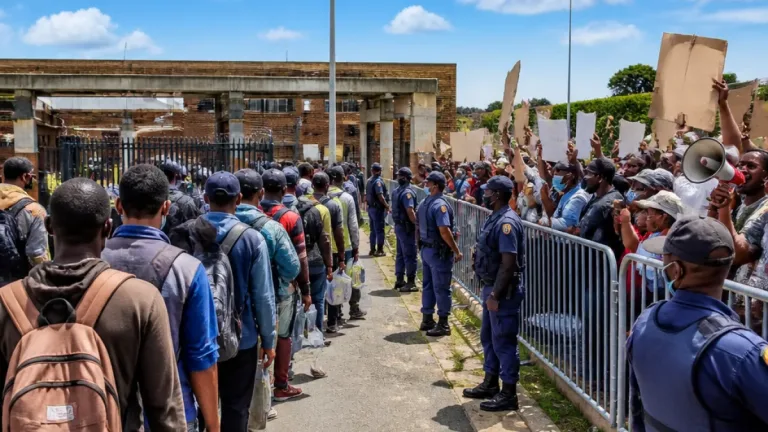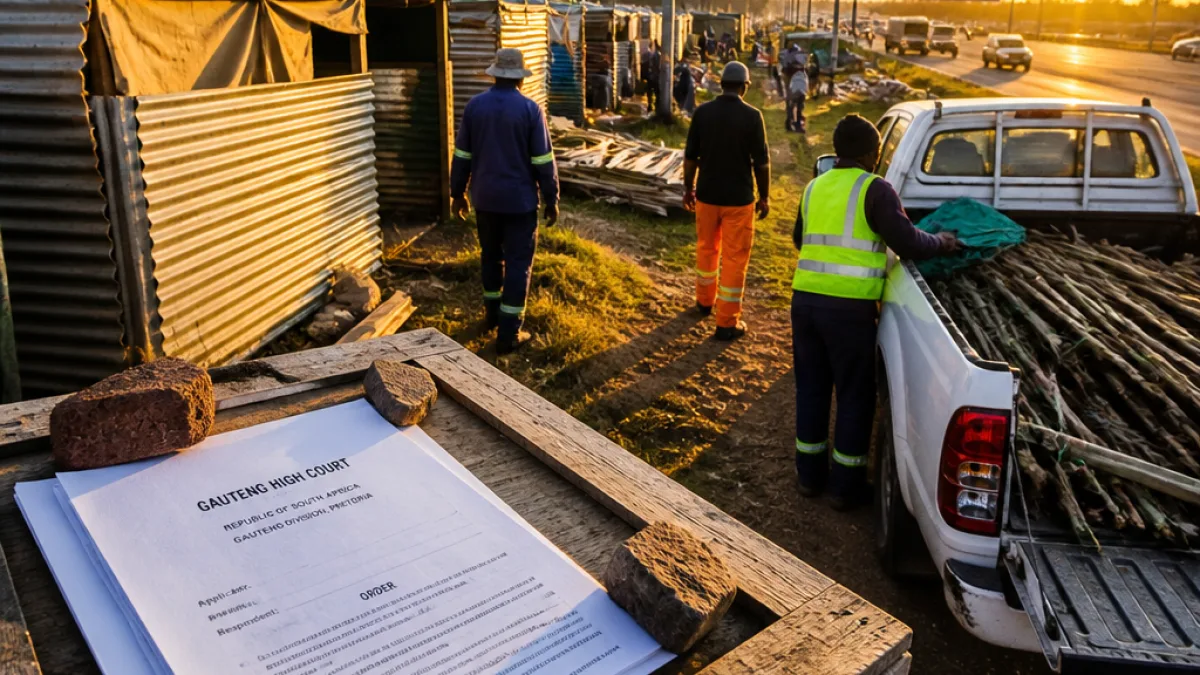
The Gauteng High Court in Johannesburg has ordered the City of Ekurhuleni to allow roughly 570 people and their families to return to the N12 informal settlement in Benoni and to have temporary structures erected for them while any appeals proceed.
What the court decision says
The order, handed down by the Gauteng High Court, requires the municipality to permit the displaced residents to return to the N12 encampment and to provide interim shelter. The directive applies pending the outcome of any appeal the city may lodge against the judgement.
The court did not, in the reporting available, set out long-term housing obligations in this decision; instead it focused on immediate relief by allowing return and temporary accommodation while legal processes continue.
Who is affected and where
The settlement is located along the N12 corridor in Benoni, within the City of Ekurhuleni metropolitan area. The order references around 570 people and their families who had been removed from the site by municipal authorities prior to the court judgment.
- Settlement: N12 informal settlement, Benoni
- Number affected: about 570 people and their families
- Authority: Gauteng High Court, Johannesburg
- Respondent: City of Ekurhuleni
Immediate implications for the city and residents
For Ekurhuleni the order imposes an operational task: allow returns and put temporary structures in place. That will require municipal staff to coordinate access to the site and to identify or deliver the interim materials or shelters specified by the court.
For residents, the judgment means the possibility of returning to sites they had been removed from, with short-term shelter guaranteed by the order while the legal dispute continues. The decision does not resolve longer-term land, tenure or municipal service questions.
“The Gauteng High Court has ordered that residents evicted from the N12 informal settlement by the City of Ekurhuleni be allowed to return,” reported News24.
Context: evictions and interim relief in Gauteng
Court orders that permit returns and require temporary structures are part of a broader pattern in which courts balance constitutional protections against unlawful evictions with municipal attempts to clear land. The Constitution and case law require that where people are evicted, alternative accommodation or meaningful interim relief must be provided where feasible.
Evictions along major corridors such as the N12 raise safety and service delivery concerns, and they often involve tensions between road authorities, metros and affected communities. This ruling is likely to prompt service and logistics questions for Ekurhuleni as it implements the court’s directive.
What happens next
The municipal administration can seek leave to appeal the order. Until such an appeal is lodged and a higher court grants a stay, the city is required to comply with the Gauteng High Court judgement and allow residents to return under the interim arrangements set by the court.
Residents and civil-society organisations often seek judicial relief when evictions occur without adequate consultation or alternative housing. This decision provides immediate relief, but it does not finalise the parties’ rights to occupy the land permanently.
Information for residents and concerned citizens
- If you or someone you know was affected by the N12 removals, contact the City of Ekurhuleni urgently to clarify return procedures and timelines.
- Court orders can be appealed; watch for statements from the city or from legal representatives of the residents for updates.
- If community organisations intend to assist, they should document the implementation of any temporary structures and any municipal delays or obstacles to compliance.
| Item | Detail |
|---|---|
| Judicial authority | Gauteng High Court, Johannesburg |
| Respondent | City of Ekurhuleni |
| People affected | ~570 (and their families) |
| Relief ordered | Return to site; temporary structures pending appeal |
The order shines a light on competing responsibilities in Gauteng: the municipality’s enforcement actions on encampments and the courts’ role in protecting the rights of vulnerable residents. Implementation will be the test—both for the City of Ekurhuleni and for the residents whose lives hinge on this ruling.
Bongani Zulu, Gauteng correspondent (Johannesburg)