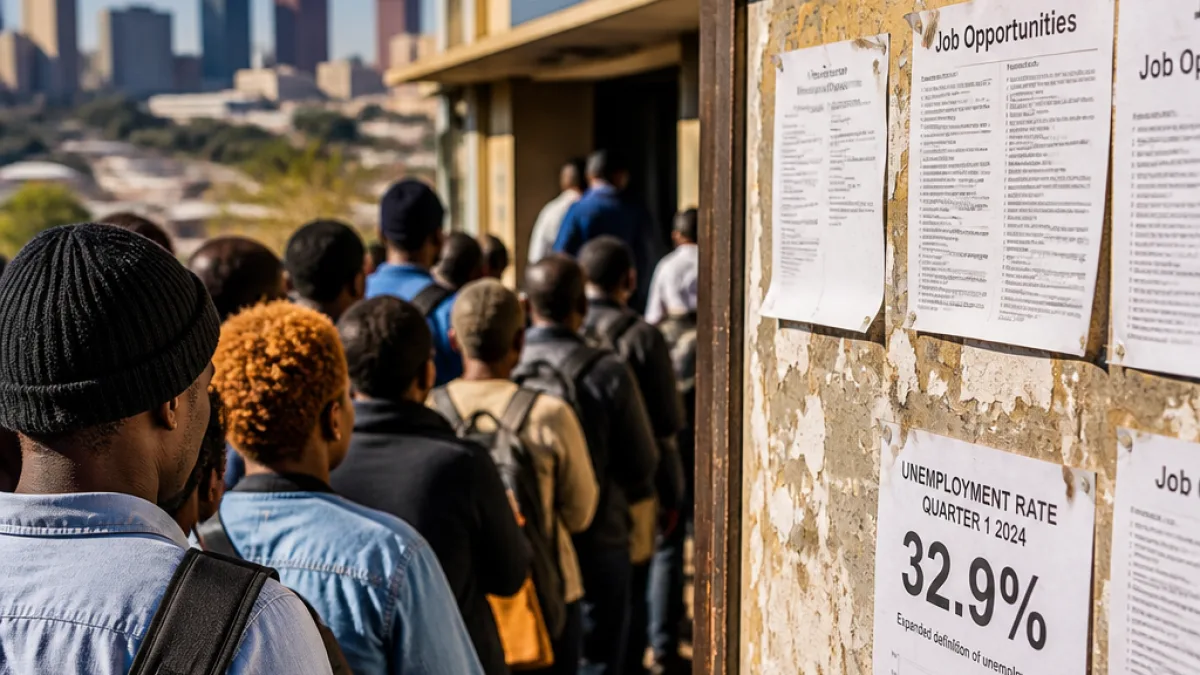
Gauteng has recorded another increase in unemployment, according to the latest Quarterly Labour Force Statistics (QLFS), with 22,000 more residents joining the ranks of the jobless in the most recent quarter. The figures bring the province’s total unemployed population to 2.697 million and push the unemployment rate to 34.6%.
Municipal pain: Johannesburg, Tshwane and Ekurhuleni
The QLFS municipal breakdown reveals steep rises in joblessness across Gauteng’s metros. Johannesburg saw the largest year-on-year increase, with 84,000 more unemployed people compared with the same period last year. Tshwane recorded an extra 57,000 jobseekers year-on-year for the second successive quarter, while Ekurhuleni added 12,000 more unemployed residents compared with quarter two of 2025.
These consecutive quarterly increases mark a worrying reversal for a province that contributes a large share of South Africa’s economic activity. Across Gauteng, residents and business owners say persistent service delivery problems, crime and corruption remain barriers to attracting investment and stimulating employment.
Political context and provincial programmes
Premier Panyaza Lesufi has rolled out high-profile initiatives, including the Nasi Ispani programme, which officials say will create job opportunities. However, the QLFS figures directly contradict claims of immediate job growth from these measures.
Critics argue that without fixing core governance issues — reliable electricity and water, functioning sanitation and roads, and effective policing — investors will remain reluctant to expand in the province and employers will be constrained in hiring.
“He must finally address those government failures that have paralysed the economy and inhibit businesses from investing and creating jobs,” the source commentary said.
How Gauteng compares
The employment picture in other metros provides contrast. According to the same data, the DA-led City of Cape Town added 67,000 jobs in the second quarter compared with 2025 — a point used by critics to argue that different municipal governance can affect job creation.
| Area | Change in unemployed (year-on-year) |
|---|---|
| Gauteng (total) | +22,000 (this quarter); 2.697 million unemployed; 34.6% rate |
| Johannesburg | +84,000 |
| Tshwane | +57,000 |
| Ekurhuleni | +12,000 |
| City of Cape Town | +67,000 jobs added (Q2 vs 2025) |
Local impact and concerns
For ordinary residents, rising unemployment carries immediate consequences: squeezed household budgets, greater demand on social services and increased pressure on small businesses and informal traders. Community leaders say potholes, unreliable electricity and inconsistent refuse removal add to the cost of doing business and discourage potential investors.
Business groups and analysts often point to crime, corruption and faltering municipal services as key deterrents to investment — factors that the latest QLFS numbers amplify. The figures also pose a direct political challenge to provincial and municipal leaders who have promised job creation and revitalised local economies.
What this means going forward
Policymakers face a twofold task: arrest short-term job losses while addressing longer-term structural constraints. That requires concerted action across multiple fronts — restoring reliable basic services, improving municipal governance, tackling crime and creating conditions that encourage private sector hiring.
Until tangible improvements in these areas are visible, Gauteng’s residents and small businesses are likely to feel the pinch. The QLFS snapshot serves as a reminder that headline programmes must be matched by sustained service delivery and effective crime prevention if the province is to reverse the recent uptick in unemployment.
- Key figures: 22,000 more unemployed (this quarter); 2.697 million unemployed in Gauteng; unemployment rate 34.6%.
- Municipal increases: Johannesburg +84,000; Tshwane +57,000; Ekurhuleni +12,000 (year-on-year comparisons cited).
- Contrast: City of Cape Town added 67,000 jobs over the same comparative period.
The QLFS release will sharpen scrutiny of provincial programmes and municipal performance as Gauteng seeks to regain momentum on jobs and investment.