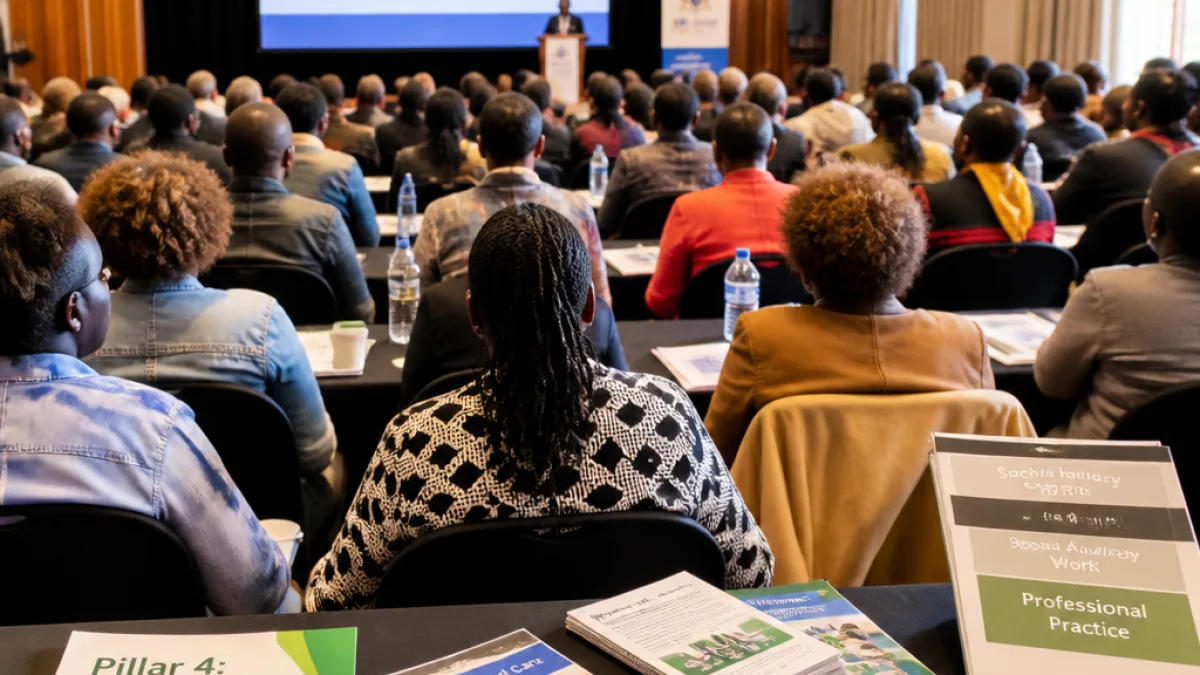
The Gauteng Department of Social Development has intensified efforts to improve care for survivors of gender-based violence (GBV) by training frontline officials in trauma-informed approaches. The department convened a Trauma-Informed Care Conference at the Springs Civic Centre in the Eastern Corridor to upskill social workers and other professionals working under the Victim Empowerment Programme (VEP).
Departmental leaders said the initiative supports Pillar 4 of the National Strategic Plan on Gender-Based Violence and Femicide (GBVF) 2020–2030, which prioritises response, care, support and long-term healing for survivors. The conference drew social workers, clinical practitioners and programme managers who handle counselling, referral and victim support across the province.
“Through VEP, the Department works closely with key stakeholders across the criminal justice and health sectors,”
The Department’s Director for the Victim Empowerment Programme and Social Crime Prevention, Khanyisile Mathebula, said the training aimed to ensure survivors receive sensitive, appropriate and victim-centred services that address both immediate needs and longer-term recovery. She named the Department of Justice and Constitutional Development, the National Prosecuting Authority, the police, the Department of Community Safety and the Department of Health as close partners in the work.
Mathebula said provincial monitoring had shown a need to bolster therapeutic and psychosocial services offered by social workers. The conference therefore prioritised practical skills for effective counselling and trauma-informed interventions for individuals, couples and families.
What frontline staff were taught
Speakers and facilitators covered a spectrum of topics intended to strengthen everyday practice for social workers and allied professionals. Dr Marcia Zikhali, a psychologist and occupational therapist, provided specialised input on the emotional, psychological and social impact of GBV, helping attendees understand how trauma manifests and the therapeutic options available.
| Theme | Focus |
|---|---|
| Understanding trauma | How domestic violence and sexual offences affect survivors |
| Trauma-informed therapeutic approaches | Individual, couple and family interventions |
| Referral systems | Effective pathways between VEP, health and justice services |
| Worker wellness | Preventing burnout and secondary trauma among social workers |
The training also emphasised the need for safe, private environments when working with survivors and the development of reliable referral mechanisms to ensure continuity of care between social services, health facilities and the criminal justice system.
Why this matters in Gauteng
Gauteng is home to dense urban communities where demand for victim-centred services is high. Social workers are frequently the first point of structured support after an incident of GBV, and their approach can shape a survivor’s access to justice, medical care and psychosocial recovery. Departmental officials said improving counselling skills and referral practices can reduce re-traumatisation and improve long-term outcomes for survivors and their families.
- Practical skills: The conference prioritised actionable counselling techniques for trauma cases.
- Stronger referrals: Attendees focused on linking victims to health and justice services efficiently.
- Worker support: Sessions addressed burnout and secondary trauma to protect staff wellbeing.
Dr Marcia Zikhali’s contributions centred on recognising the broader social and psychological consequences of violence and tailoring interventions to the needs of different survivors. While the department did not release participant numbers, it said the conference forms part of ongoing provincial efforts to strengthen VEP implementation.
The VEP is positioned as a key mechanism for delivering victim-centred services across government and civil society. By reinforcing trauma-informed practice among social workers, Gauteng aims to improve immediate crisis response while supporting survivors’ longer-term healing — a central objective of the GBVF National Strategic Plan.
Officials said further capacity-building activities will continue as the department monitors service delivery and identifies gaps in therapeutic and psychosocial provision across districts.