
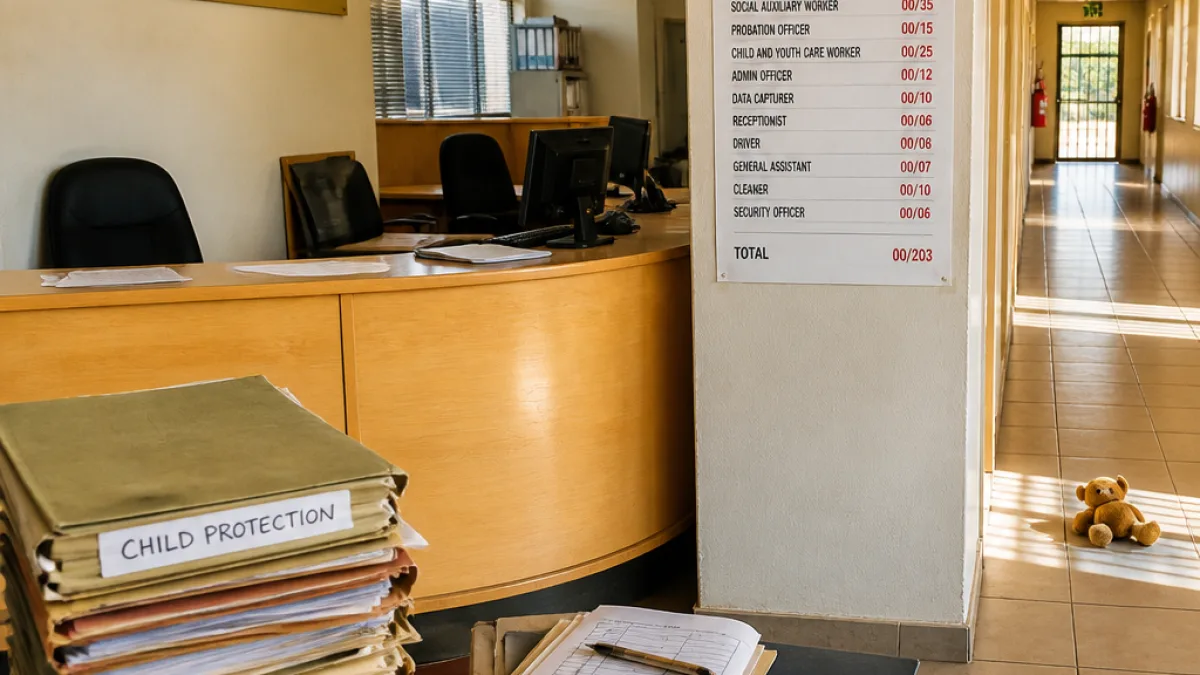
Gauteng’s social safety net is under strain after the provincial department admitted that 170 critical frontline posts remain vacant, a gap that includes 102 social worker and 74 child and youth care worker posts, the Democratic Alliance (DA) has reported.
What the figures mean on the ground
The vacancies, disclosed in a written reply by the Gauteng Department of Social Development (GDSD) to questions submitted in the Gauteng Provincial Legislature, relate to frontline roles tasked with immediate protection and care. These are not back-office posts; they are the professionals responsible for investigating abuse, supporting older people in crisis and responding to survivors of gender-based violence.
In its response the department said the posts "will be considered" for filling — a phrasing the DA described as insufficient given that the department’s budget, including compensation for employees, has already been approved by the legislature.
"For a child who has suffered abuse, an older person needing support, or a victim of gender-based violence seeking help, access to a social worker or child and youth care worker can determine whether they receive urgent assistance or are left to cope alone,"
The DA has said it will table further questions to both the GDSD and Gauteng Treasury to establish why these frontline vacancies remain unfilled and to press for concrete timelines and measures to avoid overburdening existing staff.
Numbers at a glance
| Post type | Vacancies |
|---|---|
| Social workers | 102 |
| Child and youth care workers | 74 |
| Total frontline vacancies | 170 |
Local impact and operational pressure
Social workers and child and youth care workers form the first line of support for families facing abuse, neglect, substance-related harms and the fallout of poverty. Vacancies of this magnitude can lengthen waiting times, delay investigations and reduce the frequency and reach of interventions — particularly in townships and informal settlements where demand is highest.
Current officials are likely to see their caseloads rise as vacancies persist. The department’s reply did not set binding timelines for recruitment nor explain what immediate measures are being taken to prevent burnout or service gaps among remaining staff. That absence of detail is what alarmed opposition legislators and advocacy groups who say every day of delay increases risk for vulnerable residents.
What stakeholders are asking for
- Clear recruitment timelines for all 170 frontline posts.
- A plan to manage excessive caseloads while posts remain vacant, including temporary staff or reallocation of resources.
- Transparency from Gauteng Treasury on whether funds earmarked for compensation can be released or reprioritised to expedite filling posts.
Those are the demands the DA intends to press in follow-up questions in the legislature. The department’s short response — that vacancies "will be considered" — offers no firm dates or immediate mitigation steps.
Background and broader context
Provincial social development departments nationwide have for years grappled with recruitment and retention challenges. Qualified social workers often cite heavy caseloads, safety concerns when visiting homes in volatile areas, and competition from NGOs and the private sector as reasons for leaving or not applying for public posts.
In Gauteng, where urban density and socio-economic inequality are marked, the absence of frontline staff tends to be felt quickly by communities. Early intervention in child protection and gender-based violence cases is crucial to preventing harm and long-term social costs. Delays can increase pressure on police services, shelters and community organisations already working with limited budgets.
What residents should know
At present there is no public timetable from the department committing to when the 170 posts will be advertised or filled. Residents seeking help should continue to approach local social development offices, health facilities and magistrates’ courts where available. Community organisations and shelters may provide interim support, but the lack of professionals in the public sector reduces co-ordinated responses.
The DA’s planned follow-up in the Gauteng Provincial Legislature aims to force clarity on both budget availability and the operational steps necessary to ensure frontline services are restored promptly. Until the department supplies concrete timelines and mitigation measures, frontline social services in many parts of the province will remain stretched.
Bongani Zulu, Gauteng Correspondent (Johannesburg)














