
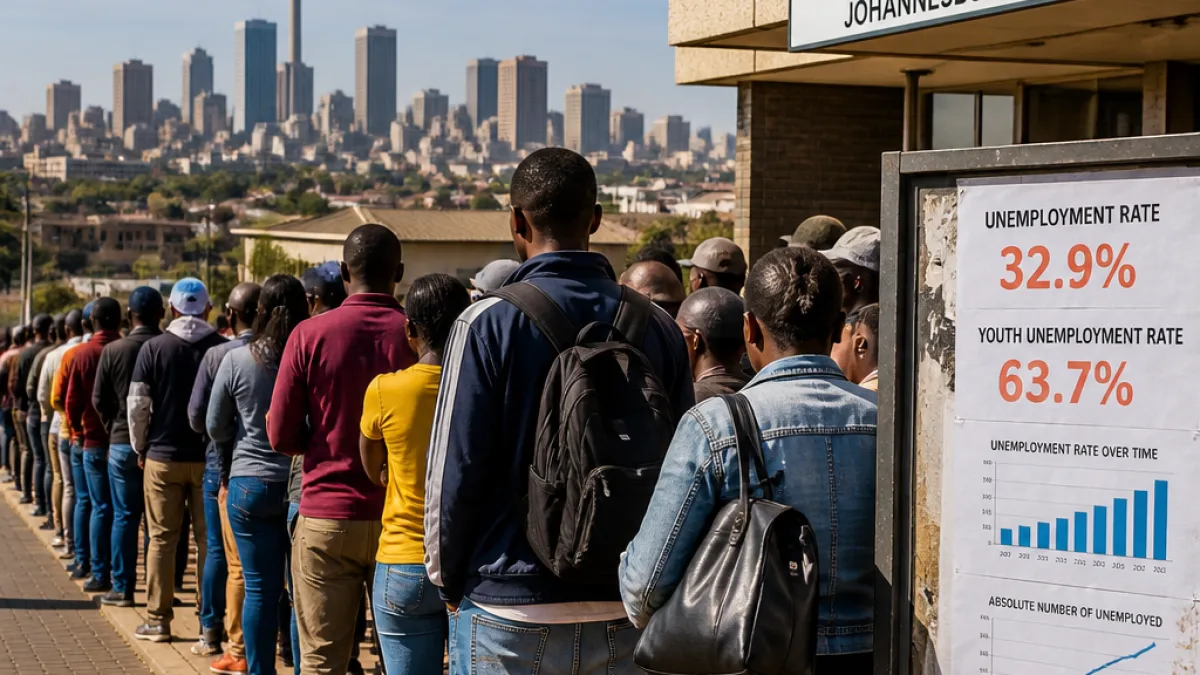
Gauteng has recorded a fresh decline in employment amid a deteriorating national jobs picture, according to Statistics South Africa’s Quarterly Labour Force Survey (QLFS) for the second quarter of 2026.
Key numbers and the local impact
The QLFS shows South Africa’s official unemployment rate rose to 33.6% in Q2 2026, with an increase of about 345,000 people joining the ranks of the unemployed. In Gauteng, total employment is reported at 5.094 million, but that figure masks a quarter-on-quarter fall of 22,000 jobs and a year-on-year drop of 92,000.
These shifts mean Gauteng’s unemployment burden remains extremely high, with the province’s unemployment rate at 33.5% in the second quarter. For many households in the economic heartland of the country, that loss of work translates to reduced household incomes and greater pressure on municipal services and social relief mechanisms.
Where the pressure is felt
Job losses in Gauteng reverberate through multiple sectors. The province is a national hub for manufacturing, finance, retail and construction; even relatively small reductions in employment numbers can affect informal traders, transport operators and small suppliers who depend on daily economic activity in the cities and townships.
Local residents and community leaders say that even when official employment figures include informal-sector and private household work, the reality on the ground is tightening. Reduced consumer spending hits small businesses in townships and suburbs alike, and municipal revenues from rates and services can suffer as payment backlogs grow.
National context and comparisons
Nationally, the QLFS suggests a mixed picture across metros. While some centres such as eThekwini recorded employment gains, Cape Town saw a quarterly decline of 19,000 jobs. KwaZulu‑Natal’s unemployment rate rose to 32.5%, up from 31.2% in Q1.
For Gauteng, the decline of 22,000 jobs between Q1 and Q2 followed an already challenging year that left employment down by 92,000 from Q2 2025. These trends feed into broader debates over economic policy, labour-market interventions and the need for targeted provincial responses.
What this means for policy and voters
The QLFS results will sharpen calls from policy-makers, labour unions and civil-society groups for more aggressive job-creation measures. Possible responses under discussion nationally and provincially include expanded public employment programmes, stronger support for small businesses, and investment in labour-intensive public works that can absorb unemployed workers in the short term.
With the local government elections approaching, the figures are likely to become a focal point for political debate in Gauteng, where employment and service delivery are central to voter concerns. Municipalities and the provincial administration are expected to face increased scrutiny over their plans to stimulate local economies and protect vulnerable households.
Practical implications for residents
For residents facing job losses, several immediate measures can help while longer-term policy shifts take effect:
- Check local municipal and provincial portals for information on public works and short-term employment opportunities.
- Explore SASSA and social-relief options if household income falls below necessity thresholds.
- Engage with community-based organisations and local business forums that offer skills training or cooperative enterprises.
Data snapshot
| Measure | Value (Q2 2026) |
|---|---|
| National unemployment rate | 33.6% |
| Gauteng total employment | 5.094 million |
| Gauteng Q1–Q2 job change | -22,000 |
| Gauteng year-on-year change | -92,000 |
The QLFS is the most recent official snapshot of the labour market and will be used by government, labour and business in planning responses. For many Gauteng residents the statistics confirm what they experience daily: work remains scarce and economic recovery fragile.
As debate intensifies over how quickly to implement job-creation measures and where to target resources, ordinary households in Johannesburg, Ekurhuleni and Tshwane await clear, actionable plans that will translate numbers on a page into paid work and steadier incomes.