
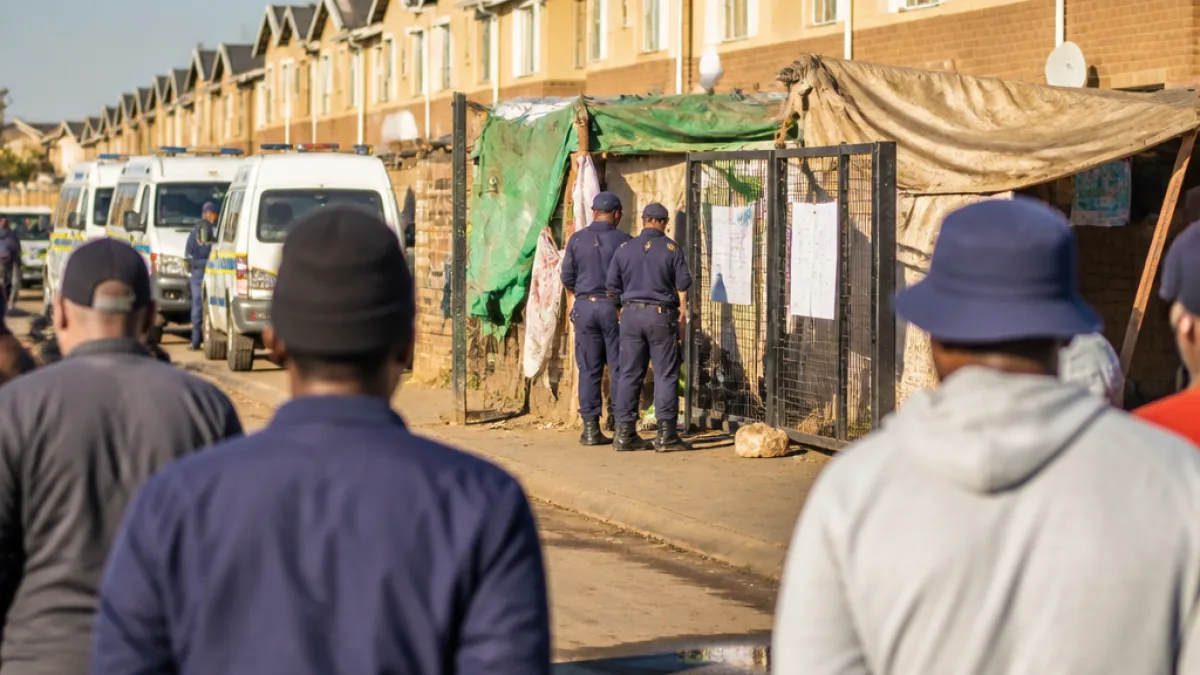
Gauteng’s Human Settlements Department has defended its response to a surge in unlawful occupations of government housing projects, saying it is mounting security, recovery and legal drives to reclaim properties from organised syndicates — after the Democratic Alliance (DA) accused the province of failing to prevent hijackings and of incurring high costs per eviction.
Province: illegal occupation is criminal, not delivery failure
The department told the provincial legislature it has identified unlawful occupations at 14 of 45 housing projects over the past five years and described the problem as criminal activity, not proof of failed delivery. It said many of the affected homes were funded, built and ready for allocation to verified beneficiaries before they were taken over.
According to the provincial response, one development highlighted was the Obed “Mthombeni” Nkosi project in Sedibeng, where the number of unlawfully occupied units reportedly rose from 48 to 292.
What the province is doing
The department outlined a package of measures it said are aimed at preventing further illegal occupation and reclaiming seized units. These include:
- appointing a panel of private security companies to provide surveillance, monitoring and early warning at vulnerable developments;
- a housing recovery drive to reclaim occupied units, refurbish them where necessary and allocate them to verified beneficiaries on the housing demand database;
- working with the Lesedi Local Municipality, the Sheriff of the Court, SAPS and Public Order Policing to enforce court eviction orders.
DA raises cost and capacity concerns
The DA has been sharply critical of the provincial response, saying the government has not done enough to protect homes intended for desperate families and pointing to the scale of illegal occupation across projects. The party also raised alarm about what it described as the high cost of evictions — a figure that has become a focus of public debate.
"Illegal occupation is a criminal act and should not automatically be regarded as evidence that government had failed to deliver housing,"
The department reiterated this position in its written reply, while highlighting that it is enforcing court orders and seeking to return units to verified beneficiaries.
Numbers on the table
Key figures provided by the department to the legislature give an outline of the problem’s footprint in the province:
| Metric | Figure |
|---|---|
| Housing projects affected (past five years) | 14 of 45 |
| Obed "Mthombeni" Nkosi project occupied units | 48 → 292 |
Impact on beneficiaries and local municipalities
Municipalities and housing officials face the immediate task of securing completed units and ensuring allocations reach legitimate applicants on the housing demand database. For communities this means prolonged uncertainty: families approved for housing may still find their units occupied, while evictions often require court processes and coordinated enforcement that can take weeks or months.
The department said its recovery drive includes refurbishment where units were damaged while occupied. It also intends to work closely with law enforcement to dismantle organised networks that allegedly profit from selling or renting unlawfully taken homes.
Practical steps for affected residents
Residents who believe they are approved beneficiaries but whose allocated houses have been overtaken are advised to check their status on their municipality’s housing demand database and to lodge formal complaints with the Human Settlements Department and their local ward councillor. The department’s reliance on court orders means claimants should be prepared for legal processes to establish possession and rightful allocation.
For now, the province is defending its approach as a combined security, legal and allocation strategy aimed at returning homes to those who qualify, while acknowledging the problem is driven by criminal syndicates rather than only by administrative failure.
As Gauteng continues to manage rapid urban growth and demand for affordable housing, the friction between delivery, security and enforcement is likely to remain a central challenge for provincial and local government.












