
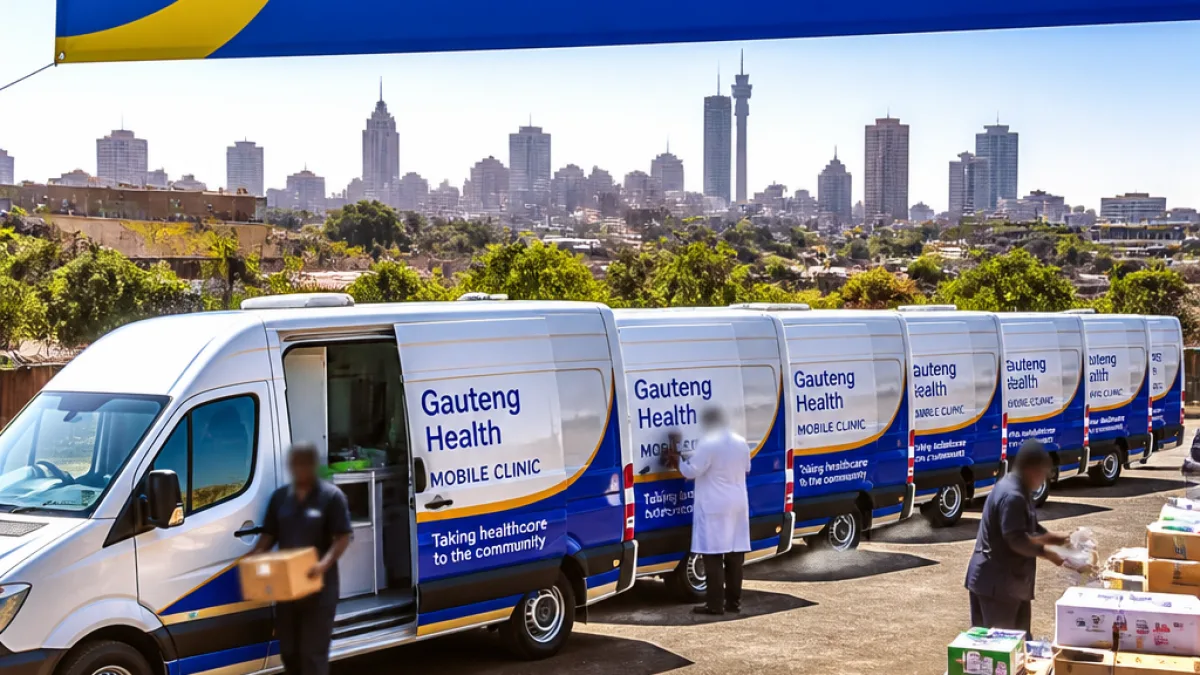
The Gauteng Health Department has bolstered its outreach capacity with seven new mobile clinics, bringing the provincial fleet to 53. The department said the units will be deployed across Johannesburg, Tshwane, Ekurhuleni and Sedibeng to serve communities that have limited access to fixed healthcare facilities.
Services on offer and deployment focus
According to the department, the mobile clinics will deliver a range of primary health services. These include:
- HIV and TB testing;
- Screening for hypertension and diabetes;
- Health promotion and education;
- Services specifically targeting women, children and young people;
- Referrals for patients who require further care at fixed facilities.
The department’s spokesperson, Steve Mabona, said the clinics would be monitored to ensure they were properly maintained, staffed and equipped, and deployed where they were most needed.
“Services for women, children and young people, hypertension and diabetes screening, health promotion and patient referrals. The department will monitor the clinics to ensure that they are properly maintained, staffed, equipped and deployed where they are needed most,” said the spokesperson, Steve Mabona.
Where the clinics will operate
The new units are intended for urban and peri‑urban pockets within Gauteng’s four metropolitan municipalities: Johannesburg, Tshwane, Ekurhuleni and Sedibeng. These areas contain informal settlements, newly developed townships and suburbs where residents sometimes face long travel times to the nearest clinic or community health centre.
Practical impact for residents
For many residents, mobile clinics offer a first point of contact for routine screening and preventive care without the time and cost of travelling to larger facilities. Early detection of hypertension, diabetes, HIV and TB can reduce complications and referrals to hospital care.
Local community health practitioners said mobile units can also ease pressure on fixed clinics by handling routine services and follow‑ups. The department emphasised that referrals will be made for patients requiring higher‑level care.
Monitoring and staffing
The health department has flagged monitoring as a priority. Mabona said the province will keep a close watch on maintenance, staffing levels and equipment availability to make sure the units are functional and effective.
| Aspect | Details |
|---|---|
| Number of new units | 7 |
| Total provincial fleet | 53 |
| Primary services | HIV/TB testing, hypertension/diabetes screening, maternal and child services, referrals |
| Target areas | Johannesburg, Tshwane, Ekurhuleni, Sedibeng |
Context: rising demand and stretched services
Gauteng’s population growth and expanding urban settlements continue to increase demand for primary healthcare. Mobile clinics are part of a broader strategy to bring services closer to where people live, particularly in areas where establishing permanent facilities may be costly or slow.
While mobile units are a useful stopgap, health experts say they work best when integrated into a network that ensures continuity of care, clear referral pathways and reliable supply chains for medicines and consumables.
What residents should know
- Residents should check local clinic noticeboards, municipal communications or social media for mobile clinic schedules and locations.
- Screening is often walk‑in; bring identity documents and any chronic medication for prescription checks.
- Mobile clinics provide basic testing and referrals but do not replace diagnostic services available at hospitals.
The expansion was announced in a media statement by the Gauteng Health Department. Reporting on the rollout was provided by Culvin Mabasa for the department’s communications.
Author: Bongani Zulu, Gauteng Correspondent (Johannesburg)











