
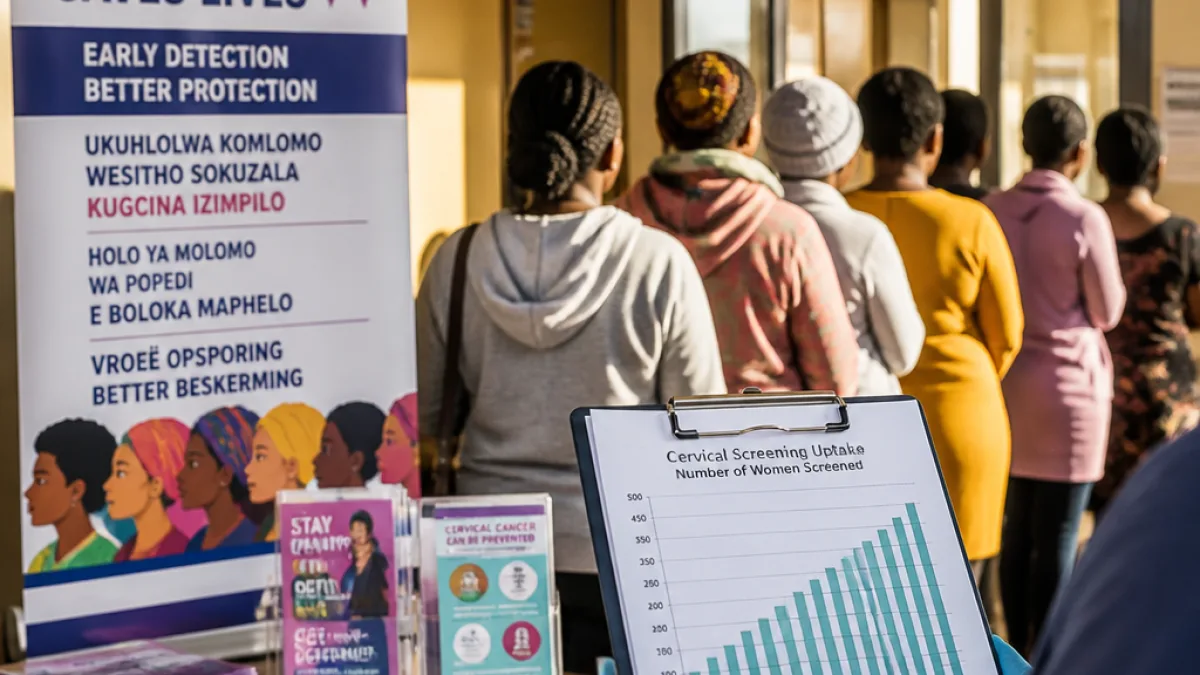
Gauteng has recorded a 29% increase in cervical cancer screening in the 2025/26 financial year, the provincial health department said, a rise it attributes to intensified awareness campaigns across all five districts.
Numbers show jump in uptake
According to the Gauteng Department of Health (GDoH), a total of 198 611 women were screened during 2025/26, up from 153 703 in 2024/25. The department said this represents an additional 44 908 women accessing services that can detect changes in the cervix before they develop into cancer.
| Financial year | Number of women screened |
|---|---|
| 2024/25 | 153 703 |
| 2025/26 | 198 611 |
The department said the improvement followed cervical cancer awareness drives that began in the third quarter of the 2025/26 financial year, carried out across all five districts.
District picture and next steps
GDoH highlighted the West Rand as the district with the greatest improvement in screening uptake. Ekurhuleni was singled out as an area that will receive further targeted interventions to raise screening numbers.
- Increased outreach and awareness initiatives were launched across districts from the third quarter of the 2025/26 financial year.
- Provincial officials plan targeted interventions where screening remains low, notably in Ekurhuleni.
- GDoH said the rise is part of an ongoing effort to ensure eligible women can access screening and information.
“The women of 1956 understood that progress begins when women stand up and act. Seventy years later, we honour them by ensuring that women are empowered with information and access to services that can save their lives,”
The quotation is from Gauteng MEC for Health and Wellness, Faith Mazibuko, who linked the screening drive to the spirit of the 1956 women’s march and to National Women’s Day commemorations held at the Union Buildings in Pretoria.
Context: cervical cancer in Africa
The provincial department pointed to a World Health Organization Regional Office for Africa report (March 2024) that documents the heavy burden of cervical cancer in the region. The WHO report notes cervical cancer is the leading cause of cancer-related deaths among women in sub-Saharan Africa, and that 18 of the 20 countries with the highest cervical cancer burden are in the African region. The region accounted for 23% of global cervical cancer deaths in 2022.
GDoH also noted that cervical cancer is largely preventable through Human Papillomavirus (HPV) vaccination and early detection, emphasising that screening catches precancerous changes before they progress.
What this means for Gauteng women
The rise in screening is a positive sign for early detection in Gauteng, but provincial health officials cautioned that work must continue. Increased screening uptake typically allows clinicians to identify and manage precancerous lesions earlier, reducing the likelihood of invasive disease and deaths.
For many women, practical barriers — awareness, clinic access, competing household responsibilities — still limit uptake. The department’s targeted outreach in district clinics and community sites aims to address some of these obstacles.
Practical advice for residents
While the department expands outreach, women and caregivers should note the following:
- Eligibility and referral criteria for cervical screening vary; check with your nearest primary healthcare clinic for details.
- HPV vaccination remains a key preventive tool; enquire at your clinic about availability and eligibility.
- Screening is most effective when combined with follow-up care — ensure you receive and act on your results.
Gauteng’s increase in screening came as the country marked National Women’s Day. The health department framed the rise as an achievement linked to information campaigns and community mobilisation, but noted further work is needed to reach every eligible woman in the province.
Reporting from Johannesburg.











