
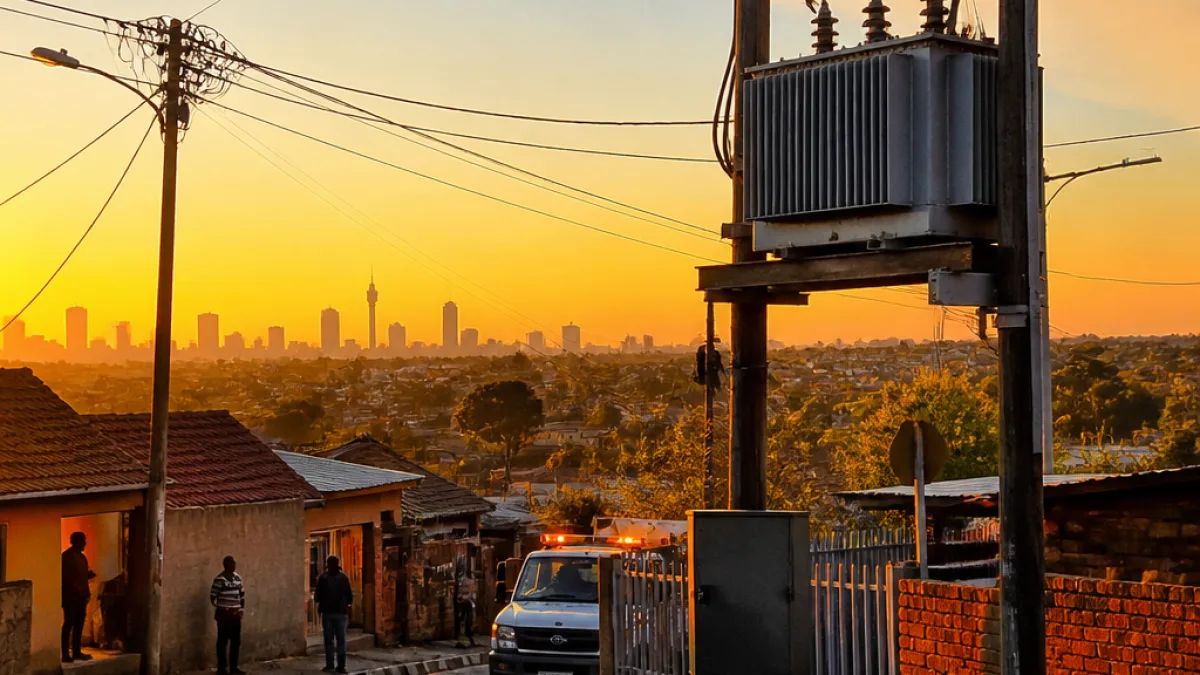
Eskom has announced targeted load reduction across parts of Gauteng from 12 to 17 August, saying the measure is needed to protect local electrical infrastructure and to prevent extended outages where networks are overloaded.
Which areas will be affected and when
The utility said load reduction will run in two daily windows: 05:00–09:00 and 17:00–22:00. Specific suburbs and townships are grouped into blocks; several affected areas include parts of Orange Farm, Sebokeng, Sharpeville, Dobsonville, Mapetla, Protea South and parts of Soweto.
| Day | Morning block (05:00–09:00) | Evening block (17:00–22:00) |
|---|---|---|
| Wednesday | Block H: Vereeniging (Sharpeville), Sebokeng Units 3,7,12,13,14,16,17,19; Sebokeng-East; Westside Park-West; Beverley Hills-East. Block J: Orange Farm Ext 7-East; Orange Farm Ext 1–4,8; Stretford Ext 2–10; Sharpeville & outlying; Sebokeng Units 1,7,8,12. | Block E: Mapetla, Protea South, Chiawelo, Protea North, Nooitgedacht, Makapanstad. |
| Thursday | Block D: Rethabiseng, Kudube, Moroka, Dhlamini, Klipspruit, Kagiso, Khutsong. | Block C: Dobsonville & Dobsonville Ext 5 & 7; Naledi; Mabopane C, E, U, W, V, X; Winterveldt Wards 2 & 13; Jabulani; Moletsane; Tladi. |
| Friday | Block B: Dube & Dube Ext 1; Mofolo (East, West, South); Meadowlands Zones 6–8; Luipaardsvlei; Riverside. |
Eskom emphasised that the measure is not the same as national loadshedding. The utility said progress had been made and that six provinces remain free of load reduction, with about 1.196 million customers removed from load reduction lists.
“Load reduction is only implemented when a local network is overloaded, to prevent equipment failure and to protect the neighbourhood from extended outages,” Eskom said.
Why load reduction still happens despite no loadshedding
According to Eskom, load reduction was introduced to protect transformers and mini-substations when local networks suffer overload. The utility pointed to illegal connections and electricity theft in some areas as continuing pressure on local equipment, which can force short, controlled reductions of supply to avoid longer outages.
Although South Africa has gone more than a year without national loadshedding, Eskom warned that localised measures remain necessary in places where infrastructure is at risk.
- Purpose: Prevent damage to local substations and protect staff and customers.
- Scope: Targeted, not national — applied only where networks are overloaded.
- Timing: Two windows daily—early morning and early evening—when demand spikes typically occur.
What residents and businesses should do
Households and small businesses in affected areas should plan for reduced morning and evening supply by preserving battery life on essential devices, charging in daylight where possible, and avoiding heavy electrical load during the scheduled windows. Those operating medically dependent equipment should make contingency arrangements and contact local clinics or emergency services if unsure about backup options.
Large or critical businesses should check with their municipalities or Eskom representatives about possible exemptions or alternative arrangements. Local ward councillors and metro offices often publish more detailed, neighbourhood-level updates; residents are advised to follow municipal channels and community notices.
What remains unclear
Eskom’s public notice lists blocks and general areas but does not give an exhaustive street-by-street timetable for every affected suburb. The utility also did not publish an updated list of customers removed from load reduction beyond the headline figure of 1.196 million.
Metro and municipal communications teams are expected to issue follow-up information for afflicted wards. Residents who are uncertain whether their area is affected should contact their local municipality or Eskom customer services for confirmation.
For now, load reduction remains a reminder that, while national loadshedding has paused, local electricity networks continue to need protection against overload and theft.
Report compiled from Eskom’s public schedule and statements on load reduction for Gauteng, 12–17 August.














