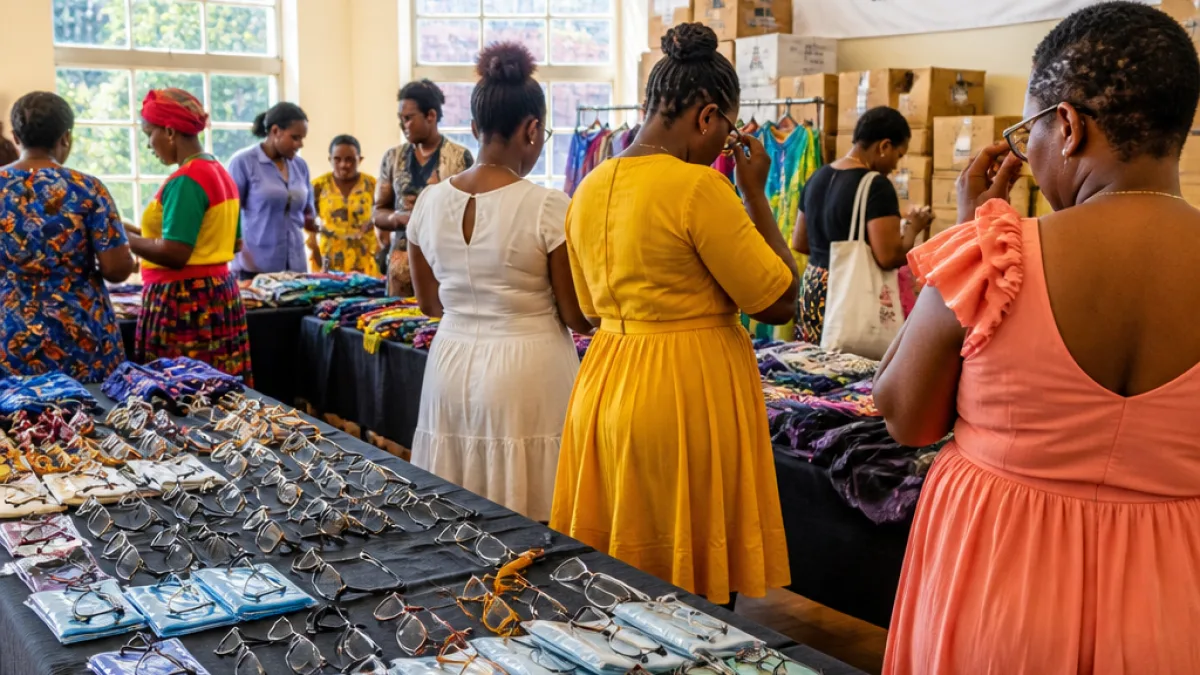
Durban — A group of women who rely on careful handiwork to earn a living were given new eyeglasses this week after declining vision started to undermine their trades.
Practical aid at a Women’s Month gathering
The spectacles were handed over on Wednesday at the Music House during a Women’s Month gathering organised by the KwaZulu-Natal Cultural and Creative Industries Federation of South Africa, according to reporting by Celani Sikhakhane. The recipients are informal traders who make and sell clothes, beads, traditional garments and other crafts along Durban’s streets and beaches.
Members of the Ubumbano Traders group had alerted federation leadership to the problem after several of their number said deteriorating eyesight was affecting their ability to sew, bead and finish items for sale. Some traders attributed vision loss to the natural ageing process, while others said diabetes had affected their sight.
“As traders we sew clothes, beads, traditional garments and other stuff and sell it on the streets of Durban and along the beaches in the city,” Ubumbano Traders chairperson Mama Khuboni said, adding that the eye problems had reduced their productivity.
Prince Thokozani “Tzozo” Zulu, chairperson of the federation’s KwaZulu-Natal branch, approached the humanitarian organisation Gift of the Givers for assistance. The charity provided the eyeglasses that were distributed at the event, Sikhakhane reported.
Why vision matters for informal traders
For many of the women, the difference is immediate: fine stitching, beadwork and traditional embellishments require sustained near vision and good contrast sensitivity. Reduced sight not only slows production but can lead to diminished income when goods are unfinished or returned by customers.
Local advocates say targeted interventions such as eye screenings and affordable spectacles can be low-cost, high-impact measures to protect livelihoods in the informal economy. The federation’s involvement underlined a wider view that the creative industry in the province goes beyond performing arts to include makers and craftswomen who work in public spaces.
Organisations, community and care
The initiative brought together community leadership, a provincial creative industries body and a national relief organisation. Those connections helped to identify need quickly and to source suitable eyewear, Sikhakhane reported.
Speaking at the event, Mama Khuboni said the traders now felt more confident and better able to continue their crafts. Prince Thokozani said the federation had a responsibility to support older women within the creative sector, not only celebrities and performers.
| Organisation | Role |
|---|---|
| KwaZulu-Natal Cultural and Creative Industries Federation | Event organiser and coordinator |
| Ubumbano Traders | Beneficiary group; alerted federation to need |
| Gift of the Givers | Provided eyeglasses |
Simple steps that can help
Community health workers and activists advise the following practical steps to protect sight and sustain livelihoods for craft workers:
- Regular eye checks, especially for people over 50 or those with diabetes;
- Access to affordable corrective eyewear and magnification tools for detailed work;
- Education about blood-sugar control for traders with diabetes to reduce progression of diabetic eye disease;
- Periodic rest, good lighting and ergonomic work set-ups to reduce eye strain.
Those measures, advocates say, are inexpensive compared with the cost to households when a primary earner loses the ability to produce saleable goods.
The donation in Durban serves as a reminder that small, local interventions — coordinated by community leaders and supported by civic organisations — can make a tangible difference to the daily lives and incomes of women working in the informal creative economy.
Reporting on the handover was provided by Celani Sikhakhane.