
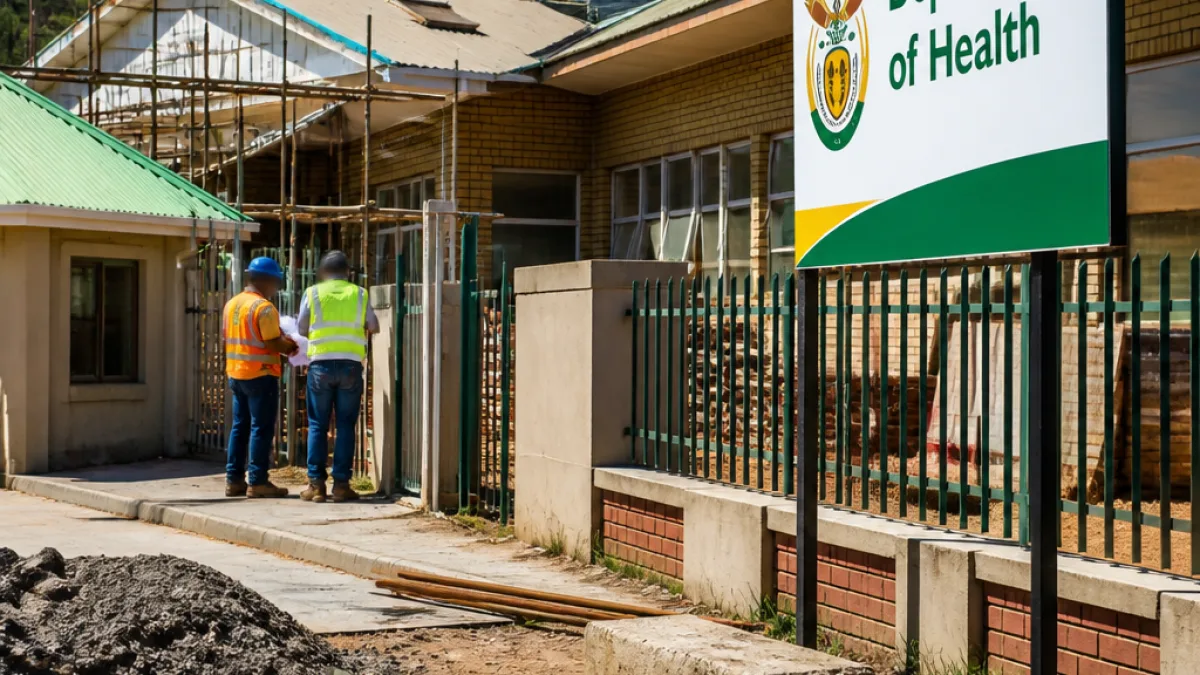
The Democratic Alliance has called for a comprehensive provincial health rescue plan after details emerged of widespread infrastructure work across Mpumalanga facilities and escalating medico-legal exposure cited during provincial health budget deliberations.
Facilities list shows targeted repairs across all districts
Information presented to the Mpumalanga Legislature’s Portfolio Committee on Health during discussions of the Department of Health’s 2026/27 budget and Annual Performance Plan showed that the department directed maintenance funding to 19 healthcare facilities during the 2025/26 financial year. The projects ranged from routine repairs such as fencing and roofing to larger conversions of clinical space.
Work reported across the three districts included:
- Repairs to palisade fencing and guardhouses, and concrete roof waterproofing.
- Replacement of doors and frames, and upgrades to ablution facilities.
- Conversions of wards and specialised spaces — for example, creating a rehabilitation unit and establishing a short-stay mental health facility.
The departmental annexure attached to the presentation set a 100% completion target for all 19 projects. The document provided to the committee lists work at hospitals, clinics and the provincial nursing college, but the circulated copy was truncated and did not include complete final status notes for every item.
District breakdown
| District | Facilities cited | Main interventions |
|---|---|---|
| Gert Sibande | Standerton, Ermelo, Evander, Carolina Hospitals | Fence and guardhouse repairs; roof waterproofing; door/frame replacement; X‑ray renovations |
| Ehlanzeni | Figtree, Shabalala, Sandriver, Shongwe clinics; Mpumalanga Nursing College; Barberton TB Hospital; Cork, Phiva clinics; Tintswalo; Brooklyn, Simile clinics | Fencing and septic repairs; roof work; clinic renovations; TB hospital conversion to rehabilitation centre; guardhouses |
| Nkangala | Witbank Hospital, Kwazamokuhle Clinic, Impungwe Hospital | ICU/theatre doors installed; roof and ceiling repairs; paediatric ward to dental lab; maternity to 72‑hour mental health facility |
Political pressure and medico-legal costs
The DA raised concerns over what it described as rapidly rising medico-legal claims and the deteriorating condition of some public health infrastructure, urging the provincial government to develop a rescue plan that addresses both the financial risks and the operational gaps affecting patient care.
Committee deliberations on the department’s budget and Annual Performance Plan provided the forum for the opposition to press for clearer milestones, accountability measures and assurances that completed maintenance work would translate into safer, better‑functioning services for patients.
Practical implications for patients and staff
Officials reported that the maintenance funding targeted projects that have direct operational impact: repairing roofs to prevent water damage to wards and equipment, securing perimeters with fencing and guardhouses to protect staff and patients, and remodelling spaces to meet current service needs such as short‑term mental health observation and rehabilitation care.
Converting a paediatric ward into a dental laboratory or creating a 72‑hour mental health facility are examples of how the department says it is reconfiguring existing space to address service gaps without constructing new buildings — an approach that can be faster but depends on proper project management and maintenance follow‑up.
Health experts and facility managers who follow these developments have often warned that maintenance budgets are only part of the solution: long‑term planning, regular maintenance cycles, and clear reporting on completion and quality assurance are required to prevent recurrent failures and reduce the risk of costly legal claims.
Remaining questions
While the annexure sets completion targets, the copy presented to the committee was not fully intact and did not provide a comprehensive status report for each project. The Legislature’s committee has the authority to request further detail on actual completion rates, oversight of contractors, and cost‑benefit analysis linking maintenance spending to reductions in service interruptions and medico‑legal exposure.
As the province prepares and debates the 2026/27 health budget, the tension between urgent repairs, medium‑term facility planning and rising legal liabilities will be central to discussions. The DA’s demand for a rescue plan places the spotlight on how the provincial department intends to protect patients and staff while managing financial risk.
What patients should know:
- Some hospitals and clinics in Mpumalanga received maintenance funding in 2025/26 aimed at safety and service upgrades.
- Residents experiencing facility‑related problems should report them via their local clinic or district health office so issues can be logged and followed up.
- Legislative oversight will continue during the 2026/27 budget process, and further public updates may be issued as the committee seeks detailed completion reports.












