
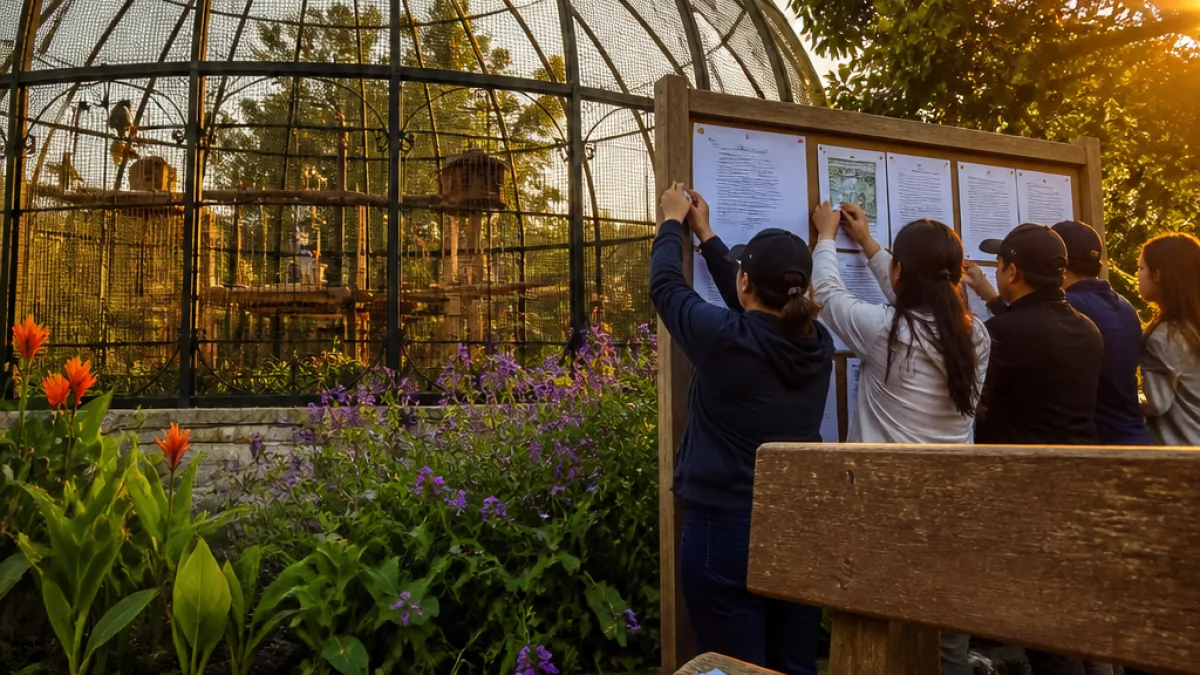
Southport — Volunteers, regular visitors and campaigners reacted with dismay after Sefton Council announced plans to close the Botanic Gardens Aviary, an 87-year-old attraction in Churchtown, early in the new year. The move has prompted petitions signed by nearly 16,000 people and brought national media attention to the small but much-loved facility.
Volunteers plead for birds to stay
Ann Cobham, co‑ordinator of the Botanic Gardens Community Association and a volunteer who has helped run the park for 15 years, told BBC North West the closure would be “devastating for the whole of the community”. She said the birds are safe and well looked after, and urged the council to keep them in their established home.
“If this aviary closes, this will be devastating, not just for me, but for the whole of the community,” Ann Cobham said.
Her comments capture concerns among residents who said the aviary is cherished, used by families and older visitors, and part of the neighbourhood’s identity. Several members of the public interviewed during the BBC crew’s visit described the council decision as “disgusting” and called for elected representatives to reconsider.
Council and animal-rights group raise welfare concerns
Sefton Council said last week it is planning to close the facility because it believes “the facility is simply no longer in the best interests of the animals who are kept there”. The authority said its position is backed by PETA (People for the Ethical Treatment of Animals), which has argued that public display is not appropriate for the birds.
Reuban Skeats from PETA told BBC North West: “We would argue that a public display isn’t really the right place for these animals at all. The most responsible thing then becomes finding an appropriate wildlife sanctuary ideally where they’re not on public display.”
Petitions and public pressure
Organisers of the Save the Aviary campaign have collected almost 16,000 signatures calling on the council to reverse its decision. The scale of support prompted the BBC crew to record reactions on site, while local activists and the Southport MP have become involved in public mobilisation.
The campaign’s appeal centres on two linked arguments: that the birds are well cared for in their current setting and that the aviary serves important social and recreational functions for the local community.
- Heritage and local use: The aviary is part of the Botanic Gardens’ long history and is regularly visited by families, school groups and older residents.
- Animal welfare vs. display: Council and PETA stress welfare concerns and favour relocation to specialist sanctuaries; volunteers argue continuity of care and wellbeing in situ.
- Public accountability: Campaigners are asking the council to make its case public and to consult more broadly before proceeding.
What is at stake for the community
For volunteers and regular users, the dispute is about more than birds. The aviary sits within the wider Botanic Gardens — a public green space where local groups run activities and where informal social ties are reinforced. Closure would remove a daily and intergenerational amenity, volunteers say, and could set a precedent for other small public attractions facing scrutiny on welfare grounds.
The immediate practical questions include the logistics of relocating birds, the destination suggested by PETA and the availability of specialist sanctuaries able to accept them, and whether the council has a phased plan to ensure animal welfare during any transition. The council’s statement did not, in the reporting available, set out a detailed timetable for closure or relocation options.
| Fact | Detail |
|---|---|
| Petition signatures | Nearly 16,000 |
| Aviary age | 87 years |
| Volunteer service (example) | Ann Cobham, 15 years |
Next steps and what to watch
The story is likely to develop along a few lines: whether Sefton Council publishes a detailed welfare assessment and relocation plan; whether campaigners sustain or grow public pressure; and whether an independent animal‑welfare body or sanctuary is identified as an alternative to closure.
For now, volunteers continue to maintain the gardens and to press elected representatives for clarity. The tension highlights a broader issue for local authorities managing small public collections: balancing legitimate animal‑welfare concerns with community attachment and the practical realities of relocation.
Journalists will be watching for an official timetable from the council and any formal proposals from sanctuaries or animal‑welfare organisations that could offer a compromise to keep the birds safe while respecting community sentiment.















