
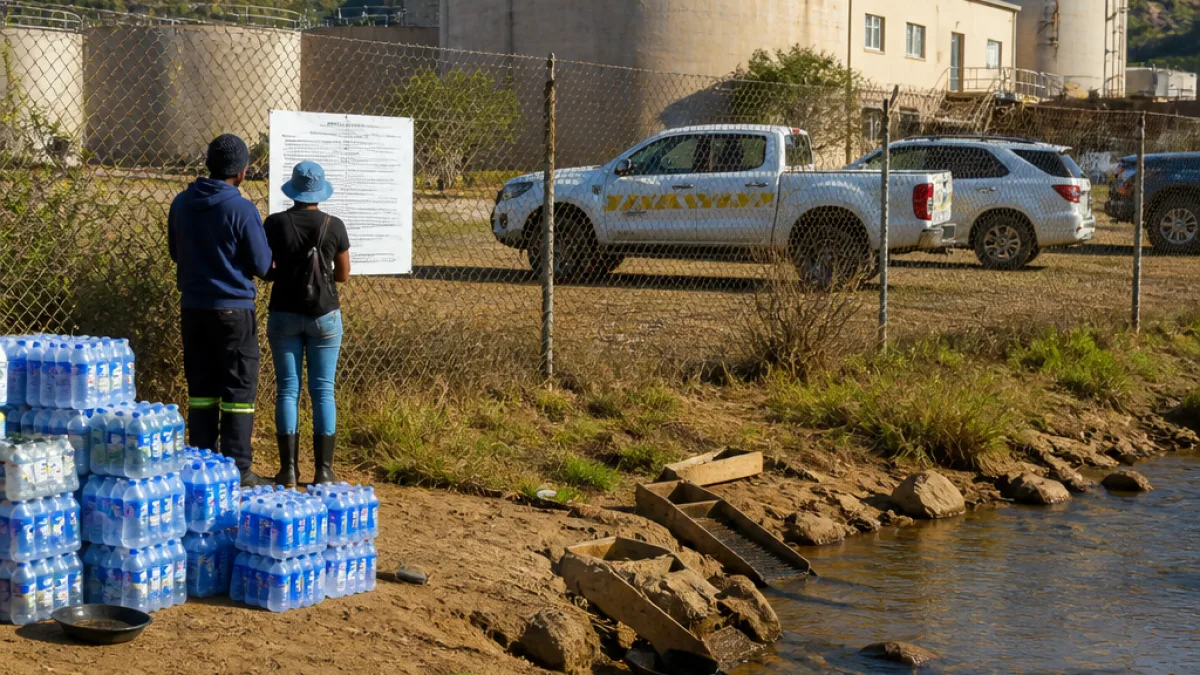
Water flowing again but trust remains thin in Barberton
Parts of Barberton have seen municipal water supplies return after the Rimer’s Creek Water Treatment Plant was shut down on 28 July over fears that its source had been contaminated by illegal gold miners. Despite the facility’s subsequent reopening, many residents remain unconvinced that tap water is safe for drinking and continue to buy bottled water for cooking and drinking.
The City of Mbombela (CoM) closed the treatment plant late in July after concerns that illegal miners were processing gold along streams that feed the plant’s catchment. The shutdown was intended to protect residents while authorities investigated potential contamination risks. The plant has since resumed operations, and the municipality says it is continuing to monitor and treat the water.
"The municipality continues to treat and test the water to ensure that it meets the required safety standards," said CoM spokesperson Joseph Ngala.
Nonetheless, residents in communities supplied by the Rimer’s Creek facility remain hesitant. Several households have reported buying bottled water as a precaution, citing ongoing reports of illegal mining and small-scale refining activity in the mountains around Barberton.
Local concerns and demands
Beyond the immediate question of whether water is flowing to taps, residents say the issue is one of confidence. They want more visible action to halt illegal mining in the catchment and clearer, more frequent information about water-quality monitoring and test results.
- Residents report continued illegal mining and gold refining in mountain catchments supplying Rimer’s Creek.
- The municipality says water is treated and tested to meet safety standards.
- Some households are purchasing bottled water despite assurances.
- Calls have been made for intensified enforcement against illegal mining at its source.
People who rely on local tourism and services say the uncertainty could have a wider effect on Barberton’s reputation. The town’s historic appeal and outdoor attractions depend on clean rivers and functioning infrastructure; sustained concerns about pollution would undermine both residents’ wellbeing and visitors’ confidence.
What authorities say and the wider response
The CoM has said it continues to treat and test supplies, and that monitoring and purification measures are in place before water reaches households. The source reporting also noted that law enforcement at an intergovernmental level continues to monitor the situation, reflecting the multi-agency nature of responses to illegal mining and environmental harm.
| Status | Detail |
|---|---|
| Plant shut | Rimer's Creek Water Treatment Plant closed on 28 July amid contamination concerns |
| Plant reopened | Operations resumed after investigations and treatment; municipality reports ongoing testing |
| Public response | Some residents continue to avoid tap water and purchase bottled water |
For affected communities, the demand is straightforward: stop illegal mining in the catchment areas and share transparent, timely water-quality information so residents can make informed choices. Without that, the physical restoration of supply may not translate into restored public trust.
The situation in Barberton highlights the intersection of environmental crime, public health and local governance. The presence of informal gold-processing activity upstream of a treatment plant poses both immediate contamination risks and longer-term challenges for water resource management, particularly for a municipality responsible for protecting residents and sustaining tourism-linked local economies.
Municipal testing and treatment are critical, but so too is preventing pollution at source. Residents and local stakeholders are urging authorities to intensify enforcement against illegal mining and to publish regular water-quality reports so communities can be reassured that water from the tap is safe.















