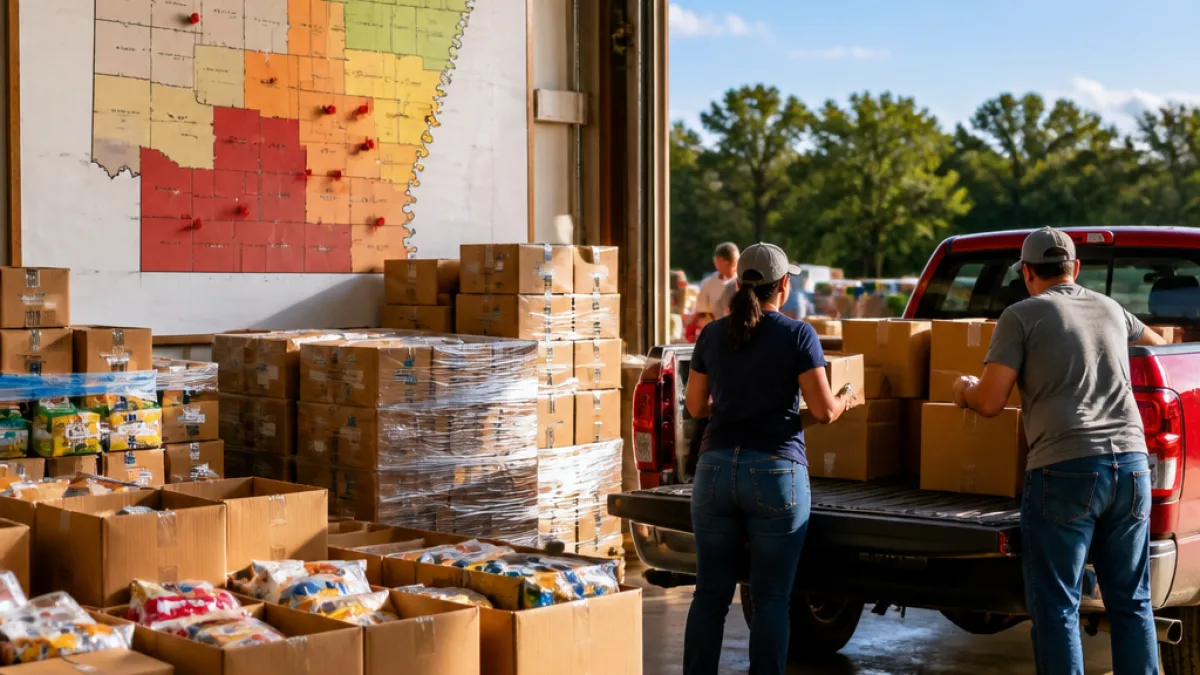
The Arkansas Hunger Relief Alliance and the state’s six Feeding America food banks released statewide research showing that 37% of Arkansans — more than 1.14 million people — did not have enough food to meet their needs in 2025.
Scope and partners behind the study
The research, produced under the umbrella of the Arkansas Hunger Continuum, was commissioned by the Arkansas Hunger Relief Alliance in collaboration with the six Feeding America food banks that operate in the state. The investigation provides a snapshot of food access challenges across urban, suburban and rural communities in Arkansas.
What the numbers mean locally
Those figures indicate that a substantial share of households statewide experienced difficulty obtaining adequate food during 2025. Food insecurity can reflect temporary gaps caused by sudden expenses or job disruptions, as well as longer-term systemic barriers such as limited access to affordable groceries, constrained incomes and transportation obstacles. The study’s findings underscore the continuing workload of food banks, community pantries and social service providers who respond to immediate needs and coordinate longer-term assistance.
How the state’s network responded
The Arkansas Hunger Relief Alliance and the six Feeding America food banks — the organizations that collectively commissioned the research — play complementary roles: statewide coordination, local distribution, volunteer mobilization and partnerships with schools, faith groups and other nonprofits. Those networks help move donated food and federal nutrition resources to neighborhoods in need and provide information about assistance options families might qualify for.
- 37% — share of Arkansans who struggled to get enough food in 2025
- 1.14 million+ — the approximate number of Arkansans the study says lacked sufficient food
- Research produced under the Arkansas Hunger Continuum and released publicly by the Alliance and Feeding America partners
Local impact and community response
Food banks and local charities often report increased demand during times of economic stress, natural disasters and seasonal pressures. The state-level findings may help organizations prioritize outreach and expand programs such as school meal partnerships, mobile pantry routes and targeted efforts for seniors and children. For policymakers and funders, the numbers offer a base for evaluating where additional resources or policy interventions are needed.
Data at a glance
| Metric | Value |
|---|---|
| Share of Arkansans lacking enough food (2025) | 37% |
| Estimated number of people | More than 1.14 million |
What comes next
The organizations behind the research have made the findings public to raise awareness and inform partners about where needs are greatest. Community agencies typically use this kind of data to plan food distributions, pursue grant funding and advocate for policies aimed at reducing food hardship. The study results also serve as a basis for conversations among local leaders, schools and health providers about how to coordinate services more effectively.
For Arkansans facing hunger, the study is a stark reminder of persistent need. For community leaders and service providers, it is a call to sustain and expand the systems that deliver food and connect families with other supports. The Alliance and the state’s Feeding America food banks will likely use the Arkansas Hunger Continuum as a tool to guide outreach and policy discussions in the months ahead.
Reporting on this developing picture will continue as the Alliance and partner food banks release more detailed findings and recommendations derived from the study.