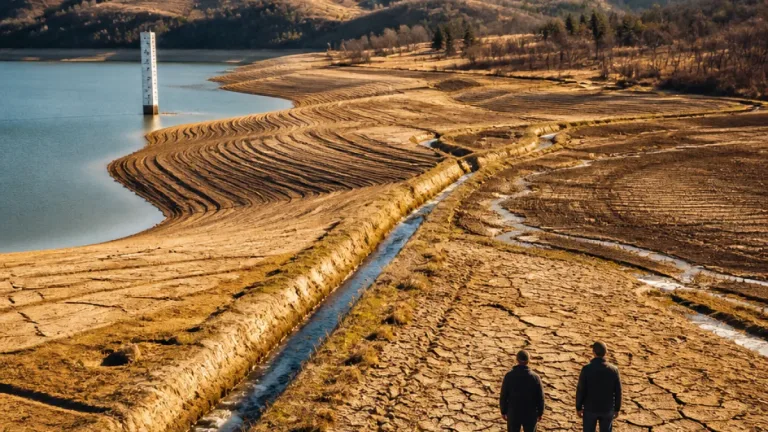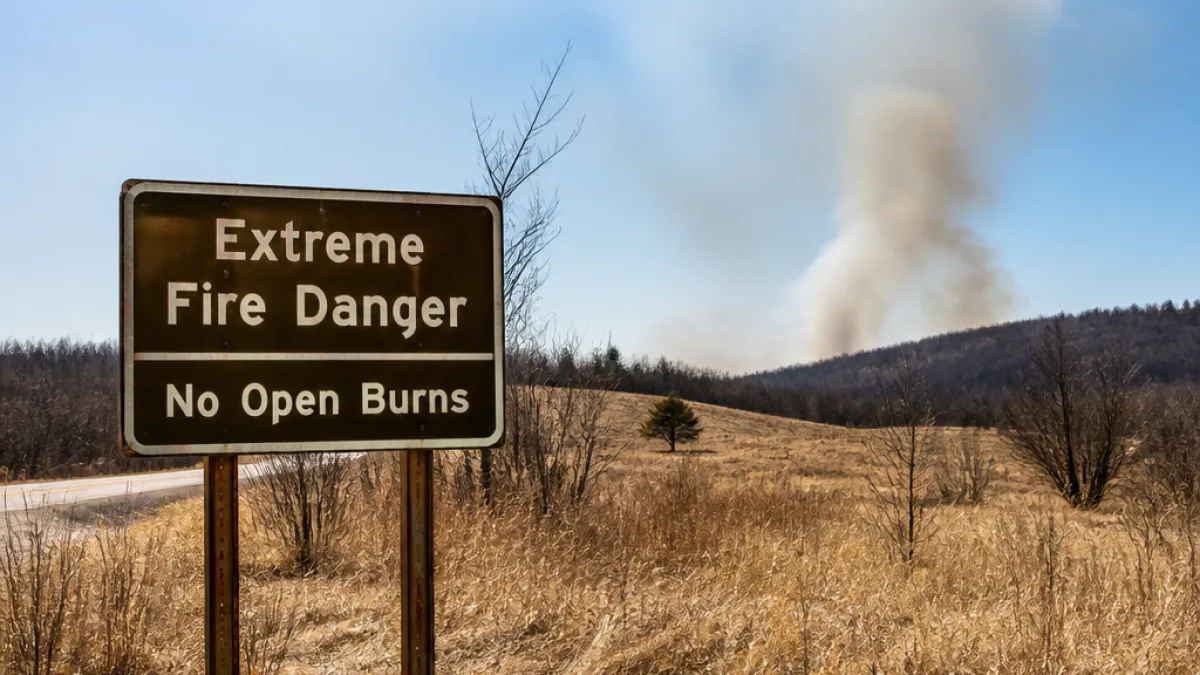
Arkansas is facing very high to extreme wildfire danger as the state endures nearly a year of drought, steep drying from a recent heat wave and a stretch of low relative humidity expected to persist through the weekend.
Conditions fueling rapid fire spread
After spotty showers and storms on Monday, Sept. 21, and into Tuesday, Sept. 22, the environment across Arkansas remains unusually dry. Forecasts indicate very low afternoon humidity from Wednesday, Sept. 23, through at least Saturday, Sept. 26, increasing the likelihood that any ignition could grow quickly.
“It only takes one spark to ignite a wildfire that spreads rapidly and is hard to contain,” forecasters said in a statewide advisory. The combination of desiccated vegetation, warm temperatures and even moderate breezes raises the risk that a small fire could become unmanageable in short order.
Burn bans, temporary changes and public guidance
As of 11 a.m. Tuesday, Sept. 22, some counties had been removed briefly from local burn bans to allow certain industries limited operations following Monday’s and Tuesday’s isolated precipitation. Officials cautioned that those removals are temporary and could be reversed quickly if conditions deteriorate.
Authorities urged Arkansans to behave as if a burn ban is statewide. That means refraining from outdoor burning and exercising extreme caution with any activity that can create heat, sparks or friction near dry vegetation.
- Report any smoke or suspected wildfire immediately to local emergency dispatch.
- Delay outdoor burning, including yard debris and recreational fires, until conditions improve.
- Avoid activities that can produce sparks: use of heavy machinery near dry grass, dragging metal objects, driving on dry vegetation and parking vehicles on grassy areas.
- If you must work with equipment that can create sparks, have water or tools ready to suppress any ignition and keep a close watch on surroundings.
How everyday actions can spark a blaze
Fire danger is not limited to open flames. The advisory highlighted several routine activities that can start fires when vegetation is dry, such as:
| Date range | Expected condition |
|---|---|
| Sept. 23–26 | Very low afternoon humidity; extreme wildfire danger |
Other ignition sources named in the guidance include hot vehicle exhaust near dry grass, friction from objects dragged across dry surfaces, operations of heavy machinery near vegetation and ordinary yard equipment. The advisory urged extra vigilance during breezy periods, when flames can spread faster.
Why rapid reporting matters
Prompt notification to local authorities remains a critical defense. Early reports give firefighting crews a better chance to arrive before fires enlarge and threaten homes, roads and infrastructure. The advisory emphasized that crews can work more effectively on smaller incidents, whereas large, fast-moving fires demand substantially greater resources and pose larger hazards to firefighters and the public.
What residents should do now
Residents should review local burn ban status with county officials and keep updated through local media and weather services. If you see smoke, call your local emergency number immediately and provide clear information about the location. Property owners in fire-prone areas should clear flammable debris away from structures and ensure access for emergency vehicles.
The heightened wildfire danger comes after a prolonged dry period across the state. With forecasts showing only slim chances for significant soaking rain over the next several days, the risk will remain elevated until substantial, sustained precipitation returns.
Arkansans are advised to stay alert, avoid unnecessary fire-producing activities, and keep emergency numbers at hand throughout the period of extreme wildfire danger.