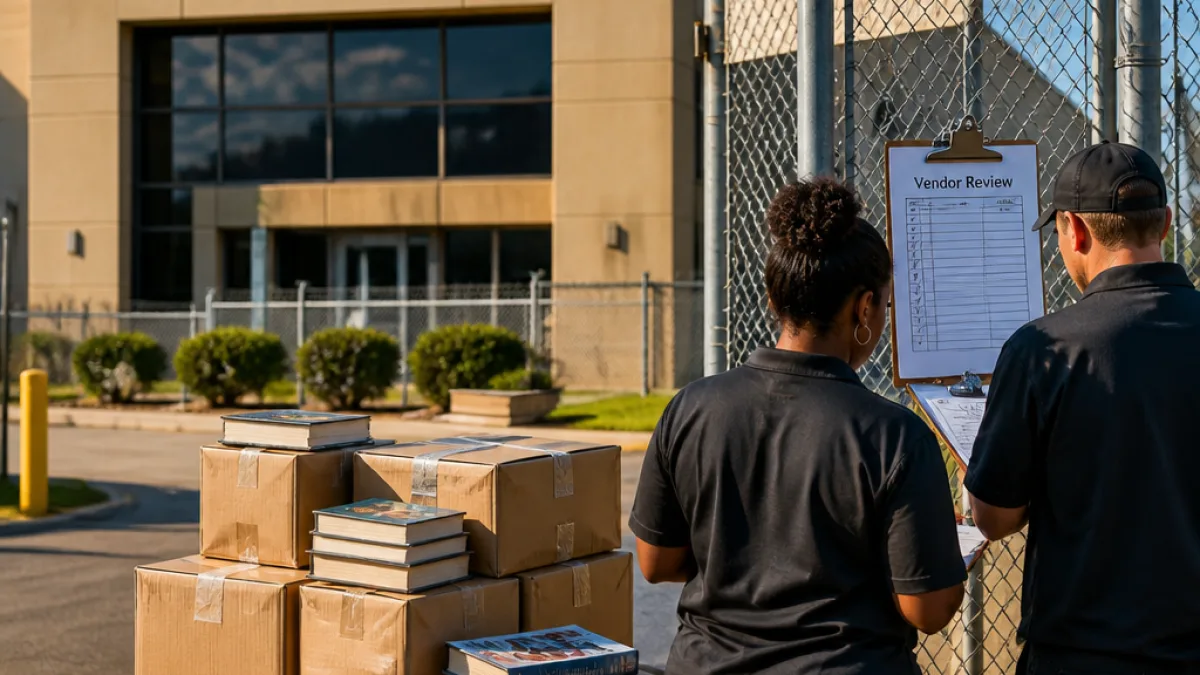
The Arkansas Department of Corrections is stepping back from a proposal that would have curtailed incarcerated people’s ability to receive physical books and newspapers, department officials told the state corrections board Monday. Instead, agency leaders said they will revise existing regulations and seek stronger authority to block third-party sellers that may be providing publications used to smuggle drugs into facilities.
Shift from blanket bans to targeted vendor controls
Corrections officials said the department will not eliminate inmates’ access to physical reading material purchased from outside vendors such as national retailers. Rather than creating a new rule to prohibit receipt of physical books, the department plans to sharpen language in a 2022 policy and expand its power to bar specific outside vendors deemed to be "misbehaving." Tawnie Hughes, the department’s chief legal officer, told board members those are the primary changes under consideration.
"Please do not print a headline that says we're banning books, because we're not,"
The comment came from Jamie Barker, chairman of the corrections board, during the meeting. Barker’s remark followed intense public scrutiny after an initial proposal last year would have prevented people in state prisons from getting physical books purchased from companies such as Amazon or Barnes & Noble. That earlier draft would not have affected books held in prison libraries.
Why the policy was proposed and why it became controversial
Prison officials initially advanced the idea as part of efforts to limit the flow of illicit drugs into facilities. They argued that publications mailed or sold to incarcerated people had been altered to conceal contraband. But civil liberties advocates, prison reform groups and families of incarcerated people criticized the plan, saying it risked significantly restricting access to reading material for people who rely on outside purchases when prison libraries or digital options are insufficient or outdated.
Officials acknowledged the department paused earlier implementation to allow the proposal to undergo the formal rulemaking process. Corrections Secretary Linsday Wallace said changes presented to the board were made for multiple reasons, including concerns that current digital reading alternatives did not meet needed standards for inmates.
Legal and practical hurdles
Members of the board and outside observers pointed to legal roadblocks faced by similar restrictions elsewhere. The Arkansas attorney referenced a Baxter County sheriff’s attempt to adopt a comparable policy that was blocked in federal court, telling the board that courts expect agencies to show they have exhausted less extreme measures before moving to outright bans.
"You really have to be demonstrative that you've taken all of the steps before moving to something that's that extreme," a board member, Rowell, said during the discussion.
What changes are likely and what remains uncertain
The department’s immediate plan, as described at the meeting, would preserve the ability of incarcerated people to purchase and receive physical books and newspapers while giving corrections officials greater discretion to identify and stop third-party sellers who introduce contraband through altered publications. Specific details about how the department would identify vendors, the criteria for banning a vendor, and the process for families or inmates to appeal such determinations were not laid out at the meeting.
- Access preserved: Physical books and newspapers bought by incarcerated people would remain allowed under the revised approach.
- Vendor authority: The department will seek expanded authority to ban third-party sellers that supply publications laced with drugs.
- Rulemaking paused earlier: The agency delayed implementation to subject the proposal to formal rulemaking and public input.
Broader implications
The decision to retreat from a wholesale ban may temper opposition from advocacy groups and families concerned about educational and rehabilitative resources in prisons. Still, the emphasis on policing vendors underscores ongoing challenges corrections officials face in keeping contraband out of facilities without substantially limiting access to legal materials.
| Issue | Current stance |
|---|---|
| Physical books purchased from outside | Allowed under revised approach |
| Prison library holdings | Unaffected by proposal |
| Third-party vendor sales | Department seeks expanded authority to ban |
Officials did not provide a timetable for when revised rules would be drafted, released for public comment or finalized. Questions remain about enforcement mechanisms, transparency around vendor bans and whether digital alternatives will be improved to address concerns about availability and quality of reading material for people behind bars.
The department’s pivot illustrates the balancing act state corrections systems face: reducing the risk of contraband while preserving access to educational and rehabilitative resources that advocates say are vital to reducing recidivism.
Cole Beaumont, State Correspondent