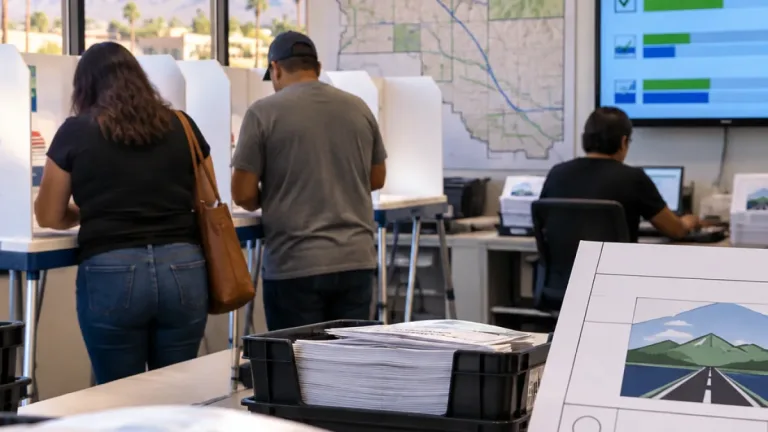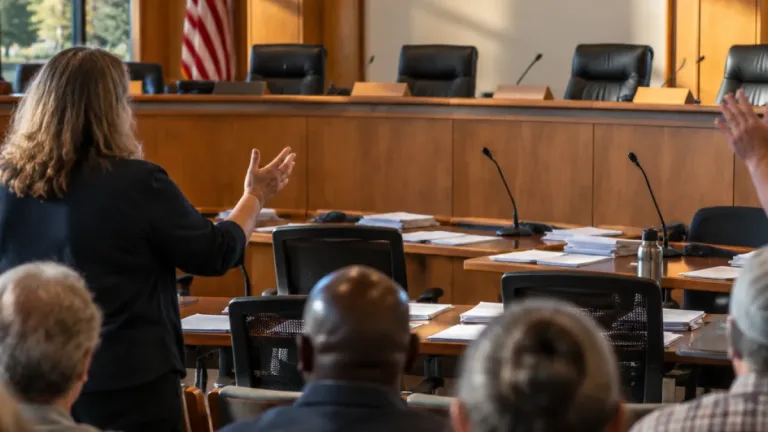
The U.S. Supreme Court is considering whether Colorado may exclude Catholic preschools from a public funding program because of their admissions policies, putting the state’s approach to LGBTQ+ nondiscrimination in conflict with claims of religious freedom.
Arguments in the case are scheduled for Tuesday in Washington. The dispute involves St. Mary Catholic Parish and the Archdiocese of Denver, which challenge their exclusion from Colorado’s universal preschool program. The Catholic institutions say their position on enrollment is rooted in religious teaching about same-sex marriage. Colorado argues that refusing to admit children from families with LGBTQ+ parents violates the state’s anti-discrimination law.
A conflict over public money and admissions
Colorado’s universal preschool program was established through a 2020 ballot measure. It provides public funding for preschool services at schools selected by parents, creating a state-supported system that includes participating private providers.
The Catholic preschools want access to that funding while maintaining an admissions policy that does not accept children from families whose structure conflicts with their religious beliefs. State officials have taken the position that participation in the publicly funded program comes with obligations under Colorado’s civil rights protections.
The case therefore presents two competing questions. One is whether a state can require providers receiving public support to follow a generally applicable anti-discrimination rule. The other is whether applying that rule to religious preschools unlawfully burdens their exercise of faith.
| Issue | Position in the dispute |
|---|---|
| Colorado’s position | Admissions decisions excluding children from LGBTQ+ families violate state anti-discrimination requirements. |
| Catholic institutions’ position | The policy reflects religious teaching, and exclusion from the program violates their free-exercise rights. |
| Program at stake | Colorado’s publicly funded universal preschool system created by voters in 2020. |
Why the case reaches beyond one preschool program
The case is the latest religious-rights dispute to reach the court during a period in which its conservative majority has considered the relationship between government programs and religious institutions. The outcome could affect how states structure aid programs involving private schools and whether religious organizations may receive public money while declining to follow certain nondiscrimination requirements.
The Catholic preschools are represented by the Becket Fund for Religious Liberty. Their lawyers contend that Colorado has already permitted other providers to give preference to children with disabilities or children from low-income households. They argue that a preference based on religious beliefs about gender and same-sex marriage should be treated similarly.
- Supporters of the preschools say the institutions should not have to abandon their religious admissions standards to participate in a program open to private providers.
- Colorado officials say public funding cannot be used by providers that discriminate against families protected by state law.
- The Supreme Court will decide how those principles apply to this particular preschool program and the institutions involved.
The precedent under scrutiny
A ruling for the Catholic preschools could further limit the reach of a major 1990 Supreme Court decision holding that religious practices generally do not receive exemptions from laws that apply broadly. That decision, written by then-Justice Antonin Scalia, concerned the religious use of peyote, a cactus containing mescaline that is sacred to many Indigenous people.
Although the earlier ruling has remained an important reference point in religious-liberty cases, it has also been a target of the conservative legal movement. The Colorado dispute gives the justices another opportunity to examine when a law applying to many organizations must yield to a religious objection.
A broader school-funding backdrop
The justices have recently ruled that religious schools could not be excluded from certain public-aid programs in Maine and Montana. Those cases involved public assistance for private schools and are part of the legal backdrop against which the Colorado arguments will be heard.
The court also deadlocked in 2025 over a proposal to create a publicly funded Catholic charter school after Justice Amy Coney Barrett recused herself. That result did not establish a controlling ruling on the proposal, but it underscored the continuing disputes over the limits of public support for religious education.
Colorado’s case differs in that it concerns preschool providers participating in a state-created program rather than a direct effort to establish a publicly funded religious charter school. The justices will have to consider the program’s design, the state’s nondiscrimination rules and the constitutional claims raised by the Catholic institutions.
The Supreme Court hearing will not immediately change how Colorado families access preschool. Any broader effect will depend on the court’s eventual decision and how state officials and participating providers apply it. For now, the case places Colorado’s universal preschool system at the center of a national debate over whether religious institutions may receive public funds while declining to follow an admissions rule intended to protect LGBTQ+ families.