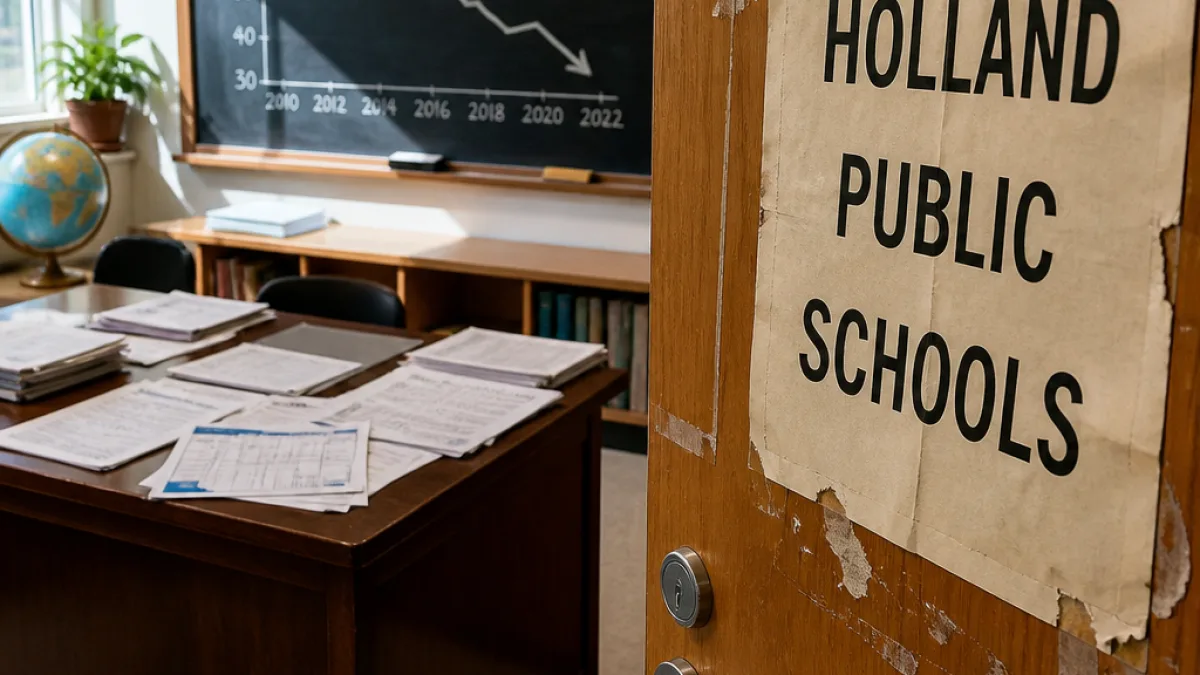
HOLLAND, Mich. — Teacher pay in Michigan has fallen sharply over the past three decades when adjusted for inflation, a new Michigan State University analysis finds, putting salary levels well behind national trends as Holland Public Schools prepares to begin collective bargaining talks.
Sharp decline in purchasing power
The MSU study concluded that average teacher salaries in the state peaked in 1995 at the equivalent of just over $100,000 in 2025 dollars. By last year, that number had dropped to just over $71,000, a decline of about 29 percent in real terms. By comparison, the national average teacher pay over the same period decreased by roughly 4.2 percent, according to the report.
Those statewide figures come as Holland Public Schools — like many districts across Michigan — prepares for a new collective bargaining agreement. The current contract between the district and the Holland Education Association is in its final year.
Entry pay lags the country
The MSU analysis also highlights concerns about starting pay. The report finds the average beginning teacher salary in Michigan is just over $43,000, which the study notes is nearly $5,000 below the national average for new teachers.
Local officials in Holland say they are aware of the broader context. Superintendent Nick Cassidy expressed confidence that the district and the union can reach a new agreement without significant disruption.
Why the decline matters locally
Lower real wages have implications for recruitment and retention, especially in districts that must compete with suburban systems or neighboring states for new teachers. In Holland, a lakeshore community with both urban and rural school populations, leaders and educators say salary competitiveness is central to maintaining class sizes, program offerings and extracurricular staff.
Teachers considering positions in Michigan face a trade-off between community ties and compensation. For districts trying to fill science, special education and math positions — areas that often command higher pay elsewhere — the pressure is acute.
Historical context and legal backdrop
Holland has not experienced a teacher work stoppage since 1967, when more than 200 instructors walked off the job. That dispute prompted court action and ultimately reached the Michigan Supreme Court, which ruled that a concerted refusal of public employees to provide services constitutes an illegal strike under the state's Public Employment Relations Act.
The 1967 ruling still shapes the boundaries of collective action for public education employees in Michigan. Since then, negotiations have proceeded under the same legal framework, with most districts pursuing contract resolution at the bargaining table.
What negotiators will focus on
While the MSU report centers on long-term salary erosion, local bargaining teams typically consider a range of items, including:
- Base salary increases and step schedules for experience and education;
- Health care contributions and benefit design;
- Class size language, supplemental pay for extracurriculars, and staffing levels.
Superintendent Cassidy said the district is optimistic about reaching an amicable agreement. Details of Holland’s bargaining priorities and the union’s initial proposals were not provided publicly at the time of this report.
Data at a glance
| Measure | Value |
|---|---|
| Inflation-adjusted average pay (1995 peak) | ~$100,000 (2025 dollars) |
| Average pay (last year) | ~$71,000 |
| Starting teacher salary (Michigan) | ~$43,000 |
| National change (1995 to present) | -4.2% |
What to watch
Parents, educators and local taxpayers will be watching negotiations closely over the coming months. Potential indicators of how talks might proceed include the district’s budget projections for the coming school year, any proposed changes to healthcare cost-sharing, and whether Holland seeks to prioritize raises for early-career teachers to address recruitment challenges.
As districts across Michigan respond to the MSU findings, Holland’s bargaining process could reflect broader statewide tensions over how to restore teachers’ purchasing power after decades of declines. The outcome will shape staffing and services in the district and offer a barometer for how communities value and compensate educators moving forward.
Reporting from the Holland area will continue as bargaining teams formalize proposals and meetings are scheduled.