
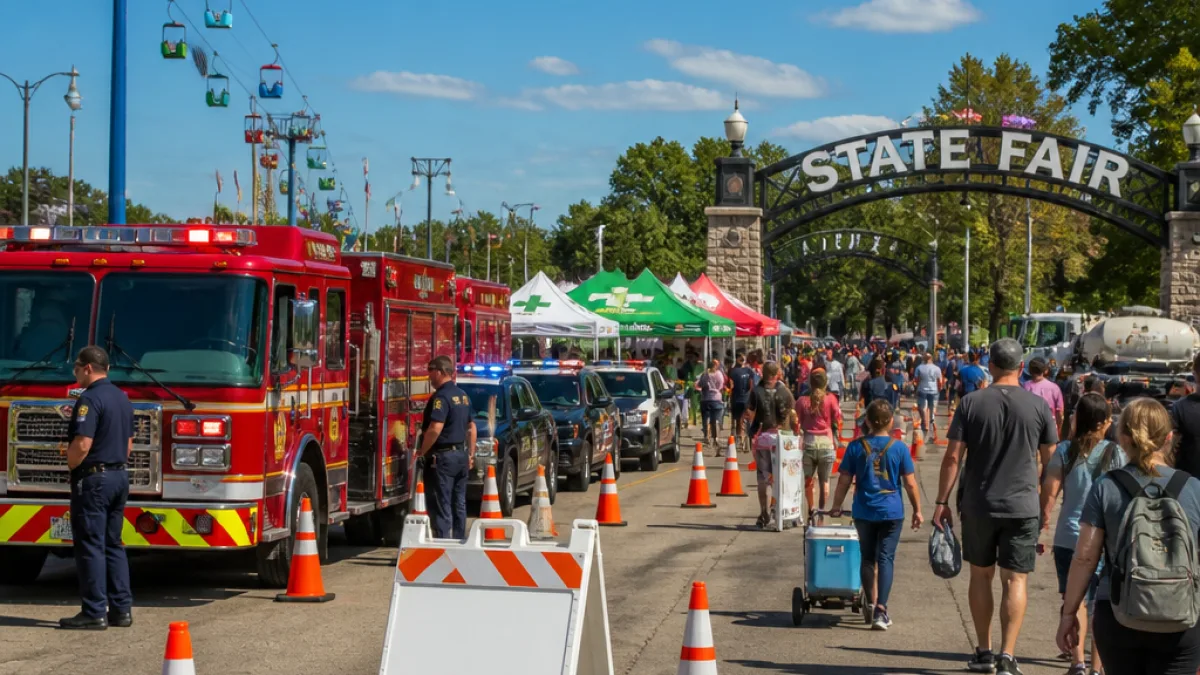
The Minnesota State Fair may be held across the city line in Falcon Heights, but the City of Saint Paul plays an integral role in keeping the annual event running smoothly and safely for the hundreds of thousands of visitors who flock to the grounds each year.
Public safety and emergency response
City leaders say teams from the Saint Paul Fire Department and the Saint Paul Police Department are deployed to provide medical response, traffic and pedestrian control, and neighborhood patrols during the event. Firefighters, paramedics and EMTs are stationed on the fairgrounds to respond to everything from minor injuries and dehydration to more serious medical emergencies.
The Police Department’s responsibilities emphasize safe pedestrian movement and maintaining emergency vehicle access. Officers and partnering agencies work to minimize disruption to surrounding neighborhoods and preserve normal day‑to‑day activities for residents and businesses.
Transportation, access and neighborhood support
Saint Paul’s role extends to traffic management outside the fairgrounds. SPPD officers will direct traffic, assist pedestrians and address public safety and quality‑of‑life concerns as they arise. The city says its teams coordinate with other agencies to keep thoroughfares passable and protect emergency routes.
City officials also highlight efforts to make it easier for residents to get to work and for businesses to operate during the fair, including permitting and licensing steps for seasonal vendors and pop‑ups near the fairgrounds.
Public works, water and health precautions
Public Works crews are preparing to respond to routine maintenance needs such as pothole repair in areas affected by increased traffic. Meanwhile, the Regional Water Services team will be on hand to ensure fairgoers have access to drinking water through the water tower that supplies hydration stations on the grounds.
City guidance to attendees stresses basic heat‑safety measures: stay hydrated, take breaks in shade or air‑conditioned areas, pace walking to avoid falls, and watch for symptoms of heat exhaustion such as nausea or dizziness. Fairgoers who are not feeling well are urged to alert the nearest Saint Paul Fire Department crew member or Minnesota State Fair staff.
Practical information for visitors and neighbors
- Emergency medical and first aid services are staffed by Saint Paul Fire Department personnel on the fairgrounds.
- Saint Paul Police manage traffic and pedestrian flow outside the fairgrounds and coordinate with partner agencies to reduce neighborhood disruption.
- Public Works will respond to infrastructure needs such as potholes that could affect travel to and from the fair.
- Regional Water Services provides water access and stations to keep visitors hydrated.
- Residents and businesses can expect increased patrols and may see temporary licensing or permitting actions for seasonal vendors.
Officials point to the Minnesota State Fair’s own health and safety resources for more details about on‑site first aid, security protocols and visitor recommendations.
| City service | Primary role at the fair |
|---|---|
| Fire Department | Emergency medical and first aid staffing on the grounds |
| Police Department | Traffic and pedestrian control; neighborhood patrols |
| Public Works | Road maintenance and infrastructure support (e.g., pothole repair) |
| Regional Water Services | Manage water tower access and hydration stations for visitors |
While the fair’s site is just over the line in Falcon Heights, Saint Paul officials emphasized that advance preparation and interagency coordination are designed to protect both fairgoers and the city’s neighborhoods during the run of the Great Minnesota Get‑Together.
For residents concerned about neighborhood impacts, the city recommends contacting local patrol officers or the appropriate city department. For attendees, the advice is straightforward: hydrate, pace yourself, and locate the nearest first aid station if you feel unwell.
These preparations reflect months of planning by Saint Paul teams to welcome visitors and support businesses and neighbors during one of the state’s largest annual gatherings.


















