
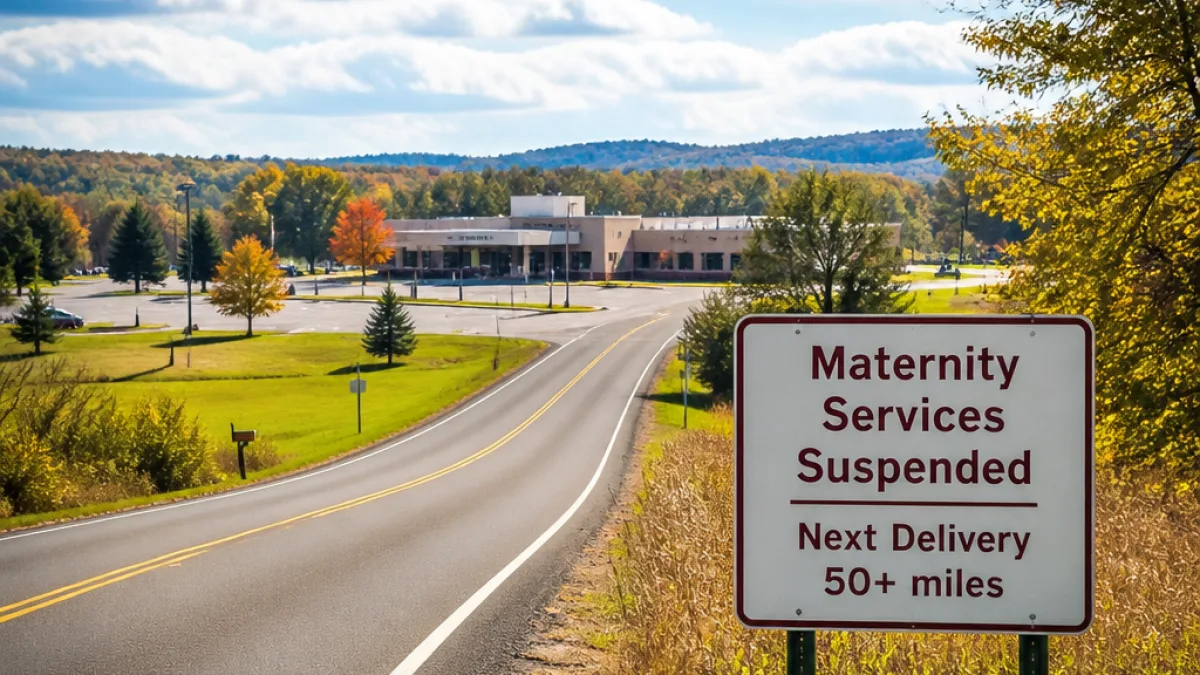
Rural communities across Pennsylvania are bracing for a potential squeeze on already sparse medical services as proposed Medicaid and Medicare work requirements move closer to implementation. Local health advocates and nonprofit leaders warn the changes could disproportionately harm areas that have long struggled to maintain basic hospital and provider coverage.
Concentrated shortages in northwest Pennsylvania
The state’s northwest region has been singled out for pronounced declines in service. That area contains what researchers call a “maternity desert” — an expanse larger than Connecticut comprising eight counties without hospitals that provide delivery services or local maternity providers. Experts say that shortage is emblematic of broader problems.
"We are really seeing challenges with OBGYN services," said Lisa Davis, director of the Pennsylvania Office of Rural Health. She also noted hospitals across the state have been ending labor and delivery services.
"We are really seeing challenges with OBGYN services," said Lisa Davis, the director of the Pennsylvania Office of Rural Health.
Primary care gaps and long travel times
Primary care is similarly stretched. Data from the Center for Rural Pennsylvania show a stark contrast in physician availability: rural areas have about one primary care physician for every 1,395 residents, while urban areas see approximately one for every 788 residents. That imbalance forces many residents to drive long distances for routine and urgent care.
| Area | Residents per primary care physician |
|---|---|
| Rural Pennsylvania | 1,395 |
| Urban Pennsylvania | 788 |
Policy changes could remove coverage, worsen outcomes
Advocates worry the changes in federal and state policy will aggravate access problems by reducing the number of insured patients in rural hospitals. The so-called Big Beautiful Bill includes new work requirements scheduled to take effect Jan. 1, 2027, that officials say are aimed at reducing program spending but which may lead to coverage losses among Medicaid and Medicare populations concentrated in rural hospitals.
"Rural hospitals tend to have higher numbers of Medicare and Medicaid patients," Davis said, pointing out that losing coverage does not eliminate the need for care. She warned insured status and access are not synonymous with health outcomes: when people are uninsured they typically delay care and often arrive with more severe conditions.
Local leaders describe 'bare minimum' accessibility
State Sen. Judy Schwank (D-Berks), the top Democrat on the Agriculture and Rural Affairs Committee, described the situation in blunt terms, saying lawmakers are focused on ensuring the "bare minimum" level of access for the largest possible number of residents. Long travel times and dwindling local services leave many communities reliant on distant hospitals or emergency departments for care that once would have been handled at neighborhood facilities.
- Maternity care: Entire counties lack delivery services and maternity providers.
- Primary care: Rural residents face far fewer primary care physicians per capita than urban residents.
- Insurance risk: Proposed work requirements could remove coverage for many rural residents who rely on Medicaid or Medicare.
What this means for residents
If the work requirements take effect as scheduled, providers and patients alike could see practical impacts: fewer insured patients may mean lower hospital revenues in areas that already operate on thin margins, and patients may be left with increased travel burdens and delayed treatment. Health leaders warn that delayed care often leads to more complex and expensive interventions later on.
Local nonprofits and advocacy organizations say they are mobilizing to preserve access and to help residents navigate potential changes, but they also emphasize the structural challenges. Transportation, provider shortages and the concentration of Medicaid and Medicare beneficiaries in rural facilities make the problem a systemic one rather than a series of isolated incidents.
Next steps and lingering questions
Lawmakers and rural health officials will be watching the rollout of the new requirements closely. Key questions remain about how many residents will lose coverage, what support systems will be available to help people meet new criteria, and how hospitals will adapt if their payer mix changes. For now, those in the most remote parts of the state remain wary: with fewer local providers and potential coverage losses on the horizon, access to basic health services could become even more constrained.
Reporting from state health advocates and the Center for Rural Pennsylvania underscores a consistent theme: geography and policy together shape who receives care and how promptly they receive it. As the Jan. 1, 2027 deadline approaches, rural Pennsylvania faces a narrowing margin for health-care resilience.

















